MBS Logo
/Two Intakes: March and September /Duration: 12 months /100% English

MBA General Management

Study MBA General Management full-time

The MBA program at Munich Business School is designed for ambitious professionals and executives who want to advance their careers in a targeted manner. The practice-oriented program imparts up-to-date management knowledge, promotes strategic thinking, and strengthens leadership skills. Experienced lecturers from the business world guide students in finding innovative solutions to complex challenges. The Triple-M Career Pathways Program prepares participants specifically for the German job market—for lasting career success and maximum return on investment.

Key Facts MBA General Management

Program Start March or September
Language English
Duration 12 months
Credits 60 ECTS
Format Full-time
Scholarships Up to € 2,000 available*
Degree Master of Business Administration (MBA)

*Scholarship amount varies depending on the strength of application, experience and interview performance - contact your study advisor for more info.*Scholarship amount varies depending on the strength of application, experience and interview performance - contact your study advisor for more info.


MBS Summer Kickoff

Save €4,000 on your tuition fees. 
We also award individual scholarships. Talk to your Study Advisor.

00 days Tag 00 hours Stunde 00 minutes Minute 00 seconds Sekunde

Meet your Academic Director

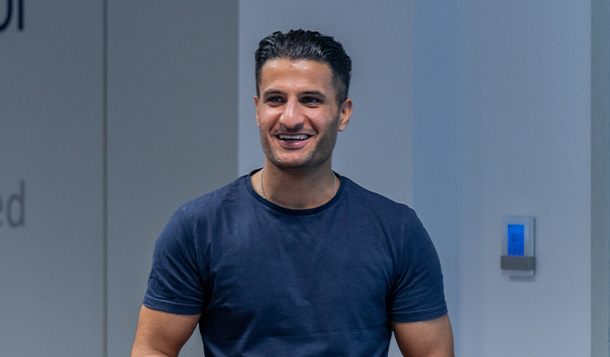
You know where you want to go. What separates the people who actually move forward after an MBA from those who end up right where they started? Prof. Dr. Michael Rüdiger has a clear answer – and he shares it in the video.

Excellence meets
practice

The lecturers bring with them many years of management experience from international companies and promote strategic, critical, and solution-oriented thinking. Through real-life business cases, group projects, and individual coaching, participants develop a deep understanding of global markets—and the confidence to lead successfully in a dynamic business world.

Your MBA studies at MBS

Practical Relevance

Our MBA lecturers bring many years of leadership experience from large corporations, medium-sized companies, and start-ups. By adapting their teaching to the constantly changing business world, they provide you with a highly relevant education in general management. Our guest speakers, many of them MBS alumni, are industry experts who share the latest business insights and real-world challenges every day. Gain even more practical experience with the MBA program at Munich Business School.

Personal support

Need to meet with your professor? Anytime! You study in small groups within interactive classes. Students and lecturers are in direct and ongoing exchange, creating an exceptional, individualized, and flexible learning experience.

Student life

Did you know that only 50% of your learning takes place in the classroom? The other 50% happens before and after class—when you and your fellow students prepare, exchange ideas, and engage in critical discussions. With 50% of students coming from abroad, you will work in diverse teams, discover new perspectives, and challenge your own way of thinking.

Location: Munich

Global corporations such as BMW, Allianz, and Siemens, as well as tech giants like Google, Microsoft, Intel, and IBM, and numerous start-ups, all appreciate Munich’s advantages and have established their headquarters here. We maintain close ties with many of these companies, giving you the opportunity to network and explore your career prospects—making the full-time MBA at Munich Business School the perfect starting point for your future.

Your MBA Curriculum

Semester 1
MBA Kick-Off & Leadership Bootcamp +

The MBA Kick-Off & Leadership Bootcamp Week is designed as an intensive and memorable start into the full-time MBA journey at Munich Business School. It is more than an orientation week: it combines program onboarding, leadership development, career preparation, and cohort building into one structured five-day experience. The week introduces students to MBS, the MBA program structure, faculty, staff, alumni, digital platforms, and the expectations connected to successful participation in the MBA. At the same time, it makes clear from the beginning that the MBA is a give-and-take journey: students receive strong academic, career, and community support, but are also expected to take ownership of their learning, personal development, and career outcomes.

The bootcamp follows a clear leadership progression. It begins with “Me at MBS”, helping students understand the school, the program culture, and the standards of the MBA. It then moves into “Leading Self”, where students reflect on their values, interests, personality, skills, motivation, resilience, and growth mindset, and translate these insights into a personal leadership, development, and career plan. The third day focuses on “Leading Others”, introducing leadership concepts and giving students the opportunity to practice teamwork and leadership behavior in applied formats such as simulations, team-building activities, and an escape room experience. The final two days shift toward “Leading in the Job Market”, preparing students for the German and European business environment, including business culture, communication styles, networking, recruiting expectations, CV and LinkedIn development, interview readiness, and strategic career planning. 

A key strength of the week is its applied and community-oriented character. Students interact with program leadership, faculty, career experts, alumni, guest speakers, and potentially partner companies. They also experience informal networking moments, including lunches, a pizza evening, and a closing celebration with MBA alumni, staff, and faculty. These elements are intended to create a strong sense of belonging from the very beginning and help students see themselves as part of a lifelong MBS network.

For marketing purposes, the Kick-Off & Leadership Bootcamp should be positioned as a signature MBA experience: a high-touch, career-driven, leadership-focused start that reflects the MBS promise of practical relevance, international perspective, personal development, and strong community. It signals to prospective students that the MBS MBA is not only about academic learning, but about transformation, employability, and becoming an active member of a professional network for life.


6 ECTS Responsible Leadership and Professional Development +

Leadership today means leading through technology as much as through people. In this module, students take a holistic view of leadership theories and models to understand the notion of what leadership is, and embed values to foster their understanding of ethical leadership. Furthermore, they investigate the ethical implications of AI-driven decision-making in our new reality and develop the skills to lead responsibly in increasingly digitalized environments. In this module, students learn how AI and digital tools impact leadership and the responsibility it comes with in areas such as sustainability, stakeholder-oriented value creation or leading diverse, intercultural teams. This is particularly valuable considering the rise of virtual working, the digital and AI tools that support today’s workforce and transform the way leaders have to react. The objective of this module is to go beyond the casual wisdom of hard leadership and take a look at the factors that increased their influence over what it means to be a good leader.

6 ECTS Innovation and Entrepreneurship +

In Innovation and Entrepreneurship, students discover innovation strategies, whether looking at case studies from the past or exploring today’s approaches to innovation and venturing. Innovation is both a mindset and a practice, and this module develops both. Starting from the different types of innovation and looking at the global context, we seek answers why certain directions are taken by global businesses when it comes to innovation and its processes. Students look at the differences between entrepreneurship and intrapreneurship, their successes and failures through the lens of case studies. Particular attention on the module is paid to innovation ecosystems and visits to innovation hubs as well as meetings with founders illustrate not just the way such ecosystems function but more importantly provide relatable case studies on how the process of putting an idea to the market works. Students explore AI-driven innovation and digital business model development alongside classic entrepreneurial frameworks. In the module, we also look at design thinking processes and the extent to which organizations embed innovation and entrepreneurship into their culture. 

The Start-up Days give this module a sharp applied edge: working in teams, students move from an initial idea to a minimum viable product (MVP) to creation of a digital prototype through a structured design sprint, engaging directly with Munich's entrepreneurial ecosystem and pitching to real investors. This element of the module is all about application of approaches such as Design Thinking and Lean Startup methodologies to real contexts integrating AI and Digital Tools. First, by understanding the user’s (customer needs), students seek to apply the five core phases of design thinking, applying the knowledge from other modules where possible. Then, using Lean Startup methodology, students are challenged to proceed with rapid experimentation, experiment with feedback loops to build, measure & learn on the basis of data. Significant attention is paid to venture validation where students gradually reduce risks and uncertainties, iterating the initial idea and processes around it, before actually committing to the launch. In this phase, data analytics, AI and digital tools prove invaluable and their appropriate application yields positive results for the project. Start-up days therefore offer an opportunity for students to apply learnings from the theoretical frameworks taught during the theoretical stage of the Innovation and Entrepreneurship module, but integrate knowledge from AI in Business, Data Analytics, Strategic Management and almost all the modules in the MBA curriculum. 

6 ECTS Global Strategic Management +

One of the key measures of success for a business is its ability to grow and expand beyond its country of origin’s borders. Naturally, this brings challenges and risks on multiple levels including market-related and operational. In the module, students will study and apply traditional market analysis tools including PESTL, Porter’s Diamond or Five Forces. They will also explore the substantial effects of AI and digitalization on strategic decision-making and adaptability to global business operations through the lens of case studies and practical exercises focusing on skill application. Competing globally demands more than strategic frameworks — it demands the ability to harness data. This module integrates AI-supported strategic analysis, including predictive analytics and scenario modeling, as core tools for navigating international markets. Students learn to identify global trends and translate data-driven insights into actionable strategy for businesses operating across borders and cultures. Through combination of AI and application of classical analysis models, students build competencies in consulting for market entry strategies, the organizational structure as well as the legal setup. 

6 ECTS Accounting for Management Decisions +

The objective of this module is to bring students closer to the practice of interpreting financial statements including income statements, balance sheets and cash flows. We also take a look at financial analysis and metrics where the use of AI tools and data analytics transforms the way in which financial decisions are made. From basic concepts such as cost-volume relationship to pricing decisions and cost allocations, decision making on the basis of innovative solutions, data analytics and intelligence becomes increasingly critical for business operations. This module integrates AI and data analytics into the decision-making process where the better the data, the better the decisions. It aims to equip students to read and interpret financial intelligence in a data-rich environment. 

Within the scope of a Business Simulation, students step into executive roles, managing a virtual company to take responsibility for making strategic and financial decisions. Discover the interdependencies between accounting, controlling and decision-making to compete with other companies and deliver the best results to win. Use metrics and calculate cost-volume relationships to make decisions on pricing with datasets from real businesses. With AI tools and data analytics knowledge, take care of business performance without losing sight of the long-term goals of your business. In the simulation one thing is certain, the ability to deal with uncertainties and working well as a team are defining features of winners.

6 ECTS Strategic Marketing +

Even the best product portfolio does not guarantee commercial success. Strategic importance of marketing plays an ever-increasing role in AI-driven environments and the digital space. Distinguishing between marketing of products and services as well as digital business models, students learn about the increasing role of AI in customer engagement, personalization and performance measurement. The latest marketing knowledge is intertwined with the traditional marketing concepts such as the marketing mix to develop data-driven marketing strategies, based on segmentation, targeting and positioning integrating digital customer insights and analytics. Aside from looking at the pricing, promotion and distribution in traditional and digital environments, students foster their understanding on customer needs and behaviors. This is achieved through the use of data analysis, digital tools and AI support to assess the competitiveness, select segments and develop implementation strategies and innovations. The centerpiece of this module is that through marketing, students are encouraged to think in terms of value creation that benefits the customer and the organization. 

The Digital Marketing Lab brings to life the theory and its goal is to design a data-driven marketing campaign from scratch. On the basis of researched data from real sources, students are tasked with developing a strategic marketing concept using traditional marketing tools as well as a digital toolbox including AI tools to deliver a comprehensive document. Customer analytics is therefore a key to success for this lab and students have to, depending on the goal of the lab look into customer acquisition and customer retention data. In some scenarios, they may also need to measure and evaluate customer experience as well as analyzing the value of customer segments on the basis of which decisions can be made. Through data, students identify market opportunities and competitive realities and formulate strategies for sustainable growth and maximization of competitive advantage. Through cycles of experimentation, agile iteration and performance measurement such as A/B testing, teams develop their concepts with the goal of improving the concept and extract the maximum value for the stakeholders involved. Understanding the needs and behaviors of customers is therefore crucial and seeing this through the lens of competitors through thorough competitor analysis further secures the project implementation. In this intensive element of the module, aside from testing the marketing knowledge, team work, leadership, communication and critical thinking are extensively tested as the backbone of team’s success.

Semester 2
6 ECTS Financial Management +

Today, financial markets more than ever are being reshaped by technology. The rise of FinTech, impact of ESG and increasing imposition of AI in financial management strategy and decision-making complement traditional tools and frameworks, the use of which will become a competency of students after this module. The module introduces international financial management frameworks and challenges students to evaluate financing and investment alternatives on the basis of real data. Leadership and team work will become a key when students face a challenge of delivering a complex financial analysis, suggesting recommendations to a publicly traded company, focusing on the sustainable, long-term stability of the business and prospects as an investment. With the use of AI tools, students are also required to formulate financial forecasting and valuation recommendations including risks in the short, medium and the long-term including the repercussions of merger & acquisition strategies on the financial success of global enterprises. In addition to this, within the sustainable finance component students take part in the Sustainable Finance Days where students tackle real-world challenges arising from ESG criteria, impact investing and sustainable finance analysis and decision-making. Here, digital tools and AI toolbox support students in critical analysis of a set problem, reflection on traditional financial management approaches and implementation of environmental and social responsibility strategies to mitigate negative consequences of fulfilling wider financial objectives.

3 ECTS Project Management +

Projects, whether big or small are now part of organizational operations and in this module, students are being prepared for the execution of a Business Project led by a real company. The goal is to equip all teams with knowledge and confidence in successful planning of the project lifecycle, initiation phases as well as monitoring and closure. In addition to learning about the key project management concepts including agile methodologies and frameworks, students will develop the ability to apply a project toolbox including work breakdown structures, timelines and resource allocation. You will also take a look at risk assessments, stakeholder analysis and project monitoring to safeguard progress and eventual success of your project. Naturally, students will embed their learnings form other modules and concentrate on the specific of leadership, team work and communication in a project context. Whilst soft skills are difficult to replace by AI and digital tools, hard competencies in project management can be supported by such tools and students will learn how to effectively apply those tools to develop work flows and plans to deliver the expected outcomes within the timeframes. As a prerequisite to the business project completed as part of the MBA studies, this module focuses on practical application of the project toolbox to give students the best possible opportunity to contribute their skills and showcase their value to the company they will work for. Tasks on this module simulate real-world business environments, directly preparing students for the Group Business Project that forms a central part of the MBA program.

Electives (Choose 2)
3 ECTS Data Analytics +

Data Analytics is central to business management but what lays behind the term and how exactly it impacts specific business functions is the core for this module. The intent is to lay the foundations so often skipped in the discussion. Students first look at the principles of data analytics, types of data and analysis methods. Understanding of historical development of the concept and its impact on the world is equally crucial as today’s technologies, AI and digital tools transform how data is collected, the quality and quantity of it. Technology also redefined what data is and very often businesses stand in front of decisions where data privacy laws and ethics must be considered. Understanding of data analytics principles is key to business success, whether working in marketing, human resources, supply chain management or project management, data is the basis of decision-making which affects profitability, expansion decisions or crisis management situations. Students on this module learn about data visualization and tools that help data analysis including AI, machine learning and cloud services. This module is an excellent starting point for future executives to think about how data can make their businesses more effective through building of competitive advantage in an increasingly competitive data-heavy global economy.

3 ECTS AI in Business +

No matter whether we talk about a global corporation or a local small business – AI is all around us, visible in plain sight and integrated in processes where we don’t notice at first glance. Understanding of the concept for a modern business leader is no longer a nice-to-have but a necessity and the focus of this module is giving students the opportunity to identify strategic, managerial and organizational aspects of artificial intelligence in business. Through real business contexts, students have an opportunity to discover how modern organizations identify, design, implement and govern AI and how AI and digital tools can be embedded sustainably into business operations. Students will learn to design and manage AI use cases across the full lifecycle from ideation and data considerations to productization, launch and operations. From the managerial perspective, the module equips students with the know-how on how to make the right decisions regarding the development of AI capabilities or implementation of existing solutions though the make-or-buy decisions and also scaling of AI solutions. Furthermore, when it comes to leadership in AI, students of this module analyze and develop strategies that allow AI adoption from the technical and organizational perspective including technology and data infrastructure, talent and expertise, organizational culture and governance. Practical workshops that take place in the second part of the module also demand that students assess ethical and regulatory implications of AI systems to integrate those into strategic decision-making. The module not only outlines theoretical aspects of AI adoption in modern businesses but also tests the student’s ability to apply those into business contexts present in both corporate and small business environments.

3 ECTS Global Supply Chain Management +

Globalization and expanding commercial activities beyond borders bring benefits to businesses and the importance of supply chains cannot be overlooked by managers in today’s world. Digital technologies, AI models and integration of technology into supply chain management are some of the steps directed at maximizing the value created at all points in the chain and support in the decision-making process. In this module, students first get an introduction into the topic and the issues that come with globalization and processes involved in delivering goods and services globally. Learning about the changes in value creation that occurred due to political situation, technology or environment and the impact on planning, implementing and controlling of supply chain operations is a key to understanding just how dynamic the progress is and how much effect it has on businesses and individuals alike. Practical application of the acquired knowledge takes place through an analysis performed on different development phases in existing supply chains, taking into account the challenges and unpredictability of certain scenarios. Through case studies and team work, students are challenged to apply the concepts and develop solutions where risks to supply chains can be effectively mitigated. This is achieved through implementation of AI-enabled procurement solutions, logistics management and performance measurement and management. In this strategy-heavy module, students embed their knowledge of data analytics, project management and strategic decision-making to conceptualize solutions that at least in some sense mitigate their chief enemies namely disruption and lapses in efficiency.

3 ECTS Business in Germany +

As one of the top global economies, Germany stands in front of a significant challenge – maintaining its status and capitalizing on its competitive advantage. In the era of digitalization and acceleration this is a task that some German enterprises face well, others struggle with and in this module, students look at the why as well as the how for Germany. History, politics and society are very important in understanding what makes Germany what it is and how important it is to spark shifts that unleash the potential through adoption of digital services, AI and technology which may still be skeptically received due to some of the historical and societal factors. For international students, this module provides a context, much needed for developing a successful career in Germany and for Germans this module is an opportunity to reflect on the past and evaluate future possibilities. Therefore, this module gives students a thorough grounding in the political-economic, legal, and institutional conditions for doing business in Germany — from the legal forms available to founders to the labor regulations shaping employment. Understanding the fabric of German economy built on the shoulders of small and medium enterprises (Mittelstand), family businesses that went global and the regulatory frameworks that govern Germany in the context of the EU regulation also play an important element of this module. The opportunities and challenges that Germany faces relating to digitalization and maintenance or increasing of competitiveness through digital transformation will be investigated by students through case studies and presentations where the intention is to critically evaluate the current status and play a role of consultants to explore the directions that German companies can take to succeed.

15 ECTS Master Thesis +

During your thesis, you can work on one of the following types of projects:

  • Individual research project: Investigation of a practical business problem, preferably in collaboration with an external company or organization.
  • Business plan: A comprehensive business plan for the founding and start-up phase of a new company/initiative, created by one to three students.
  • Consulting project: A project carried out by a group of three to four students working with an external company/organization on an agreed strategy or management problem. The project is expected to result in practical, actionable recommendations for the organization carrying out the project.

Chat with us on WhatsApp

Get 24/7 support for your application, studies, and next steps.

MBA Career Accelerator Programm

The MBA Career Accelerator Program at Munich Business School is based on Dr. Christine Menges’ “Triple M Program” and supports our students in successfully entering the job market.

FROM CAMPUS TO CAREER

Start with “Me – Know yourself,” navigate through “Market – Know the market,” and culminate in “Match – Align yourself effectively with the market to build a fulfilling career.”
This framework, integrated into our Career Services, is designed around a competency-based curriculum. The Career Accelerator Program complements our MBA curriculum and enriches it with key experiences such as Leadership Week, Start-up Week, Business Simulation, and an International Week. It provides intensive opportunities to develop leadership skills, entrepreneurial mindset, and practical problem-solving abilities.

Our goal is clear: to empower our graduates for a seamless transition into the job market!

Emba Consortium

The EMBA Consortium is an international network of leading business schools that offers Executive MBA students an additional global dimension. The aim is to enrich the education beyond the scope of the individual program and to open up new perspectives, knowledge, and networks for participants.

Participants can voluntarily take part in an international theme week. Each of the twelve partner schools – including those in Poland, Brazil, Italy, South Africa, the UK, Peru, Japan, the US, and India – offers its own specialized program focusing on a business-related topic, such as sustainability, digital transformation, luxury goods management, industrial management, etc.

Your added value during your studies: Benefit from the EMBA Consortium

  • Exchange with MBA students from all over the world (maximum of three participants per school, guaranteed diverse groups)
  • Combination of theory and practice through realistic applications and company visits
  • Insights into local economy, culture, and society through excursions and guest lectures
  • Building an international network that extends far beyond your own program

Three weeks of intensive collaboration and new insights

Leadership Week

The first week of the program focuses on leadership. Through lectures, seminars, and workshops—including sessions with experts from the US Army—participants gain valuable insights into modern leadership concepts and reflect on their own role as leaders.

Start-up Week

Start-up Week is part of the Innovation & Entrepreneurship course and specifically promotes entrepreneurial thinking. In design thinking and lean start-up sessions, participants develop their own ideas, test business models, and network with female founders, start-ups, and innovators from the field.

Business Simulation Week

The Business Simulation Week in the Accounting for Management Decisions course combines theory and practice. After an intensive accounting boot camp, students take on leadership roles in a company in the "C-Suite Life" simulation and steer it back to success with strategic decisions.

Get to know us. Online or at our campus in munich.

MBA Info Session in English June 23, 2026 05:00 PM online Register now /MBA Info Session with an Alumnus
MBA Info Session in English June 30, 2026 02:00 PM online Register now /Educational Agency Info Session – MBA 2026 Curriculum Update
MBA Info Session in English July 10, 2026 12:00 PM online Register now /MBA Info Session
MBA Info Session in English July 30, 2026 04:00 PM online Register now /MBA Info Session with WeMakeScholars
MBA Info Session in English August 24, 2026 05:00 PM online Register now /MBA Info Session

MBA Employment Numbers

How soon MBS students get a job?

Over 70 % of all MBS students secure their job offers prior to graduation. 90 % of all our alumni who are already working, receive a promotion within one year of graduating from MBS.

How our students increase chances to secure a job after graduation?

Seamless transition from classroom into the workplace requires a synchronous movement of several gears. As a student, you are in the driver's seat, deciding how much engagement you commit. At Munich Business School our goal is to equip you with all the necessary skills to secure the best deal possible.
The engagements that contribute to securing the best opportunities include:

  • Participation in career workshops
  • Taking advantage of career coaching
  • Nurturing networking skills in events
  • Taking on business projects & internships

Your salary after an MBA degree

On average, you can expect a salary increase of 91 % after an MBA from MBS.

/ 80,923 € Average salary after an MBA
/ 91 % Salary increase for MBS students
/ 70 % MBS students secure jobs before graduation
/ 90 % MBS students are promoted within one year

Career Support

The world of work is constantly changing. Due to technology many jobs will disappear, while others will grow and new ones, which we haven’t heard of yet, will be created. This means that it is very important that you prepare yourself for the future – and we support you in this endeavor! Whether you aim to advance in your current field, change your job function or industry, or become a successful entrepreneur, we offer individual and tailor-made support to make you fit for the future:

Career Coaching

To find your own path in an increasingly complex and dynamic business world, it is important to know your values, interests, personality, and skills. We offer personalized one-on-one career coaching by certified professionals to identify your VIPS, evaluate your career goals, and design your job strategy.

Career workshops and networking opportunities

We offer workshops on building your brand and network, job hunting, writing resumes and cover letters, and job interviews. With the help of moderators, speakers, and online tools, we support you in pursuing your career goals. In addition, MBS offers you many opportunities to meet and get to know alumni, recruiters, guest speakers, and student clubs—to successfully find the right job.

Business Projects

You will have the opportunity to work on a consulting project for a large corporation, a medium-sized company, a start-up, or a non-profit organization. As part of a team, you will work on a specific, practical project over a period of several months. This will allow you to become more familiar with the internal processes and structures of the company while also giving you the opportunity to apply and demonstrate the skills you have acquired in practice. 

Company visits and company presentations

Throughout the year, various career and networking events offer you exciting insights behind the scenes of a wide range of companies and allow you to make initial contacts. Company representatives come to campus to provide information about their companies, offer insights, or outline current trends in the industry. In addition, we offer company visits, during which we take you to the companies' offices.

German courses in Munich

Take the opportunity to improve your German language skills. At the Goethe-Institut Munich, the official partner of MBS, you receive a 15% discount on German courses. In addition, we support our MBA students with a reimbursement of up to EUR 500 for successfully completed courses.

The reimbursement of up to EUR 500 applies exclusively to enrolled MBA students at MBS. Prospective students may obtain the appropriate reimbursement form from the respective program manager. In addition to the Goethe-Institut Munich, German courses offered by other officially recognized language providers are also eligible for reimbursement, provided the course has been successfully completed.

Stakeholder Testimonials

Nasir Mehrzad Balach University Relations Expert & Senior Recruiter, Allianz, Munich
"Our collaboration goes beyond only hiring outstanding students from MBS; it also includes meeting those students in private sessions on campus. The university's career center is the focal point for all of these subjects, and because of open communication, cooperation is simple and seamless. MBS has given Allianz outstanding talent and continues to do so, we will continue to expand our strategy and partnership."
Kenny Smiles Lartey University recruiter, Microsoft, Munich
"The MBS career center is a valuable partner for Microsoft. We have been impressed by the professionalism and efficiency of the MBS team in all aspects of our collaboration, from the planning and organisation of recruiting and career events to the catering of our needs during these events."
Arjun on Studycheck
"Participating in the MBS Career Accelerator program has boosted my career readiness, providing me with the tools and confidence to navigate the corporate world effectively. The personalized coaching from the MBS Career Center, coupled with a state-of-the-art career software, has empowered me to target job opportunities strategically, enhance my networking skills, and position myself as a highly desirable candidate."

MBA in Munich

Munich is one of Europe's leading business locations – home to global companies such as BMW, Allianz, Siemens, Microsoft, and Google, as well as numerous start-ups. This dynamic environment makes the city the ideal place to study for an MBA.

The MBA General Management program at Munich Business School combines academic excellence with direct practical relevance. Many lecturers come directly from Munich's business community and bring valuable management experience to the classroom. Guest lectures, career events, and projects with partner companies create valuable contacts and perspectives—a decisive advantage for professional development. Munich also scores highly in terms of quality of life: an international atmosphere, cultural diversity, safety, and proximity to the Alps. Those who study here benefit not only from a first-class education, but also from an inspiring environment that perfectly combines learning, working, and living.

MBA and Munich – a strong foundation for your career.

An MBA program at MBS: Learning to lead responsibly

The MBA General Management program at Munich Business School combines excellent management training with a value-oriented approach. Core modules such as Responsible Leadership, Innovation & Entrepreneurship, and Global Management impart up-to-date specialist knowledge and promote responsible, international thinking.

In the Expert Business Knowledge courses, students expand their management know-how in a targeted manner, while thematic special weeks offer space for new perspectives, intensive teamwork, and practical experience. In addition, participants benefit from individual coaching, soft skills training, and exclusive career events. Practical projects with renowned companies provide valuable insights and contacts in the business world.

Application

In order to be admitted to a study program at Munich Business School, you must fulfill academic, linguistic, and professional requirements. The required application documents may be submitted at any time. Since the places are limited, we advise you to apply for your desired study start as early as possible. One thing always applies: the earlier you submit your application, the more likely it is that you will be admitted to the next program start.

Tuition Fees

The quality of teaching and the training of sought-after specialists and managers are at the heart of Munich Business School. By studying at MBS, you are making an investment in your future. You can conveniently pay your tuition fees in two semester installments or 12 monthly installments.

Promotion

Save €4,000 on your regular tuition fees of €32,000. This offer is available for a limited time only – make sure you take advantage before it ends. 

We also award individual scholarships. Find out more in a personal conversation with your Study Advisor. All information on 100% tuition financing with Brain Capital can be found under Scholarships and Study Financing.

€ 2,333 per month (incl. promotion)
€ 14,000 per semester (incl. promotion)
€ 28,000 for 2 semesters (incl. promotion)
– € 4,000 Promotion
€ 60 application fee
€ 690 | € 1,490 enrollment fee (EU | Non-EU)

Admission requirements

Academic and Professional Requirements

+

English language skills

+

Application deadline in detail

+

Compensation for Disadvantages

+

Application process

Step 1: Written Application

+

Step 2: Personal Interview

+

Step 3: Study Contract

+

Step 4: Student Visa

+

Scholarships

+

Apartments for MBS students

Our fully equipped apartments offer everything you need to focus entirely on your studies: modern design, comfort, and premium extras. 

You don’t have to worry about annoying things like a washing machine, electricity, heating, or Wi-Fi. We have already taken care of everything for you.

MBS Insights: The university blog with news on studying, research, and business administration

Would you like to learn more?
Study Advisor MBA
Program Manager MBA
Maciej Kapron , M.Sc. +49 89 547678 254 mba@munich-business-school.de
MBS WhatsApp-Chat
QR Code Scan & chat with us instantly.