MBS Excels with Digital Learning Programs and the Strategic Use of AI in Teaching
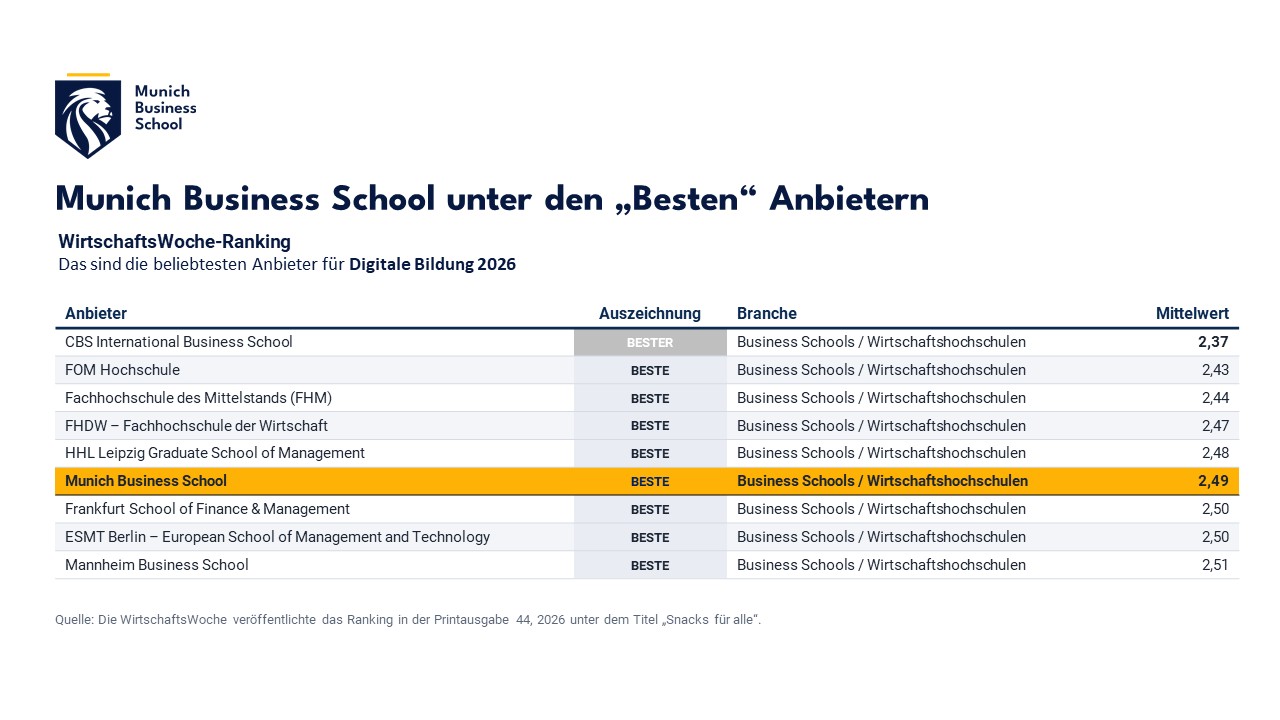
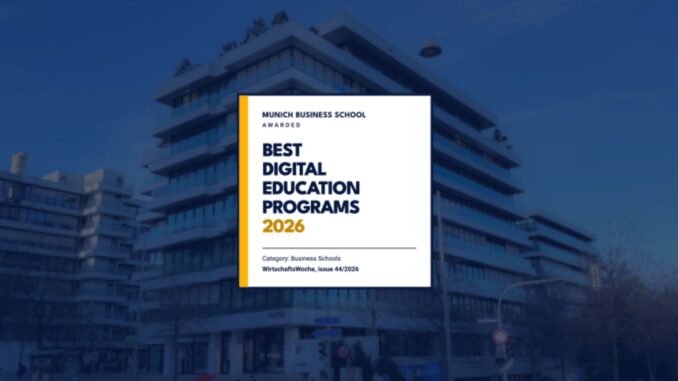
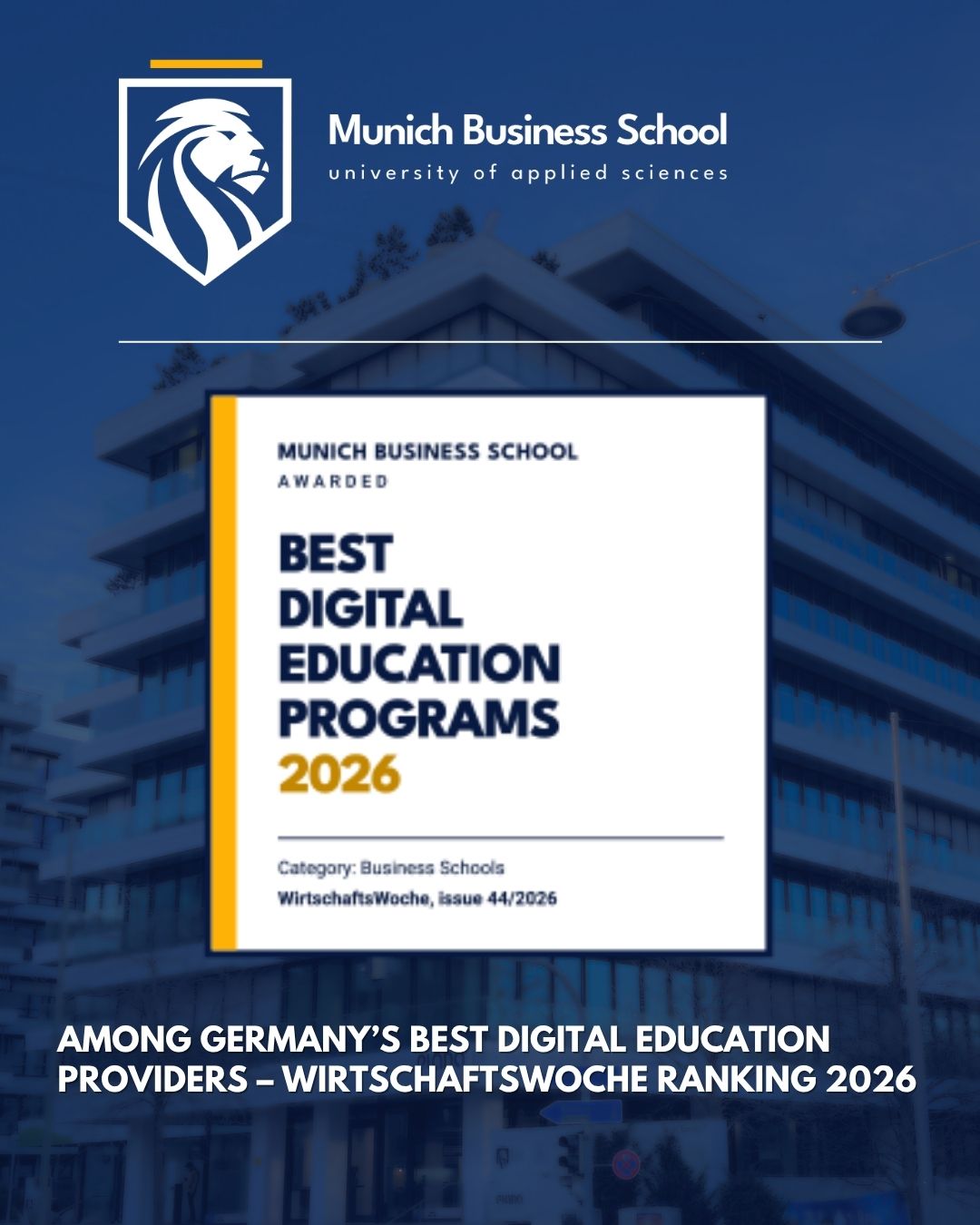
The WirtschaftsWoche ranking has named the best digital education programs for 2026. Among business schools, the Munich Business School (MBS) stands out for its combination of digital instruction and in-person interaction. For the ranking, the market research institute ServiceValue analyzed more than 13,000 user reviews of 135 providers. Those who score well here have therefore won over the people who are actually learning through digital offerings.
A razor-thin lead in a competitive market
The mean scores show just how close the field is. MBS scored 2.49. The Frankfurt School of Finance & Management and ESMT Berlin followed with 2.50 each; Mannheim Business School scored 2.51. The difference between the four universities is just two hundredths. This shows that MBS is in good company and on par with universities that are among the most renowned institutions for management education in Germany.
Digital tools complement face-to-face interaction
MBS’s teaching concept deliberately combines physical and virtual learning spaces. Platforms such as Moodle, the Virtual Campus, and Microsoft Teams bring together learning materials and facilitate communication between students and faculty. These digital tools complement the in-person interaction and application-oriented learning that characterize the education at MBS.
Digital skills are also an integral part of the curriculum. Even at the bachelor’s level, students engage with topics such as statistics, data analysis, big data, business intelligence, and digital ethics. In the master’s programs, data analytics, digital business models, and technological transformation are firmly embedded in the curriculum.
Artificial Intelligence in the Curriculum
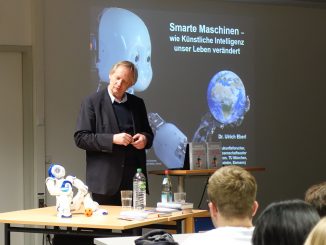
With its revised MBA curriculum, Munich Business School has been incorporating artificial intelligence across all programs since this year. AI plays a role there in areas such as predictive analytics, financial forecasting, and customer analytics. Students who want to delve deeper can take the elective module “AI in Business.” Among other things, this module focuses on the development and implementation of AI applications in business. The Master’s in Innovation & Entrepreneurship addresses topics such as AI-supported idea generation, prototyping, new business models, and responsible leadership.
Prof. Dr. Sophie Hieke demonstrates how AI can transform teaching itself. In her teaching concept “How ChatGPT Became My Co-Lecturer,” the language model serves as a sparring partner that helps students sharpen their critical thinking skills. The approach has also garnered international attention: it took second place at the 2024 Innovation in Teaching of Research Methodology Excellence Awards.
Faculty and Research Drive Digital Transformation

Effective digital teaching stands or falls with the instructors. That is why MBS specifically promotes their professional development and collaboration with one another. The most recent MBS Teaching Day, for example, focused on ChatGPT, digital instructional videos, Moodle, and simulation-based learning.
The university is also addressing digital transformation in its research. In the ELDiCo project, funded by the Bavarian Research Institute for Digital Transformation (bidt), MBS is investigating how leadership and collaboration function in virtual spaces and how digital communication technologies can be used responsibly.
“Munich Business School combines innovative digital learning offerings and the targeted use of artificial intelligence with the strengths of a personalized, practice-oriented management education. It’s not just about applying new technologies, but about empowering students to critically assess their possibilities and limitations and to help shape the digital transformation responsibly,” says Prof. Dr. Stefan Baldi, Dean of Munich Business School.