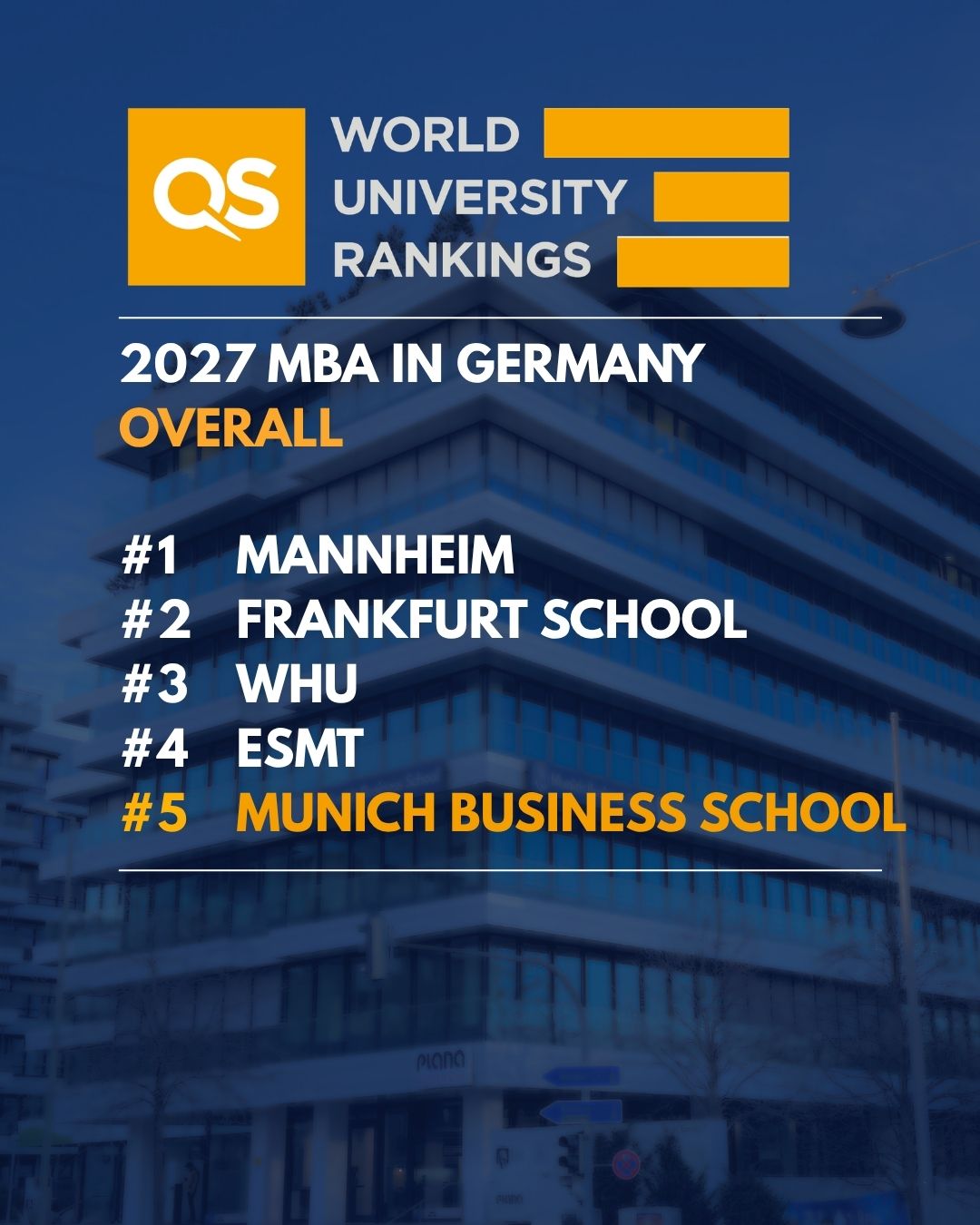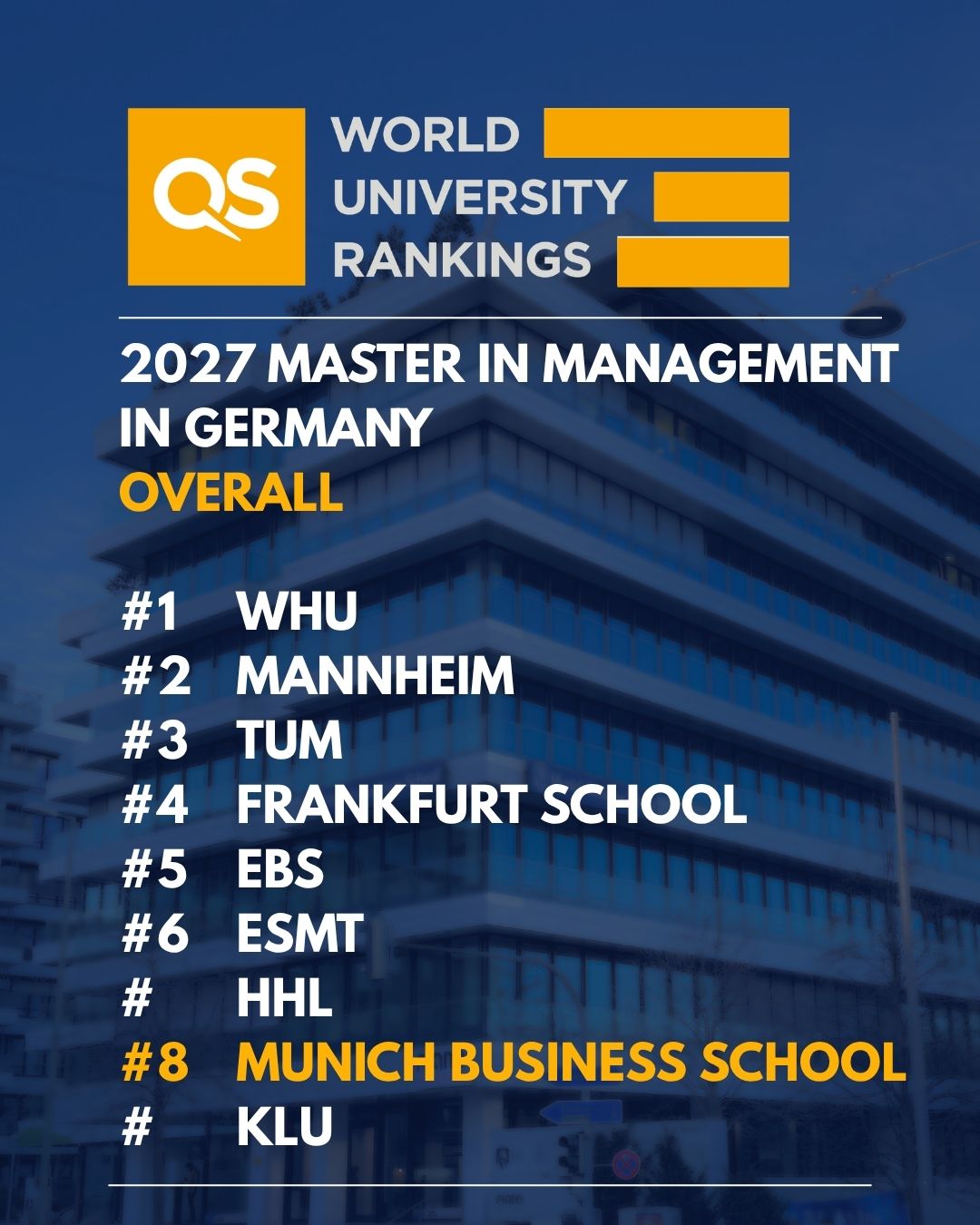
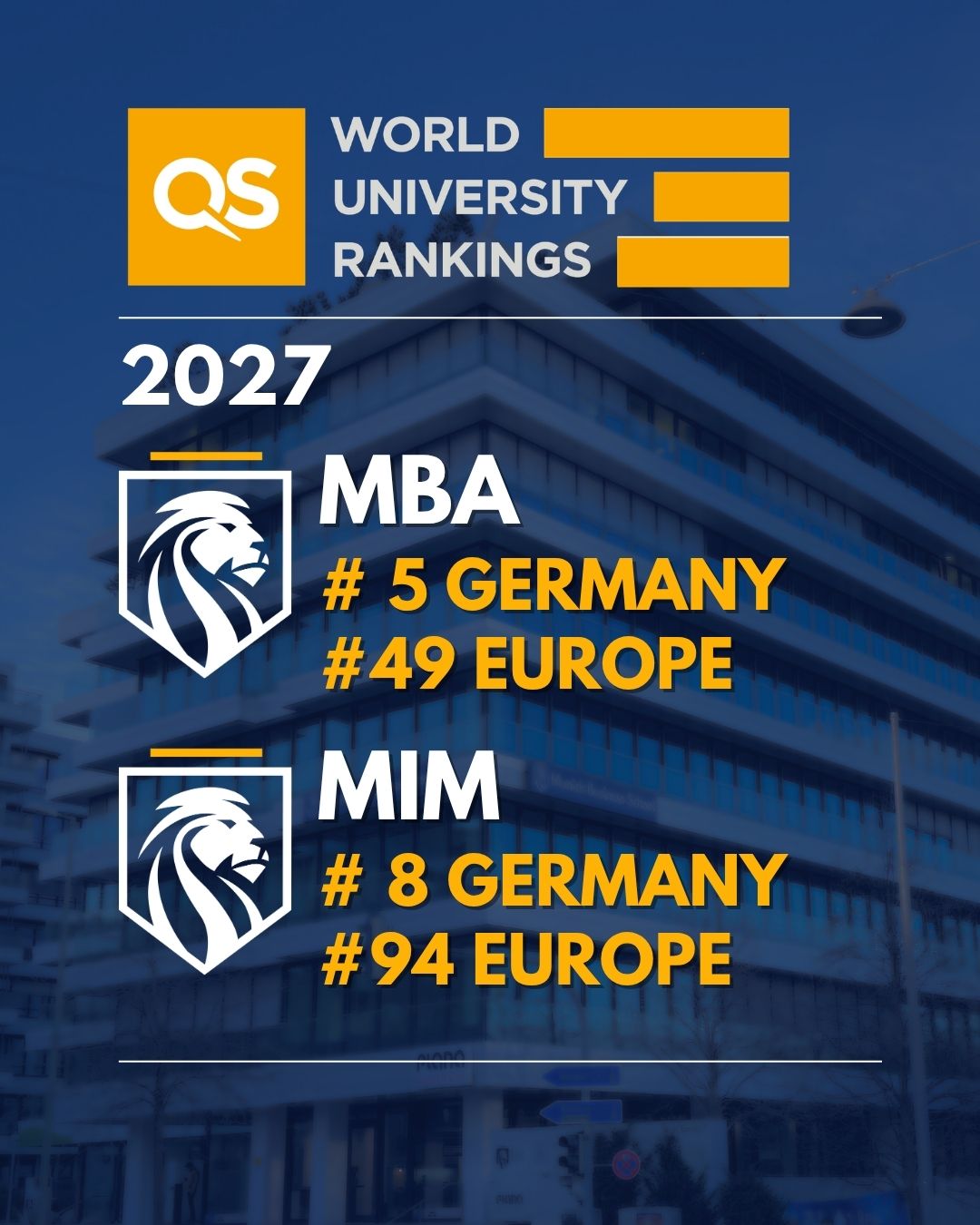
The Munich Business School’s MBA program ranks among the top 50 MBA programs in Europe and is ranked 5th in Germany. The Master’s in International Business has also made its debut in the QS Master’s in Management Ranking and is ranked 8th in Germany.
Munich Business School (MBS) made its debut in the QS Global MBA & Business Masters Ranking in 2027 and achieved a strong result right off the bat. The MBA program at the Munich-based private university ranks 49th in Europe, placing it among the top 50 programs on the continent. At the same time, MBS ranks among the top five business schools in Germany. Also, newly listed is the Master’s in International Business in the global QS Master’s in Management Ranking, which has made it into the top 100 in Europe right off the bat.
A Tightly Contested Field of Private Business Schools
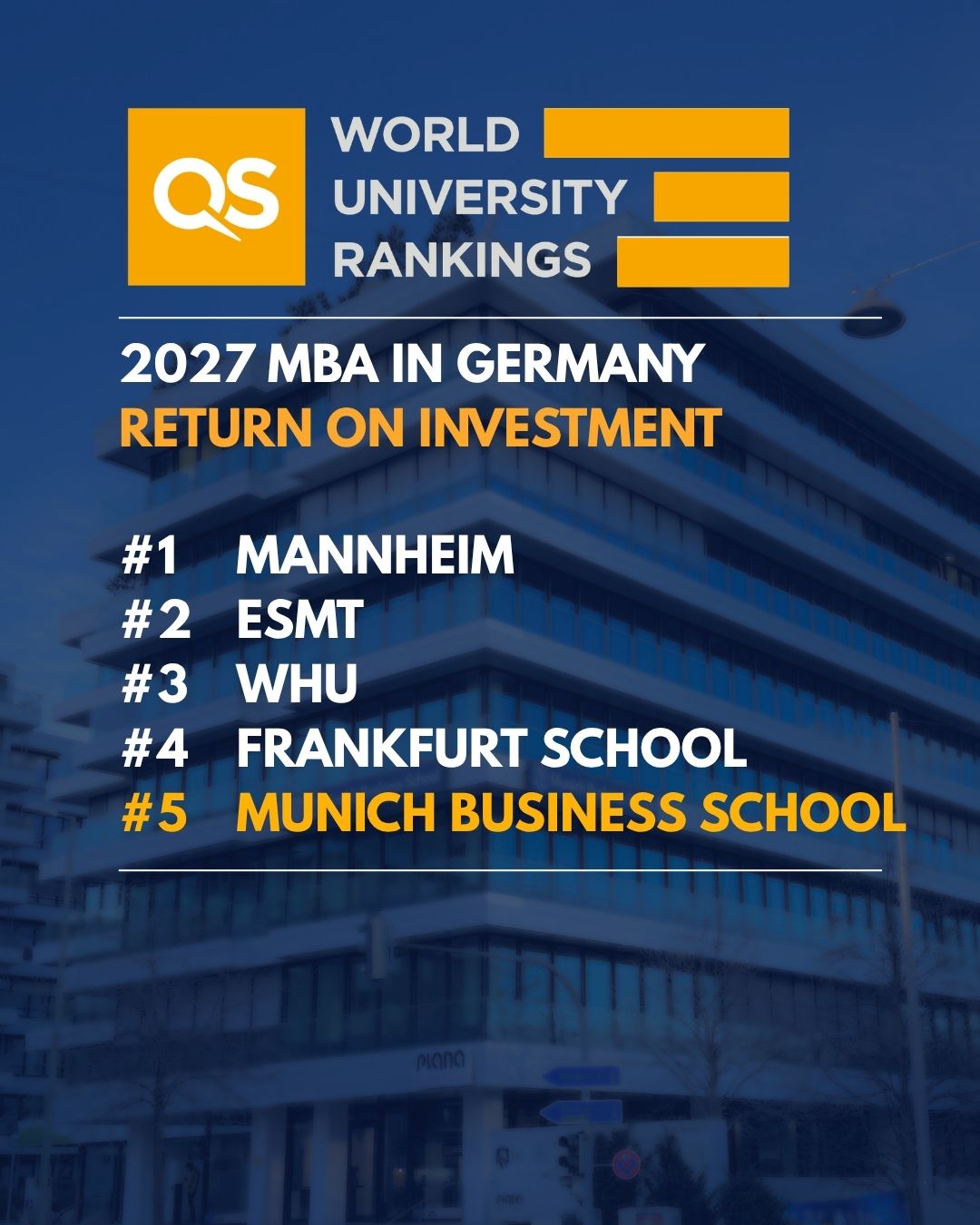
The QS Ranking is one of the most widely recognized international comparisons of business schools. In Germany, the number of private universities included in the ranking is relatively small. In the MBA ranking, WHU – Otto Beisheim School of Management, Mannheim Business School, Frankfurt School of Finance & Management, and ESMT Berlin lead the German field, followed by Munich Business School in 5th place.
MBA: Starke Werte bei ROI, Employability und Diversity
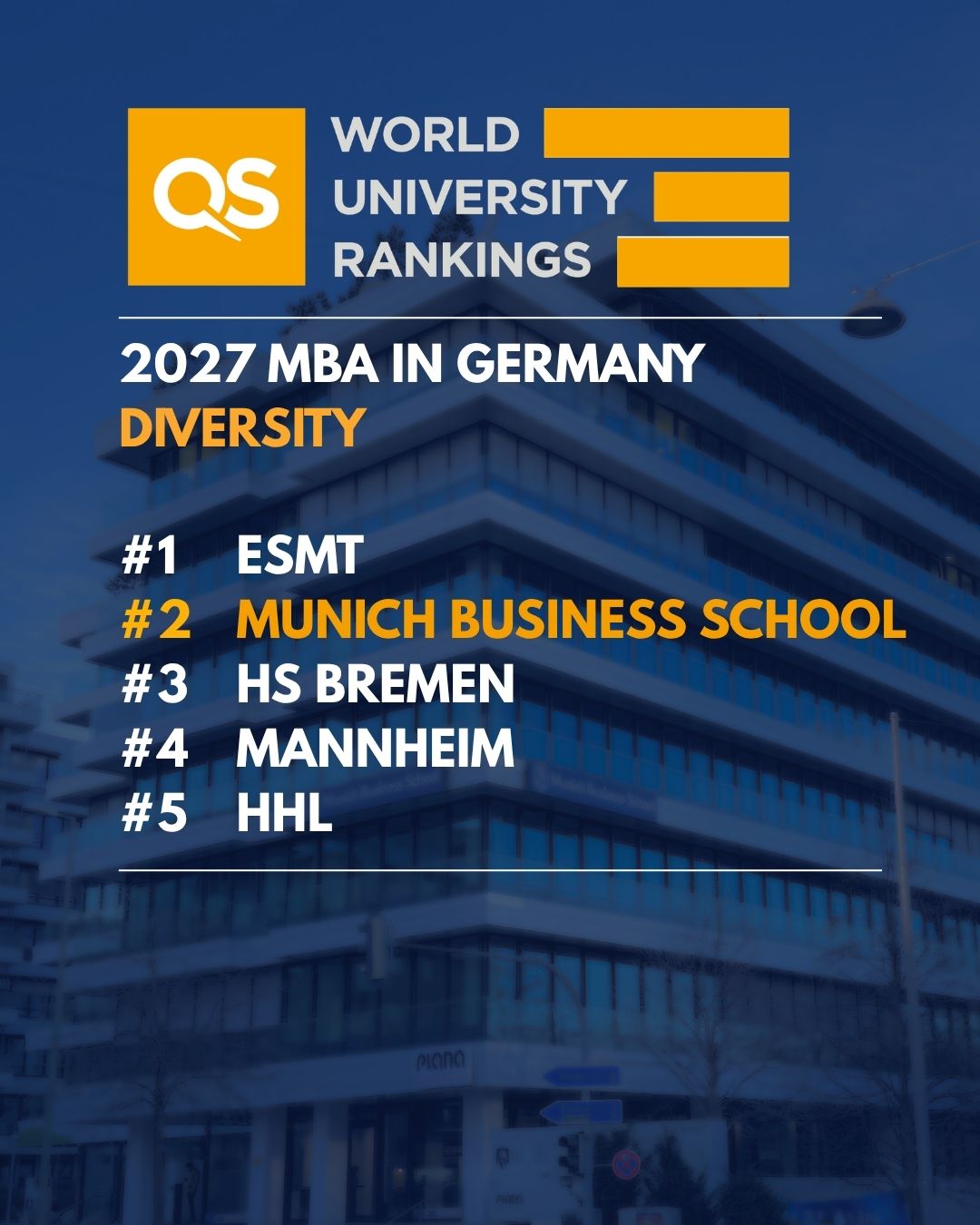
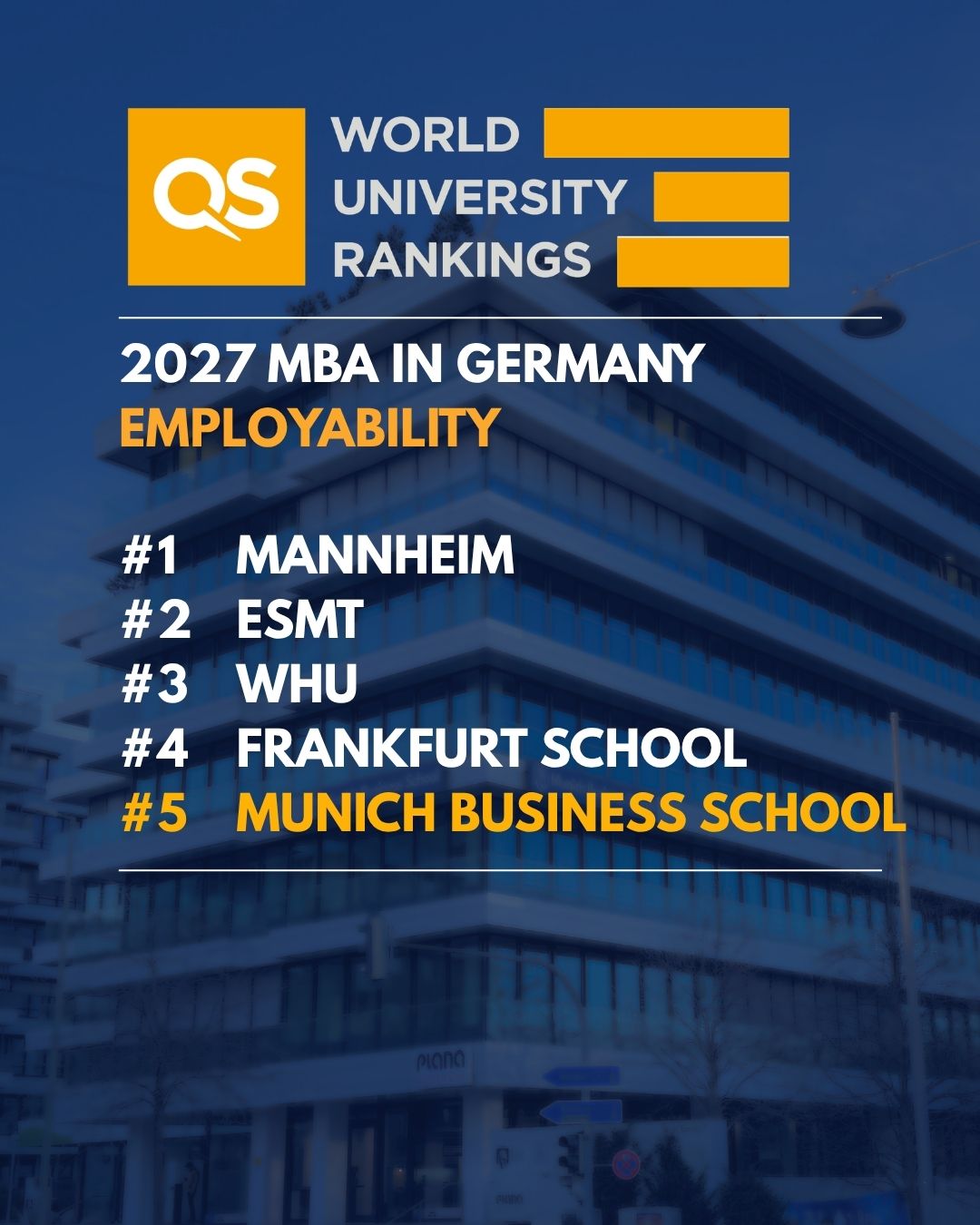
The strength of the Munich Business School’s MBA program becomes particularly clear when examining the individual evaluation criteria. In terms of return on investment, MBS scored 80.8 out of a possible 100 points—23.1 points above the global average and just behind the Frankfurt School’s top score (82.3). In terms of employability, MBS also scores above average with 51.0 points (compared to 43.2). In the diversity category, it ranks second among German universities with 64.9 points. Munich Business School thus outperforms the global average in three out of five categories.
Master’s in International Business Makes Its Debut in the Rankings
In the global QS Master’s in Management rankings, the Master’s in International Business is ranked in the 151–200 range. Among European institutions in this range, it ranks 94th. Nationally, seven universities rank ahead of MBS; together with Kühne Logistics University, it thus ranks 8th in Germany.
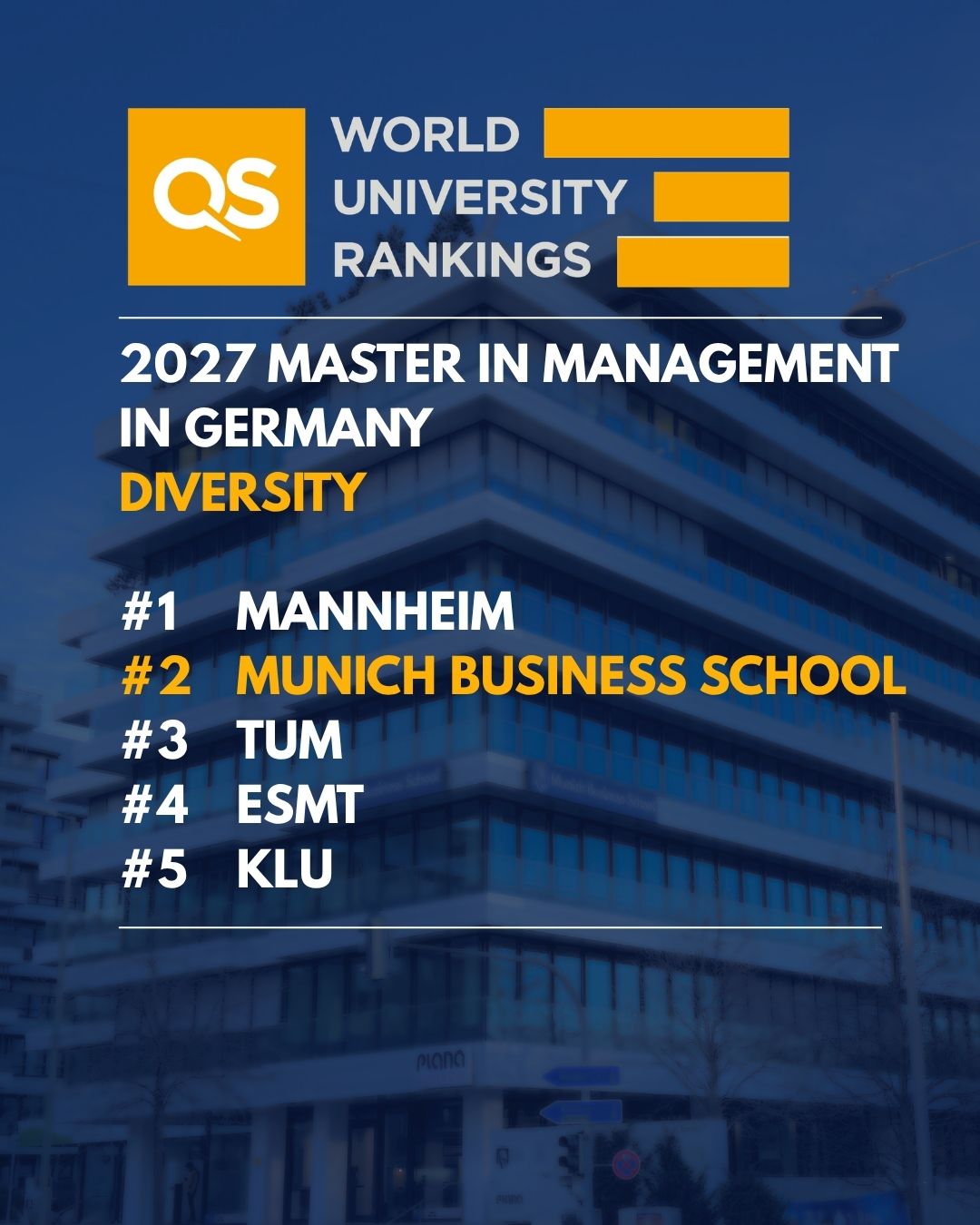
Here, too, the “Diversity” criterion delivers the strongest individual score. With 68.0 points, the master’s program is well above the global average of 63.4, placing it second among all listed German universities. Only the Mannheim Business School scores higher in this category. For a program entering the rankings for the first time, this is a remarkably strong debut in one of the categories most indicative of a program’s international orientation.

Internationality as a Common Denominator
A recurring pattern emerges in both rankings: MBS scores particularly well when it comes to the international composition of its student body. This aligns with the university’s mission, which is to prepare its students for global management careers in internationally diverse cohorts.
“The fact that we’ve entered the QS rankings with two degree programs right off the bat confirms what sets Munich Business School apart: an internationally oriented academic environment, close ties to the business world, and a clear focus on the professional success of our graduates. But it’s just as important for us to take an honest look at the areas where we can improve—such as our alumni data. Being included is the first step; improving year after year is the next,” summarizes Prof. Dr. Stefan Baldi, Dean of Munich Business School.
The Results at a Glance
MBA
49th place in Europe
5th place in Germany
Range 131–140 worldwide
Employability: 51.0 points | global average: 43.2 | 4th place in Germany
Return on Investment: 80.8 points | global average: 57.7 | 5th place in Germany
Diversity: 64.9 points | global average: 60.1 | 2nd place in Germany
Master in International Business
Ranked 94th in Europe
Ranked 8th in Germany
Range 151–200 worldwide
Diversity: 68.0 points | global average: 63.4
Ranked 2nd in Germany for the diversity criterion
Ranked 97th worldwide for the diversity criterion