
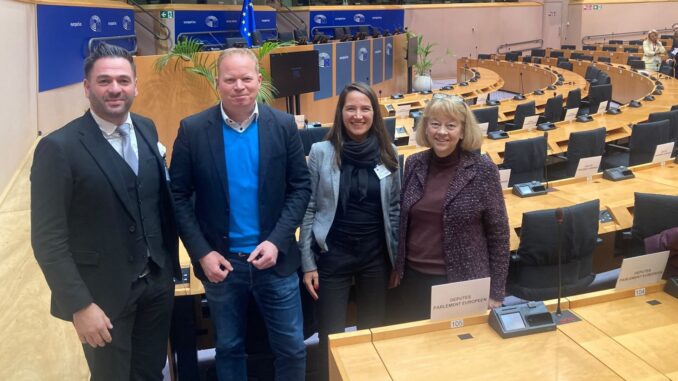
Presenting our recent scientific study at the GLOBE EU Conference in Brussels and engaging with European institutions on the future of a sustainable economy.
How can we create an economic system that enables everyone to live in human dignity while remaining within the ecological limits of our planet? This fundamental question is at the heart of my Doctor of Business Administration (DBA) research at Munich Business School and Sheffield Hallam University, focusing on Human Dignity in Economics within Social and Planetary Boundaries.
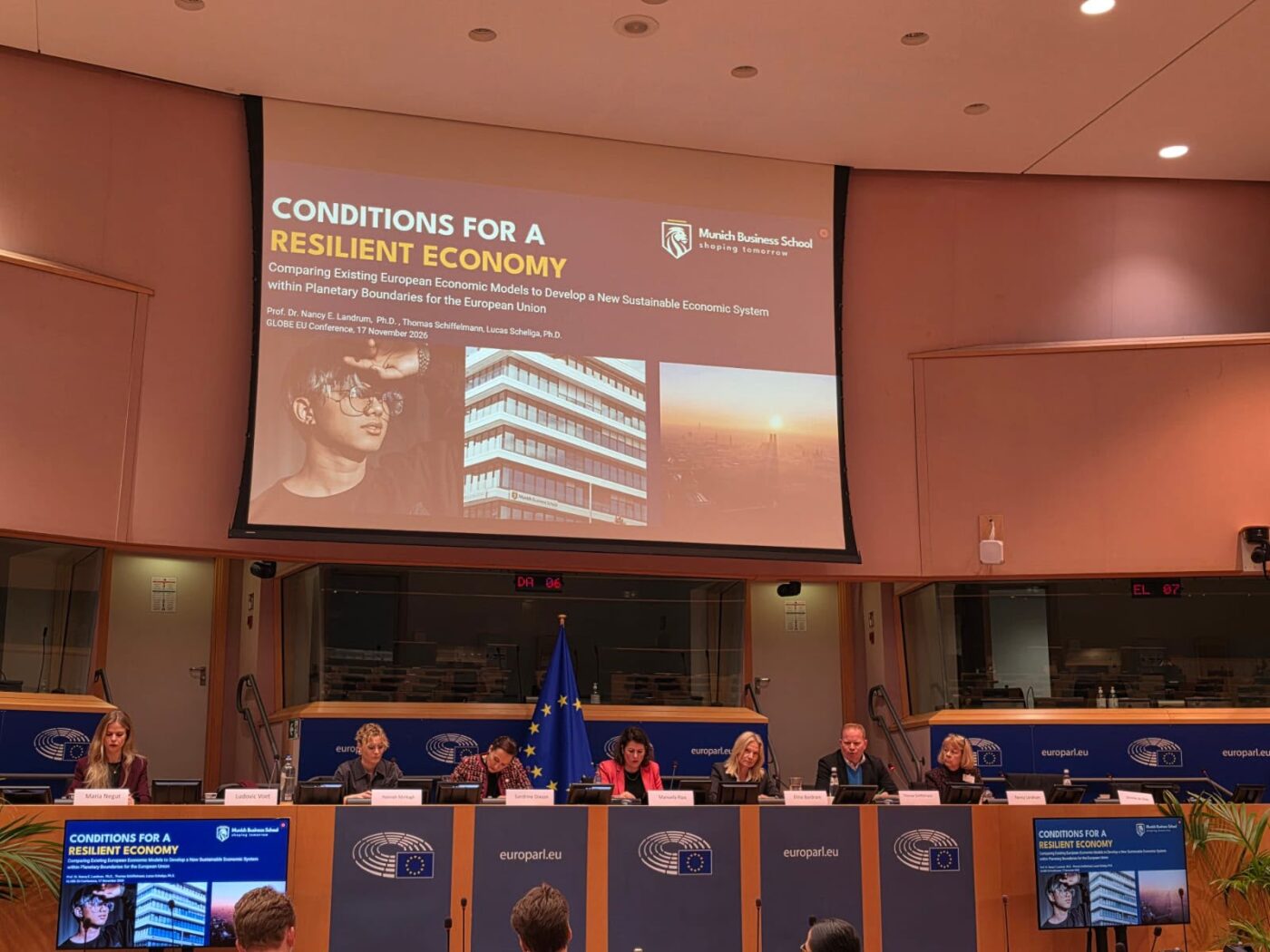
On 17 November 2026, I had the opportunity to contribute to this discussion at the GLOBE EU Conference in the European Parliament in Brussels to Resilience Redefined: Shaping Europe’s Economic, Social, and Ecological Renaissance, where our scientific study Conditions for a Resilient Economy: Comparing Existing European Economic Models to Develop a New Sustainable Economic System Within Planetary Boundaries for the European Union was presented.
Scientific insights into a resilient European economy
The study was commissioned by Manuela Ripa, Member of the European Parliament, and jointly conducted with Prof. Dr Nancy E. Landrum, Professor of Sustainability at Munich Business School, and Lucas Scheliga, mathematician and statistician at NOVUSTAT.
Combining thematic analysis with fuzzy-set Qualitative Comparative Analysis (fsQCA), we examined the economic and institutional characteristics of 26 EU Member States to identify which conditions are associated with meeting social needs while respecting planetary boundaries.
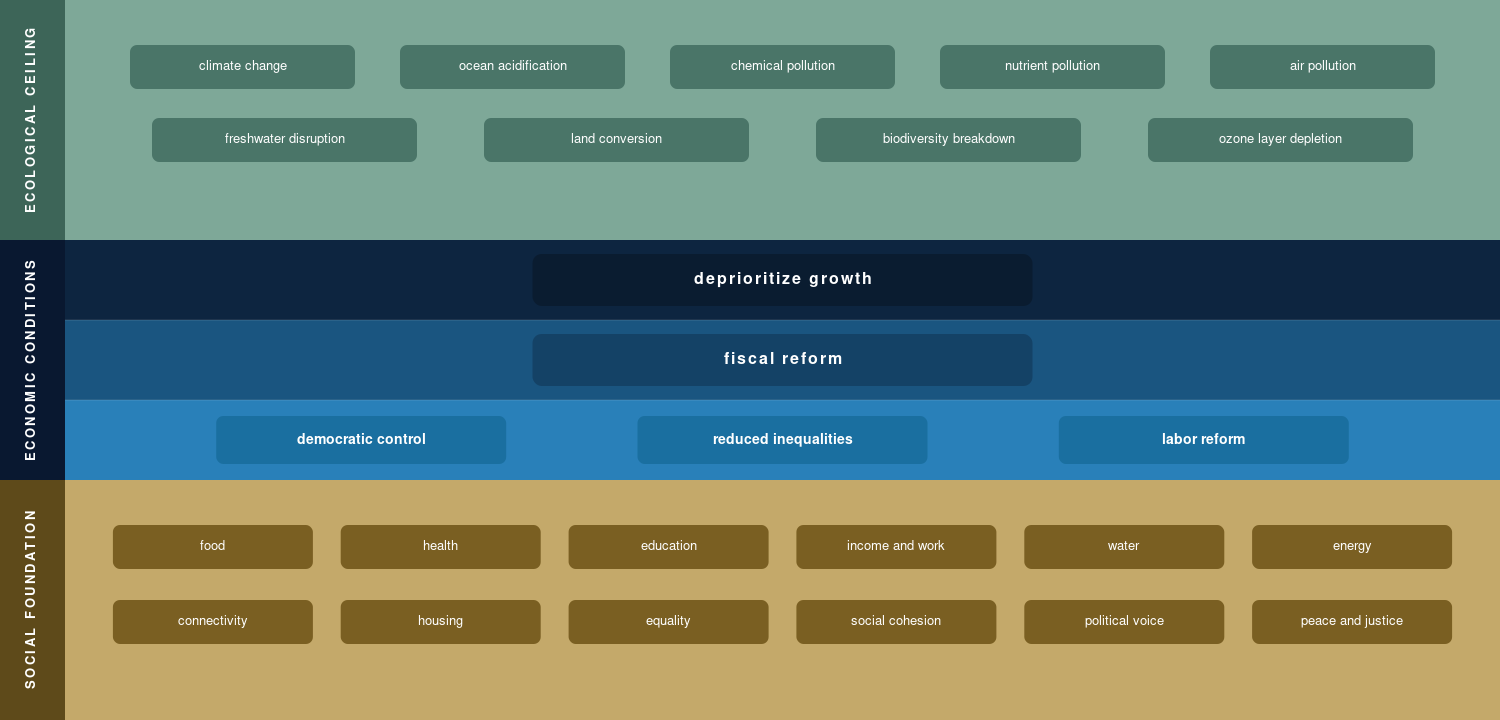
Our findings indicate that democratic governance and reduced economic inequality form the strongest joint configuration associated with resilient economic outcomes. Furthermore, labour reforms are particularly closely associated with social performance, while GDP growth intensity shows its strongest relationship with ecological performance.
Importantly, our exploratory research suggests that no single economic measure is sufficient in isolation. Instead, we propose an integrated post-growth framework combining democratic participation, inequality reduction, labour reform and a reduced dependence on GDP growth as the primary measure of economic success.
These findings reinforce my conviction that human dignity, social justice and ecological sustainability must become fundamental principles of economic decision-making.
Connecting research, European institutions and business

The days following the GLOBE EU Conference provided further valuable opportunities to exchange perspectives with representatives of European and international institutions, as well as businesses operating in Brussels.
Among these encounters were discussions with a representative of the United Nations Environment Programme (UNEP) and two representatives of the Institute for European Environmental Policy (IEEP).
These exchanges offered valuable opportunities to discuss the relationship between scientific research, environmental policy and the practical challenges of transforming our economic systems. They also highlighted the importance of interdisciplinary cooperation and dialogue between academia, policymakers and business.
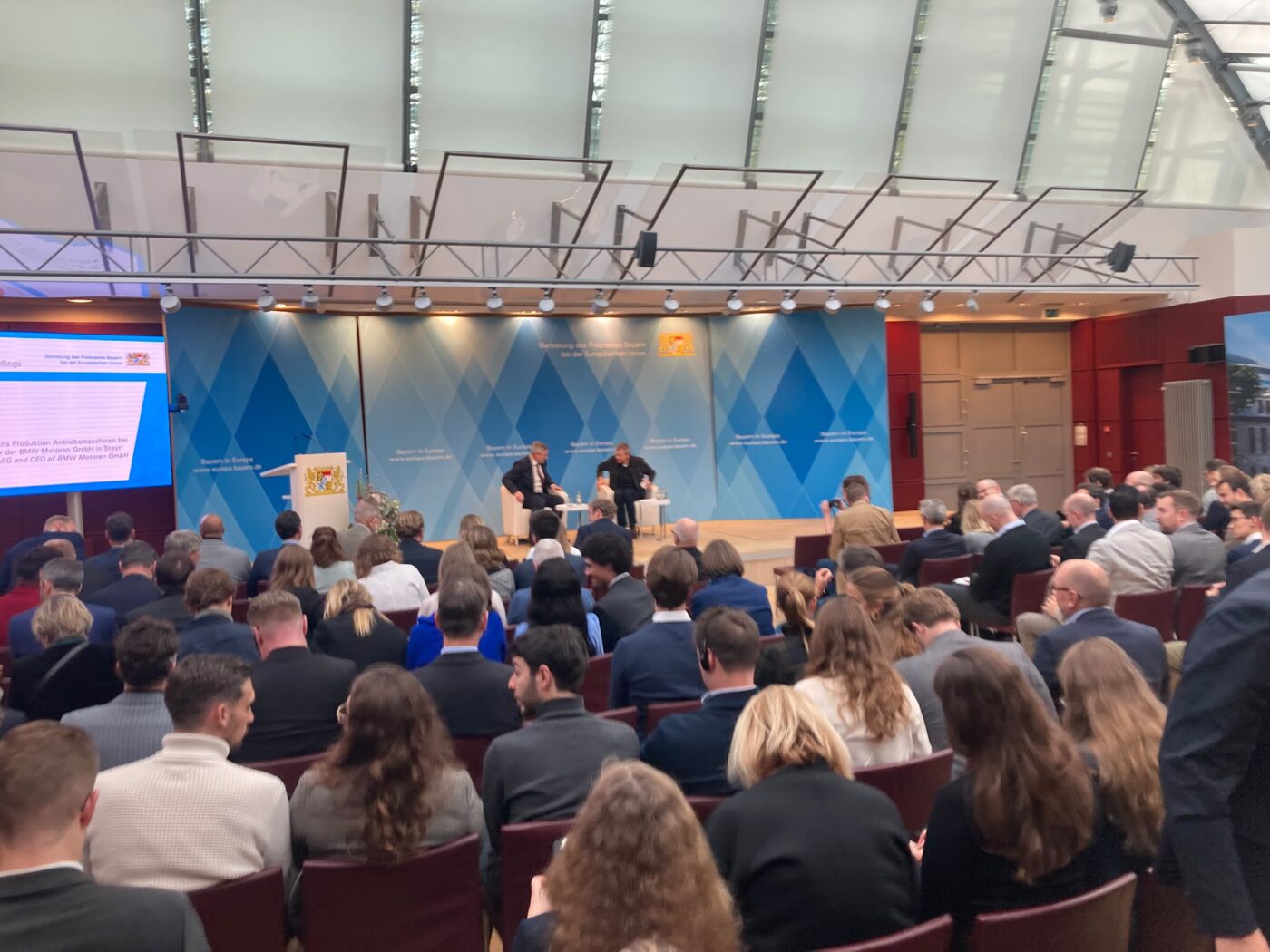
The subsequent networking reception provided another opportunity to engage with perspectives on European economic policy and the relationship between industrial competitiveness and sustainability.
From academic knowledge to societal impact
For me, these days in Brussels represented another important milestone in connecting academic research with real-world economic and political challenges.
They demonstrated how the DBA programme at Munich Business School encourages scientific inquiry that extends beyond academia and contributes to discussions with decision-makers in European institutions and businesses.
Above all, the experience reinforced my belief that economic success should ultimately be measured not merely by economic growth, but by our ability to secure human dignity within social and planetary boundaries.
This conviction continues to guide my doctoral research and my commitment to contributing to a more humane, equitable and sustainable economic future.
Scientific publication
Landrum, N. E., Schiffelmann, T., & Scheliga, L. (2026). Conditions for a resilient economy: Comparing existing European economic models to develop a new sustainable economic system within planetary boundaries for the European Union. In-depth analysis commissioned by Manuela Ripa, Member of the European Parliament.
About the author
Thomas Schiffelmann is a Doctor of Business Administration (DBA) candidate at Munich Business School and Sheffield Hallam University. His research focuses on human dignity in economics within social and planetary boundaries, with particular attention to responsible management, sustainable economic models and organisational decision-making.