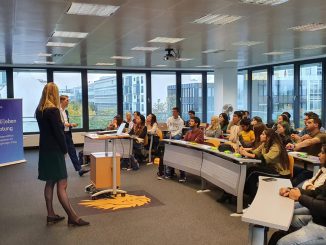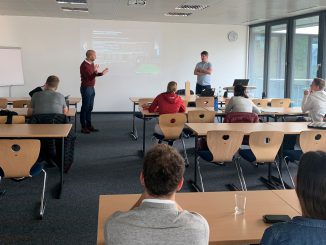
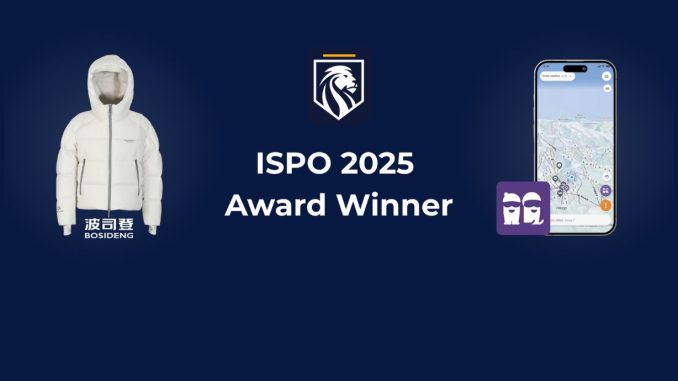
On December 1st, as part of the course Digital Sports Management, we had the opportunity to visit ISPO Munich together with our professor David Wagner. ISPO is considered the world’s leading international trade fair for the sporting goods and sports fashion industry and serves as a central platform for innovation, sustainability, and technological development in sports business.
During our visit, we gained valuable insights into current industry trends, explored several ISPO Award Winners 2025 on site, and also attended the ISPO Brandnew Award Grand Final, where selected sports start-ups presented their innovation concepts.
The ISPO Awards recognize products that stand out due to exceptional innovation, functionality, and sustainable concepts, and therefore actively contribute to shaping the future of the sports industry. In the following, we present two selected ISPO Award winners and explain why these products were awarded, while also reflecting on their relevance from a Digital Sports Management perspective.
Circular Design Fashion and Functional Puffer Jacket by Bosideng
One of the ISPO Award Winners 2025 in the Outdoor / Apparel category is the Circular Design Fashion and Functional Puffer Jacket by the Chinese brand Bosideng. The jacket combines technical performance, fashion-oriented design, and a strong focus on sustainability.
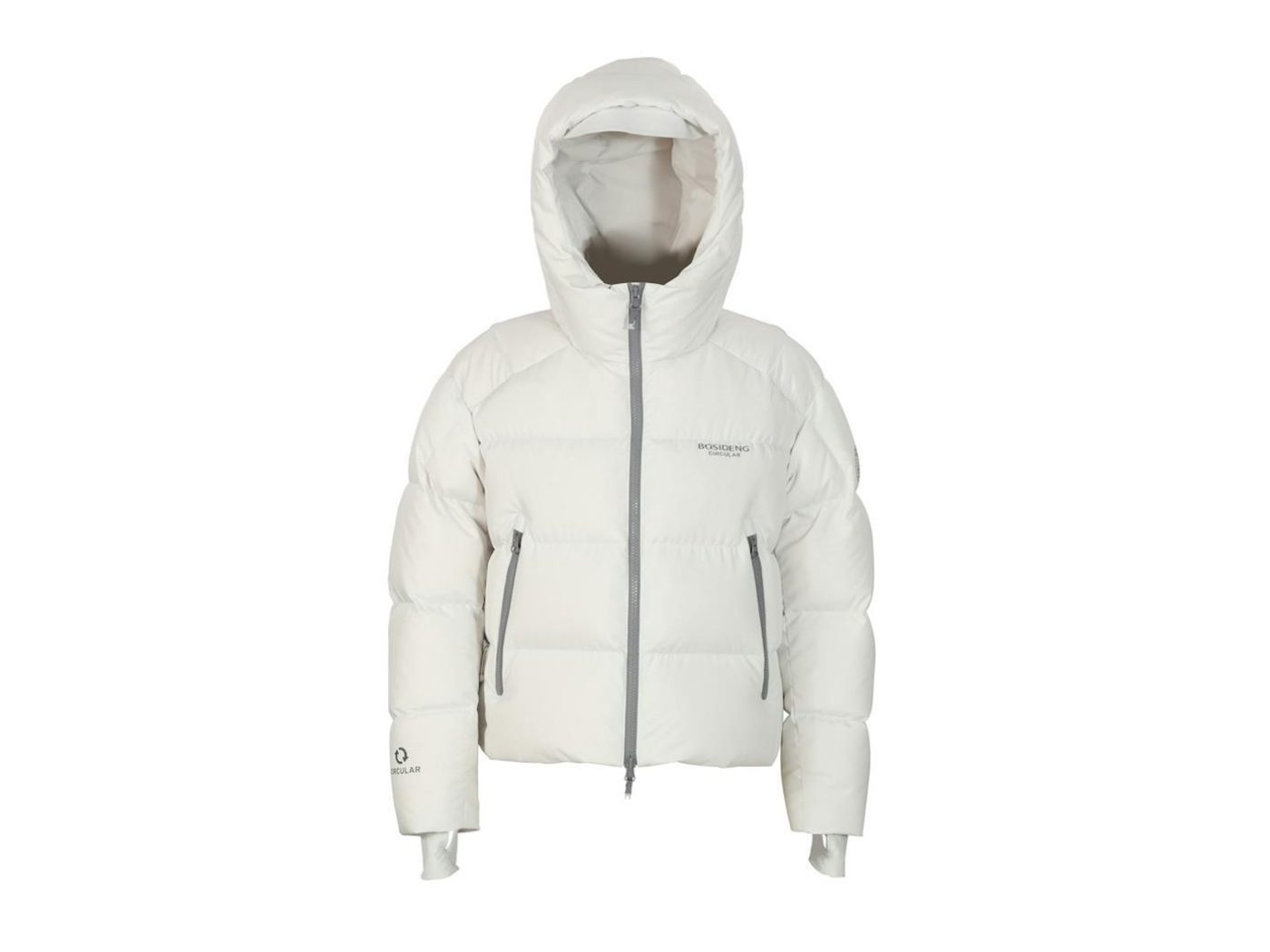
The product was designed for urban mobility, particularly for cycling in winter conditions, and targets modern, active consumers who move between sports, commuting, and everyday life. From a functional perspective, the jacket features body-mapped down insulation, providing warmth where needed while maintaining breathability. In addition, an innovative ventilation system inspired by traditional Chinese Lahua patterns improves airflow during movement and enhances overall comfort.
What truly distinguishes the jacket, however, is its circular design approach, which played a key role in winning the ISPO Award. The jacket is made from recycled polyester monomaterial and recycled down, and Bosideng has developed a new recycling technology that enables the separation of down protein and polyester at the end of the product’s life cycle. This addresses one of the major challenges in functional sportswear: the limited recyclability of garments made from complex material blends.
Another innovative feature is the jacket’s multi-functionality. Using a special folding system, it can be transformed into a shoulder bag, making it particularly suitable for urban environments and changing daily situations. This adds practical value beyond traditional outerwear and reflects a growing demand for versatile sports fashion.
From the perspective of the Digital Sports Management course, the case of Bosideng is especially interesting in terms of digital communication. Despite being an award-winning and highly innovative product, the jacket has limited visibility on Bosideng’s global website and international social media channels. Communication around the product mainly takes place within the B2B and trade fair context, such as through ISPO platforms and industry media. This highlights an important insight: even future-oriented innovations can fail to reach their full potential if they are not supported by a clear, global, and digitally driven storytelling strategy.
Skiif: Digital Navigation and Smart Resort Infrastructure
Beyond product innovation in apparel, ISPO Award winners also include digital solutions. Another ISPO Award Winner 2025 comes from the digital domain: the ski navigation app Skiif. In contrast to many winter sports apps that primarily focus on recording performance statistics, it is designed as a functional navigation and orientation tool for ski resorts.

The app translates complex resort infrastructure into a structured and intuitive digital map environment and supports users in planning routes and moving efficiently within ski areas. It helps skiers find important locations such as restaurants and meeting points, coordinate with friends on the mountain, and share live information about conditions. This creates a community-based information layer on top of the navigation function and improves situational awareness on the slopes. The concept can be described as a navigation platform for ski resorts, comparable to a Google Maps style solution for skiing, enhanced with social and safety-oriented features. The platform is already active in more than 200 ski resorts across Europe and has built a large and growing user base.
The ISPO Award jury particularly emphasized the app’s practical utility and user centered design for real resort environments. In addition to winter sports, the solution follows a multi-sport and multi season approach, which increases its long-term relevance for destinations and brand partners and supports engagement throughout the year.
Viewed through a digital sports business lens, Skiif is especially relevant because it shifts innovation from equipment toward functional digital infrastructure. Its value lies in navigation utility, safety support, and information accessibility alongside hardware performance. At the same time, platforms like Skiif create continuous digital touchpoints between users and resorts, opening opportunities for partnerships, destination communication, and integrated digital services. This also reflects a broader industry development in which sport and digital products are becoming increasingly interconnected and mutually reinforcing. Infrastructure-oriented apps are therefore becoming an increasingly important component of the modern sports ecosystem.
Conclusion: Learning Through Practice
The visit to ISPO Munich clearly demonstrated how closely innovation, sustainability, and digital communication are connected in today’s sports business. Analyzing the ISPO Award winners within the Digital Sports Management course showed that successful sports innovations can take different forms, from advanced and circular product design to functional digital platforms and navigation solutions. In all cases, it becomes clear that new sports solutions must not only perform well, but also be positioned and communicated clearly through digital channels and user focused concepts.
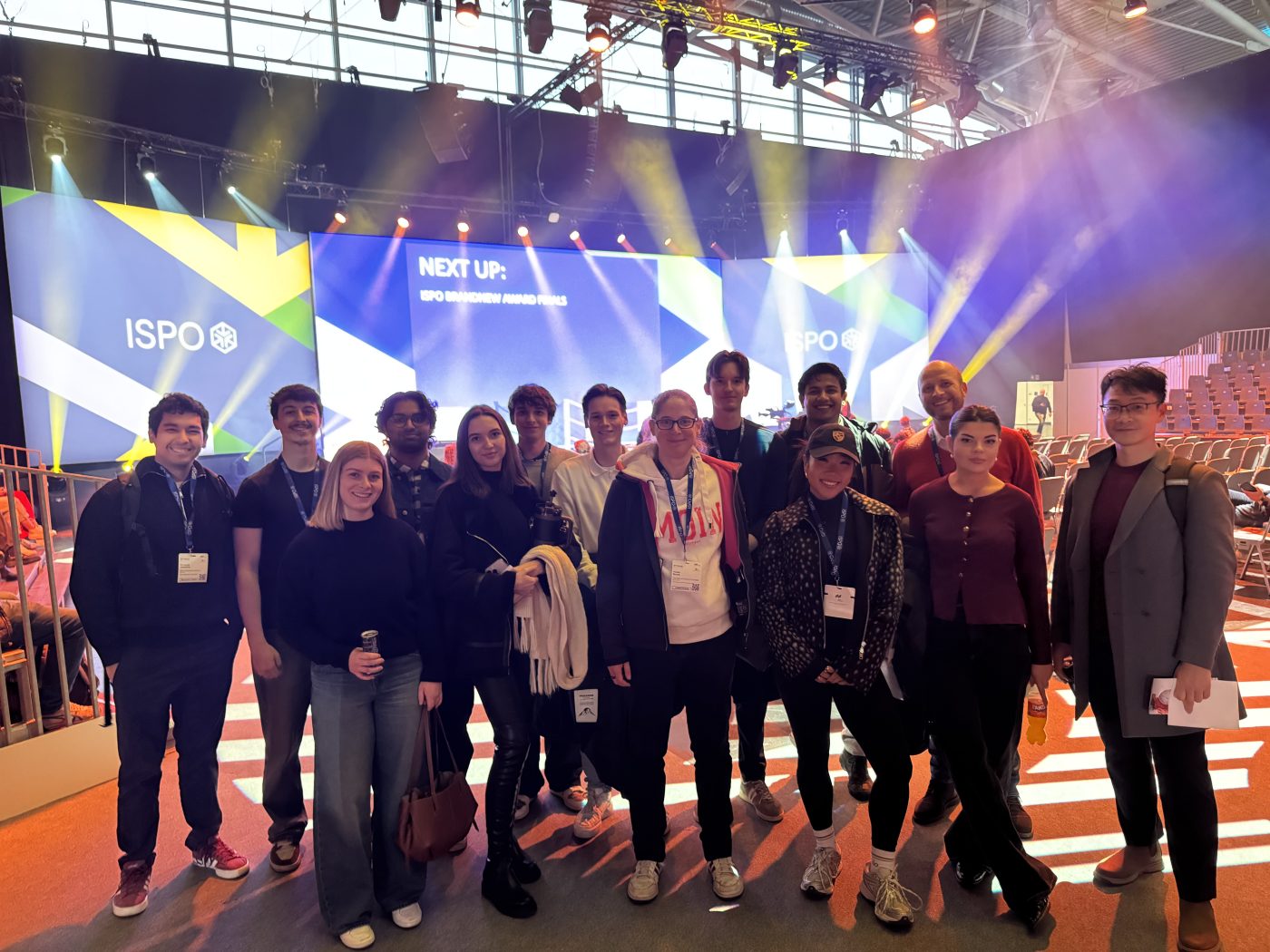
We are very grateful for the opportunity to gain such practical insights as part of our studies by visiting ISPO Munich. Experiencing the sports industry firsthand and engaging with award-winning innovations made the course content tangible and highly relevant. At the same time, we are looking forward to what we will learn in the second semester of our Sports Management and Media master’s program in the course Digital Sports Management – because this experience was definitely just the beginning.