A report on participation in the Engaged Management Scholarship Conference 2026 of the Executive Doctorate in Business Administration Council
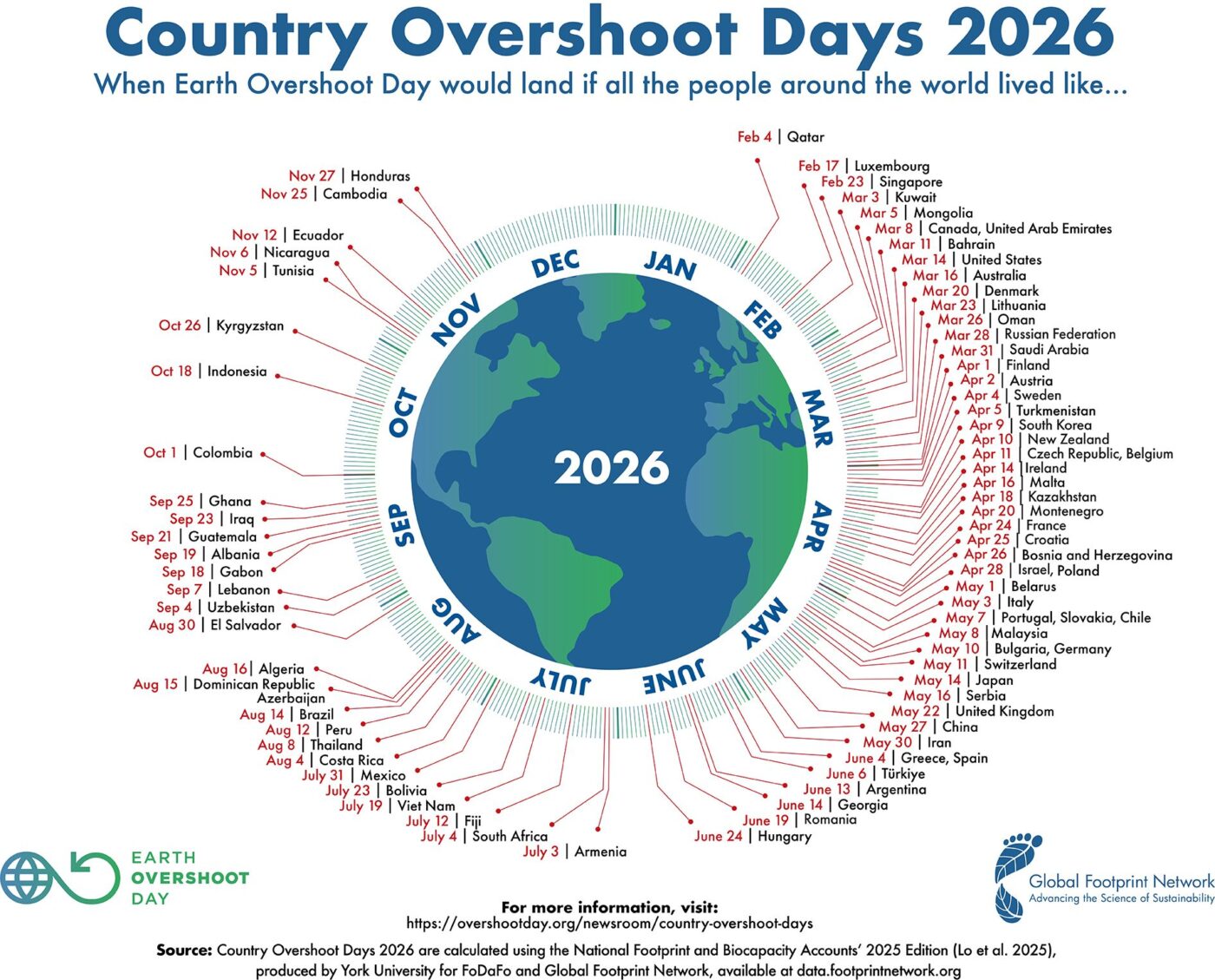
Our planet and our society are changing: the society we live in is drifting apart, with wealth concentrated among fewer people, rising unemployment, and increasing social unrest (Robeyns, 2024). Global warming is already having significant consequences on all species, including humans (Rockström, 2025). These issues stem from today’s economic system, which prioritizes rapid and unlimited growth at the expense of human and natural resources. Humanitarian, social and ecological concerns are not adequately addressed in the current economic framework (Felber, 2018). One example of the impact of our economic system is shown in the yearly “Country Overshoot Days” (National Footprint and Biocapacity Accounts, 2026).
Related to these developments, I submitted after my first workshop at the Annual Meeting of the Academy of Management (AOM) last year in Copenhagen and the third module of my DBA journey according to a renewed recommendation from Prof. Dr. David Wagner, Vice dean and Academic director of the DBA program (Doctor of Business Administration) at Munich Business School, in the spring of this year in time with the official deadline a paper to present the topic of my doctoral thesis on “Human dignity in economics within social and planetary boundaries” on the Doctoral Consortium at the Engaged Management Scholarship Conference 2026 at the Universidad Pontificia Comillas. Fortunately, I was once again accepted so I went (like always by train) to Madrid from 15th to 18th of July 2026. This yearly conference for applied business management showcases every year academic research that drives meaningful change by bridging business growth and success with a positive lasting impact on people, organizations, and society.
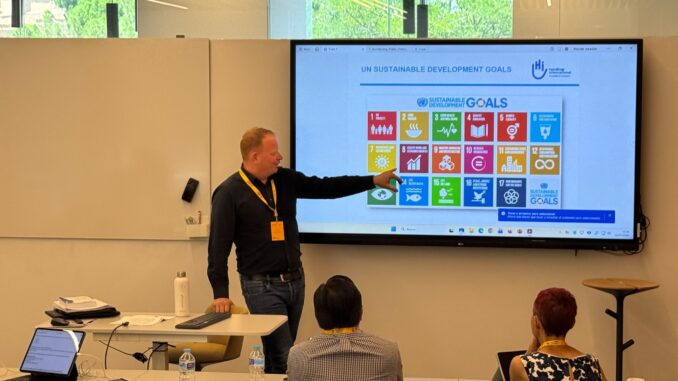
My dissertation examines the rigorous design of a research project aimed at investigating the influence of human dignity in economics on companies, with particular emphasis on the consideration of human rights which are violated by the existing economic model. In its latest report on the global human rights situation, Amnesty International highlights namely the growing threats to fundamental rights and underscores the essential role of human dignity. The organisation warns that universal human rights are increasingly being undermined, placing global respect for human dignity in serious jeopardy (Amnesty International, 2025). Within the study, human dignity is conceptualised as a fundamental value of human existence, because it is anchored in many constitutions worldwide. But its implementation in corporate contexts varies significantly (Kateb, 2011). As such, human dignity constitutes a critical component of sustainable working conditions, as promoted by the United Nations (UN) Global Compact and articulated in Sustainable Development Goal (SDG) 8: Decent work and economic growth. And the promotion of human dignity aligns with UN Guiding Principles of Business and Human Rights (Ruggie, 2011).
The UN Guiding Principles on Business and Human Rights (UNGPs) are a set of 31 principles establishing a global standard to prevent and address human rights abuses in business. They are built on three core pillars: Protect, Respect, and Remedy.
Pillar I: State Duty to Protect Human Rights
Governments have the primary obligation to protect against human rights abuses within their territory and jurisdiction by third parties, including businesses.
Pillar II: Corporate Responsibility to Respect Human Rights
Companies have a global, independent responsibility to respect human rights, meaning they must avoid infringing on the rights of others and address adverse impacts.

Pillar III: Access to Remedy
Both states and businesses must provide effective avenues for victims to seek justice and reparation if human rights violations occur.
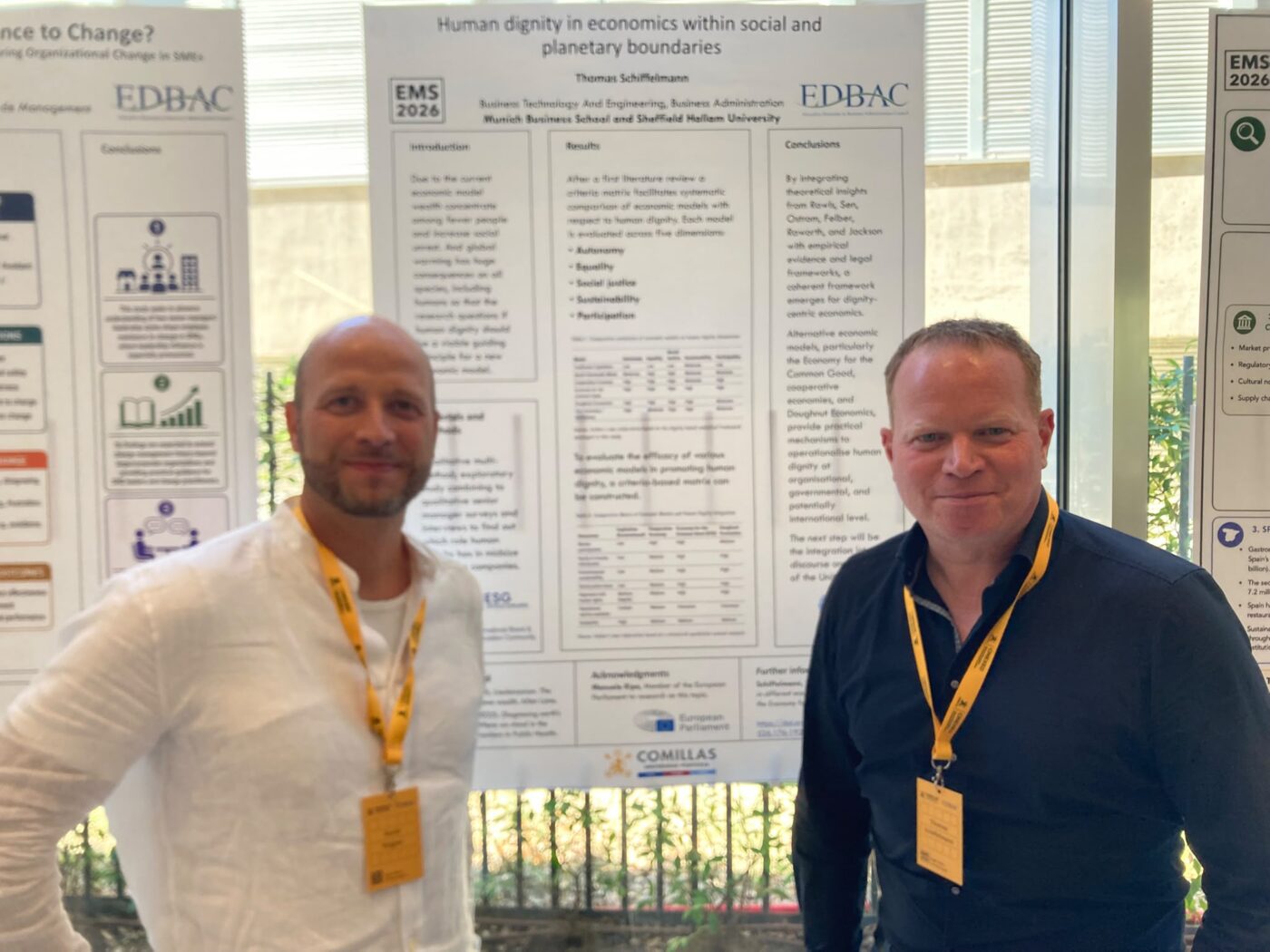
The feedback from the participating doctoral fellows and professors was very valuable and fruitful so that I can finalize now my research design. Additionally, I was asked by the EDBAC Scientific Committee – following the acceptance to the Doctoral Consortium – to develop a poster for the conference that I naturally accepted with pride.
I designed a poster due to my first scientific paper (double-blind peer reviewed) on “Human dignity in economics compared to the Economy for the Common Good” at the “Economy for the Common Good International Conference 2026” in June at OTH Amberg-Weiden (Germany).
And, what’s all about? It is personal connections that define academic conferences, both on and off campus, like a vinery tour as social and pre-event of the “Engaged Management Scholarship Conference 2026” organized by the Executive Doctorate in Business Administration Council (EDBAC) in Madrid. I try to demonstrate with my doctoral thesis on “human dignity in economics” to foster a human-centric approach to beeing together – both within and beyond the academic community.
In summary, the Executive Doctorate in Business Administration Council (EDBAC) organises yearly a high-level conference on applied business management research and runs a scientific journal as well as helpful workshops for doctoral candidates.
Munich Business School is official member so that students can benefit from special conditions and strengthen their networks to academic researchers and practitioners. Personal participation on the yearly conference is highly recommended for everyone who wants to get feedback on its own research, and I encourage all students to visit conferences like the Engaged Management Scholarship Conference that leads to bright ideas and lasting impact.