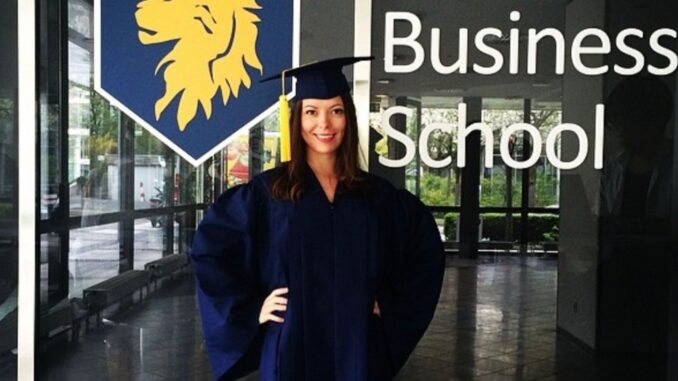
From being part of MBS’s first full-time MBA cohort to building a career at the intersection of e-commerce, fashion and brand management, Alena Kayumova has experienced firsthand how quickly the business world can evolve. Today, as a Senior Key Account Manager at Ralph Lauren, she works closely with wholesale partners, helping translate seasonal strategies into commercial success. But her connection to MBS extends far beyond her studies. Having returned as a guest lecturer and now serving as a mentor in the MBS Alumni Mentoring Program for the third time, Alena believes in sharing the knowledge and experience that have shaped her own journey.
In this edition of Future Forward – Alumni Insights, she reflects on the changing world of digital commerce, the importance of trust and adaptability, and why giving back is so much more than a professional commitment.
Name: Alena Kayumova
Study program and graduation year at MBS: MBA International Business, Graduation 2016
Current position: Senior Key Account Manager at Ralph Lauren
About You
Could you briefly introduce yourself and tell us about your current role?
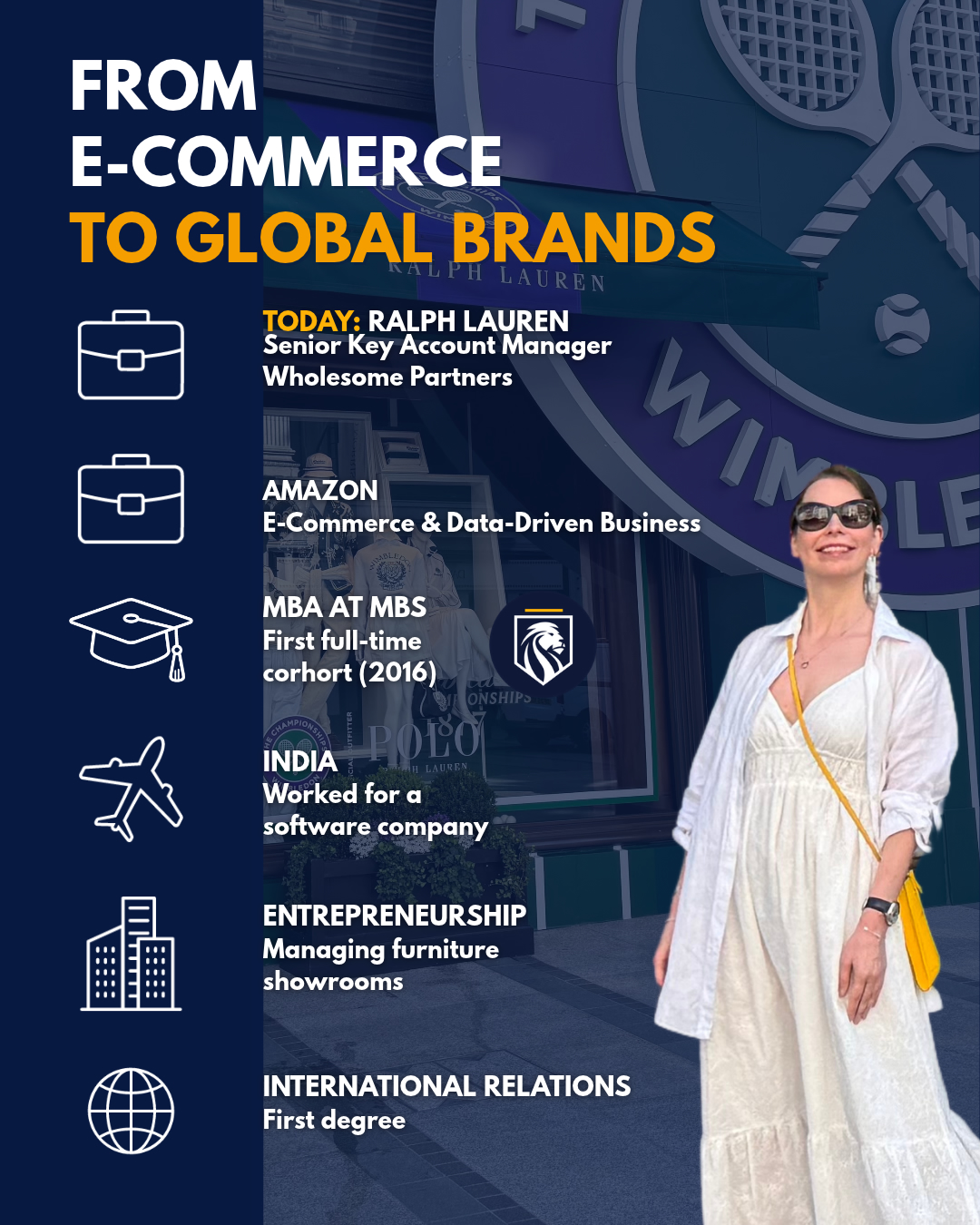
My name is Alena Kayumova, I am 40 years old, and I graduated from the MBA International Business program at Munich Business School in 2016. I was part of the very first full-time MBA cohort, which makes my connection to MBS particularly special.
Today, I work as a Senior Key Account Manager at Ralph Lauren. My responsibilities include selling our footwear collections, aligning seasonal plans and budgets with our partners, monitoring performance and winning new customers. At its core, my role is about building strong, lasting partnerships and working side by side with our partners to reach shared commercial goals.
Before MBS, my path took a few turns. After my first degree in International Relations, I started my own business managing furniture showrooms. It taught me early on what it means to run a business and to work directly with customers. I then relocated to India, where I worked for a software company searching for new customers for its software. It was an amazing experience, and it showed me how to approach new markets and build relationships from scratch. Afterwards, I decided to do an MBA, which had always been my dream.
From MBS to Your Career
What initially attracted you to the world of brands, fashion and e-commerce, and how did you find your way into this field?
I was drawn to e-commerce because I could see that the world was moving online, and I wanted to be part of that change. I see something similar happening with AI today.
What kept me interested was how logical and data-driven the field is. You can measure what works, learn from the results and continuously improve. When I joined Amazon, I felt I had found the perfect environment to learn e-commerce. I consider it one of the best schools for the industry, and working with fashion brands every day made the connection between e-commerce and fashion a natural next step for me.
Has there been a particular moment or experience in your career that had a lasting impact on you?
Joining Amazon was probably the most important turning point. I loved e-commerce from the beginning and quickly understood how the business works: how data guides decisions and how quickly things can change.
That experience still shapes the way I work with my partners today. It taught me to look at performance, understand the reasons behind the numbers and use those insights to make better decisions.
Which skills or qualities have been particularly valuable throughout your career?
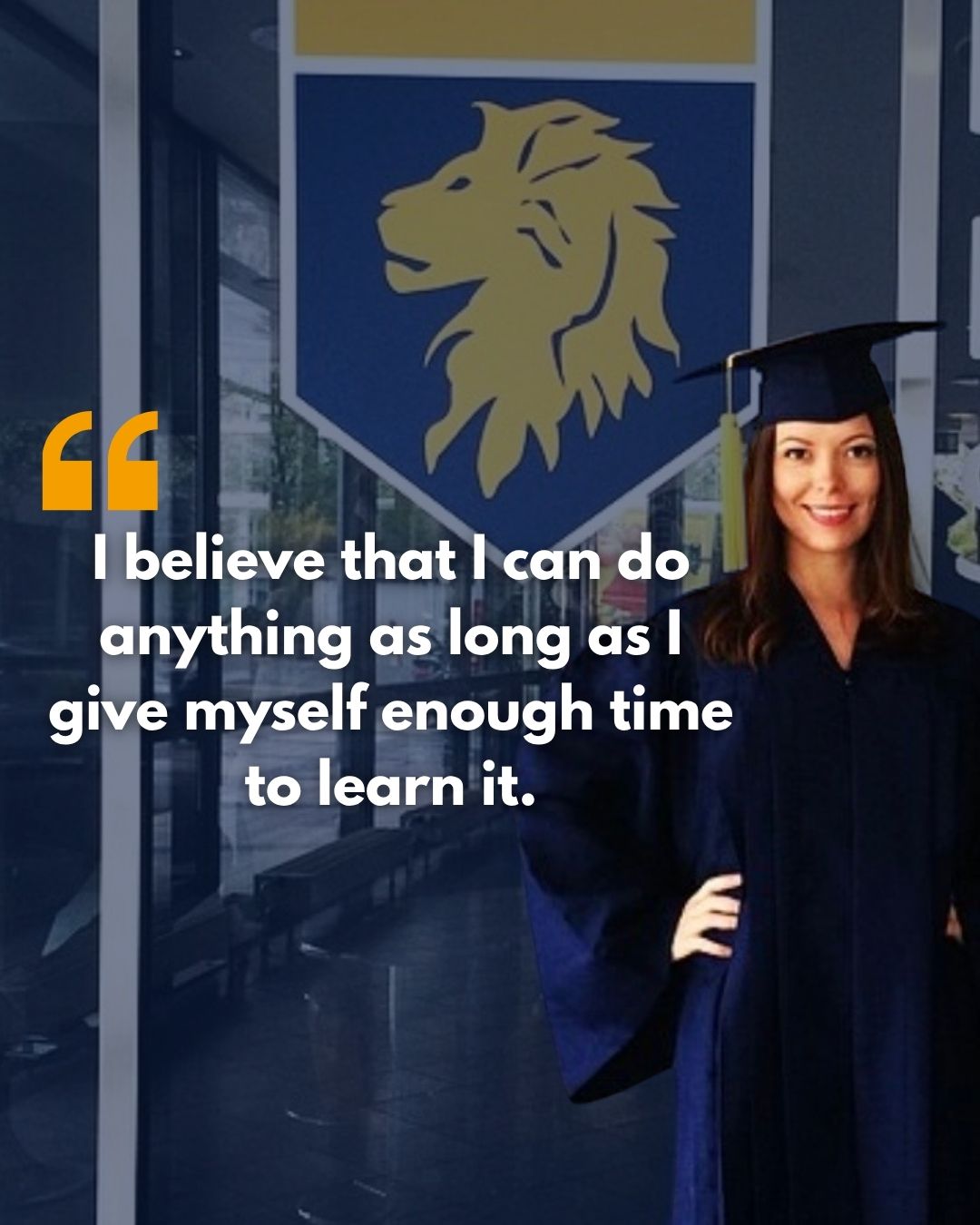
Patience, the ability to learn quickly, communication and the belief that I can do anything as long as I give myself time to learn it.
Patience is especially important in key account management because relationships and results take time to build. Learning quickly has helped me adapt to new markets, categories and tools. And having a positive mindset — believing that a challenge can be solved — has helped me take on new responsibilities with confidence. I also believe that challenges help you grow faster.
The Future of Brands and Digital Commerce
What do you find particularly exciting about the intersection of brand, customer experience and digital commerce?
What excites me most is the pace. Digital commerce keeps evolving, and AI is accelerating that development even further. Online, a brand can serve customers wherever they live, making fashion accessible to people in remote locations who may have limited access to physical stores.
Another fascinating aspect is how many new professions have emerged from e-commerce. Roles such as e-commerce manager, influencer, marketplace manager, SEO specialist, data analyst, and digital merchandiser barely existed a generation ago. Today, they are part of almost every brand, and new roles continue to emerge as AI changes the way we work.
At the same time, brand, customer experience and commerce cannot be separated. Everything, from how a product is presented to how it is delivered, shapes how customers perceive a brand.
What role does a strong brand play in today’s increasingly digital world?
A strong brand matters just as much as it ever did, whether customers encounter it online or in a store. When people have endless choices, a brand is what makes them choose and trust you. Clear positioning is the foundation: a brand needs to know whom it speaks to, what it stands for and how to communicate that consistently across every channel and partner.
This will become even more important as products are increasingly recommended by AI tools. Even when shoppers use AI to explore their options, they still do their own research and look for names they already know and trust. Brands need to make sure that their identity and positioning remain clear in this changing environment.
How has e-commerce changed the way brands connect with their customers, and which developments will be particularly relevant in the future?
E-commerce has made the connection between brands and their audiences faster and closer. Brands can reach their target groups directly, see how customers respond and adjust quickly. Influencers and creators have become important voices too, because their followers see them as people they can trust, not just as advertising.
Looking ahead, I see two particularly relevant developments. The first is AI in shopping. AI assistants are beginning to take over parts of the customer journey, from searching for products to helping people make decisions. The second is the growing connection between content, creators and checkout. Social platforms are no longer just places where people discover products or find inspiration; they are increasingly places where they make purchases.
In both cases, trust is the deciding factor.
What are the biggest opportunities and challenges you see for brands in the digital space?
The opportunities are wide reach, data and speed. Brands can enter new markets, personalize customer experiences and learn from customer behavior in real time. AI can make many of these processes more efficient.
At the same time, I see three major challenges:
- The first is visibility in an AI-driven world. To be found by AI, a brand first needs good product information. It also has to make sure that everything it has built up over the years, its identity and its customer experience, still shows when an algorithm recommends its products.
- The second is trust. People want to be sure their data is in good hands, and many still prefer to make their own buying decisions rather than leave them to AI.
- The third is returns, particularly when it comes to fit. Fashion e-commerce has a much higher return rate than e-commerce overall. I see returns data as valuable customer feedback because it can help brands understand where products, sizing or product information need to improve.
Which developments in your field are you following most closely at the moment?
AI, without a doubt. I believe it will play a major role in the future, and so much is happening in this area.
In Fashion, AI is changing how customers search and make decisions. Shopping assistants are handling parts of the purchasing journey, which means brands need to ensure their products can be found and are presented correctly. AI is also changing the way we work by taking over routine tasks and leaving more room for judgement, collaboration and relationships.
Beyond that, I find it interesting how AI is changing the way companies operate. Consumers have much more information about business processes, and this makes companies more transparent. Customers increasingly want to know where a product comes from, how it is made and how it moves through the supply chain. Brands need to be prepared to answer those questions clearly.
I am curious to see how these developments will shape the way brands and their retail partners work together in the future.
Returning to MBS and Giving Back
What motivated you to return to MBS as a guest lecturer?
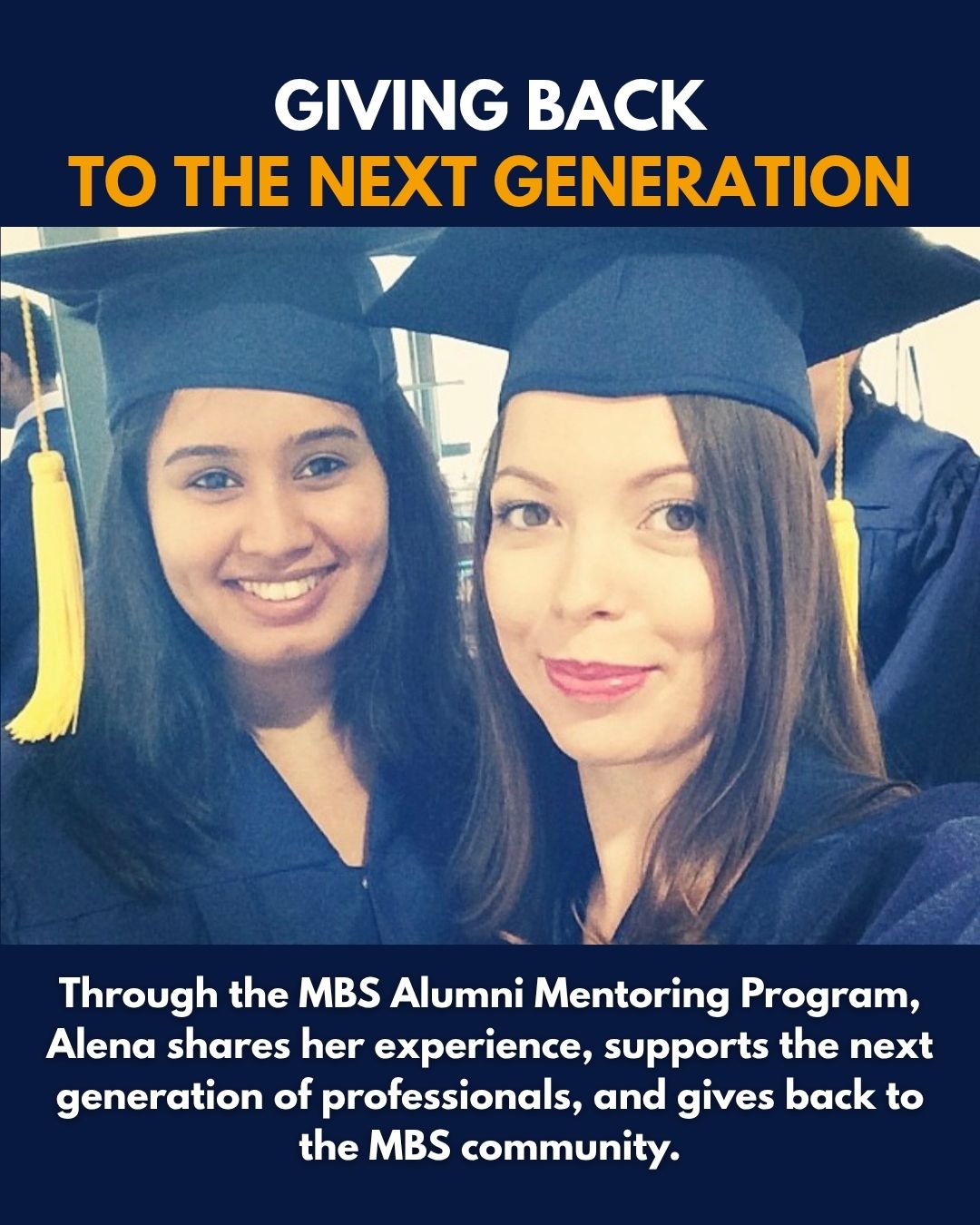
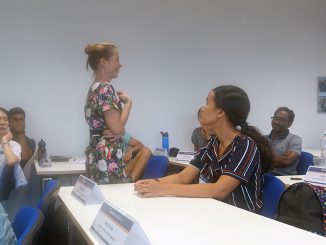
I love sharing what I have learned, and I genuinely enjoy answering people’s questions, especially when I can help someone see their next step more clearly. When I had the opportunity to return to MBS as a guest lecturer, it was an easy decision. Moreover I wanted to become a professor at the university in the past but my career took another direction, so being a guest lecturer is fulfilling that dream of mine.
What skills are particularly How did it feel to return to MBS as an experienced professional, sharing your knowledge with the next generation?important in your industry right now?
It felt wonderful. I came to Germany on my own, and MBS became my home and family.
Coming back as an experienced professional and being able to share what I have learned along the way felt like a way of giving something back. It was a very special experience to return to a place that had played such an important role in my own journey.
What did you take away from the exchange with the students?
What stayed with me most was how engaged the students were. They were curious, willing to learn and asked questions, and I felt proud of them. Their questions reminded me how much energy and potential there is in the next generation.
What does giving back to the MBS community mean to you personally?
It means a lot to me. I appreciate every teacher I have had throughout my life, and giving, in general, is my life motto.
I’ve met amazing people along the way who have supported me, and I want to do the same for others. For me, giving back means sharing my time and what I’ve learned, and helping someone find their own way.
What motivated you to become a mentor at MBS, and what do you hope to contribute to your mentee’s journey?
Since Giving is a part of my life mission and MBS also feels like home to me, becoming a mentor at MBS felt like a natural step.
What I hope to contribute is an honest and encouraging perspective. I can share what I have learned from my own path, and show that a career rarely follows a straight line. I would like to help my mentee build confidence, stay curious, make useful connections and see the next step more clearly.
Your Network
Are you still in touch with fellow MBS alumni, and how has your MBS network supported you throughout your career?
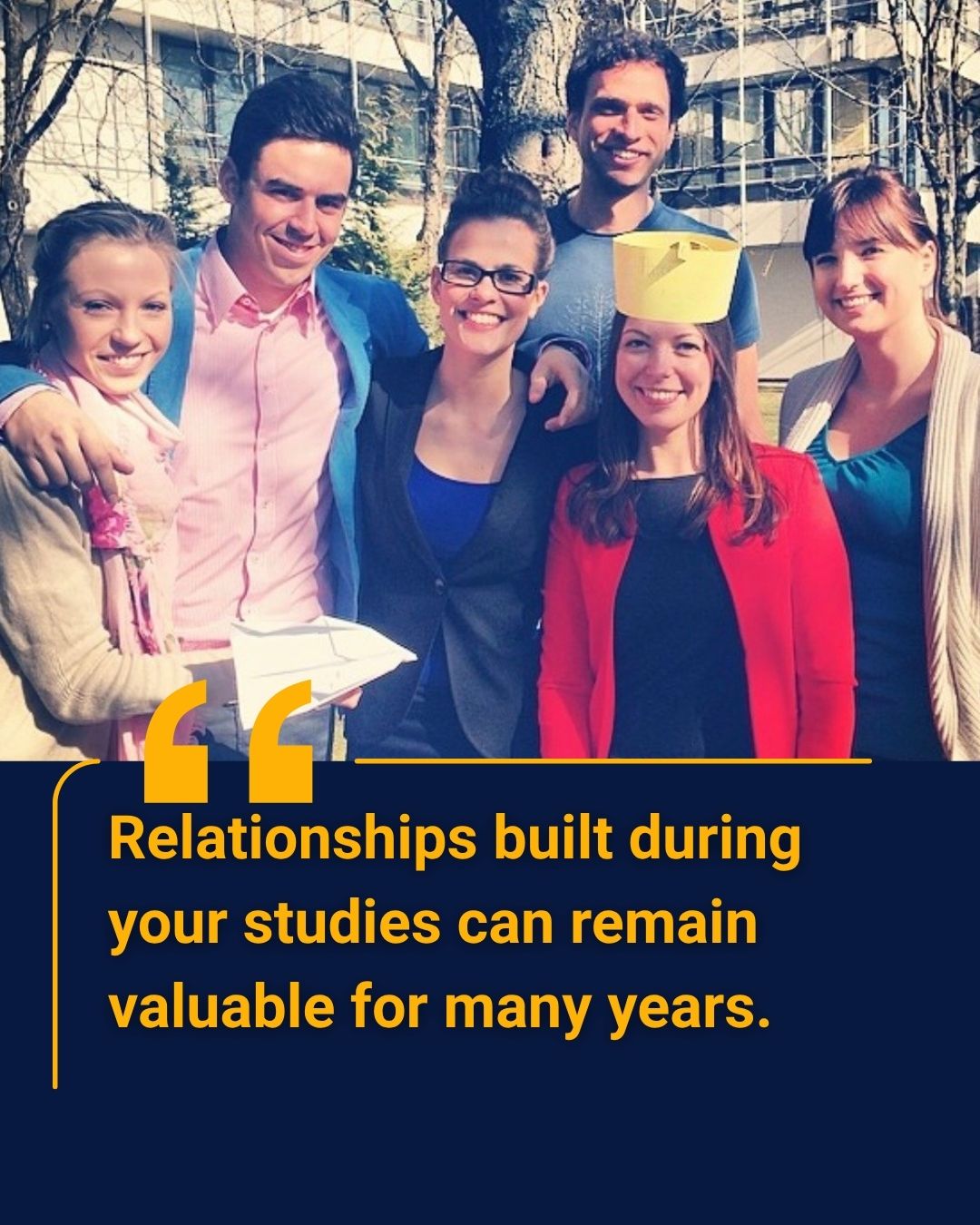
Yes, I am still in touch with fellow MBS alumni, and I really value these connections.
The relationships I built at MBS are ones I continue to appreciate. Friends from your student days offer a level of trust and openness that can be difficult to build elsewhere. I am grateful to have these connections as part of my professional and personal life.
What are your tips for building meaningful professional relationships during your studies and beyond?
First, be curious about people. Ask questions, listen and take a genuine interest in what others do and where they want to go.
Second, support each other. Share what you know, make an introduction when you can and celebrate other people’s success. A good network is built on giving, not only on asking.
And finally, keep in touch. A short message from time to time can keep a connection alive long after your studies are over.
Advice for the Next Generation
What recommendations would you give students who are interested in building a career in e-commerce, fashion or digital business?
Attend events and connect with professionals in the field. Many opportunities start with a conversation.
Be open to different roles at the company you’d like to work for. You do not have to say yes to every job, but a first role that is not your dream position can be a way in. You get to learn the business from the inside, build experience and discover opportunities you might not have considered before.
And accept that your path may be longer than you expect. Do not chase the perfect path; build adaptability instead. Every step teaches you something you may use later.
What should young professionals bring to the table when starting their careers in a dynamic and rapidly changing industry?
Bring curiosity first. Lifelong learning and adaptability are among the most valuable skills as roles continue to change. What you can learn matters more than what you already know, and employers often value how you approach a problem more than a perfect CV.
A working understanding of AI is also important. You do not need to be an expert, but you should know how to use it with good judgement and always double-check the result it gives you.
Finally, bring your soft skills. Clear communication, collaboration and critical thinking are essential, and they are precisely the skills that AI cannot replace.
Be willing to start small, ask questions and keep learning. Nobody expects you to have all the answers from day one. What stands out is someone who asks good questions and values progress over perfection.
The interview was conducted by Dr. Lea Krähahn, Head of Alumni Relations at the Munich Business School.