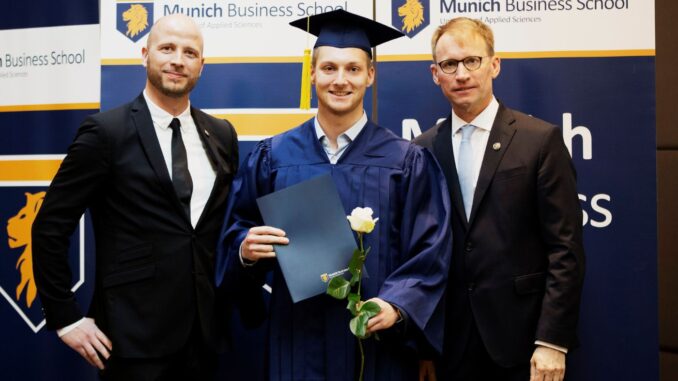
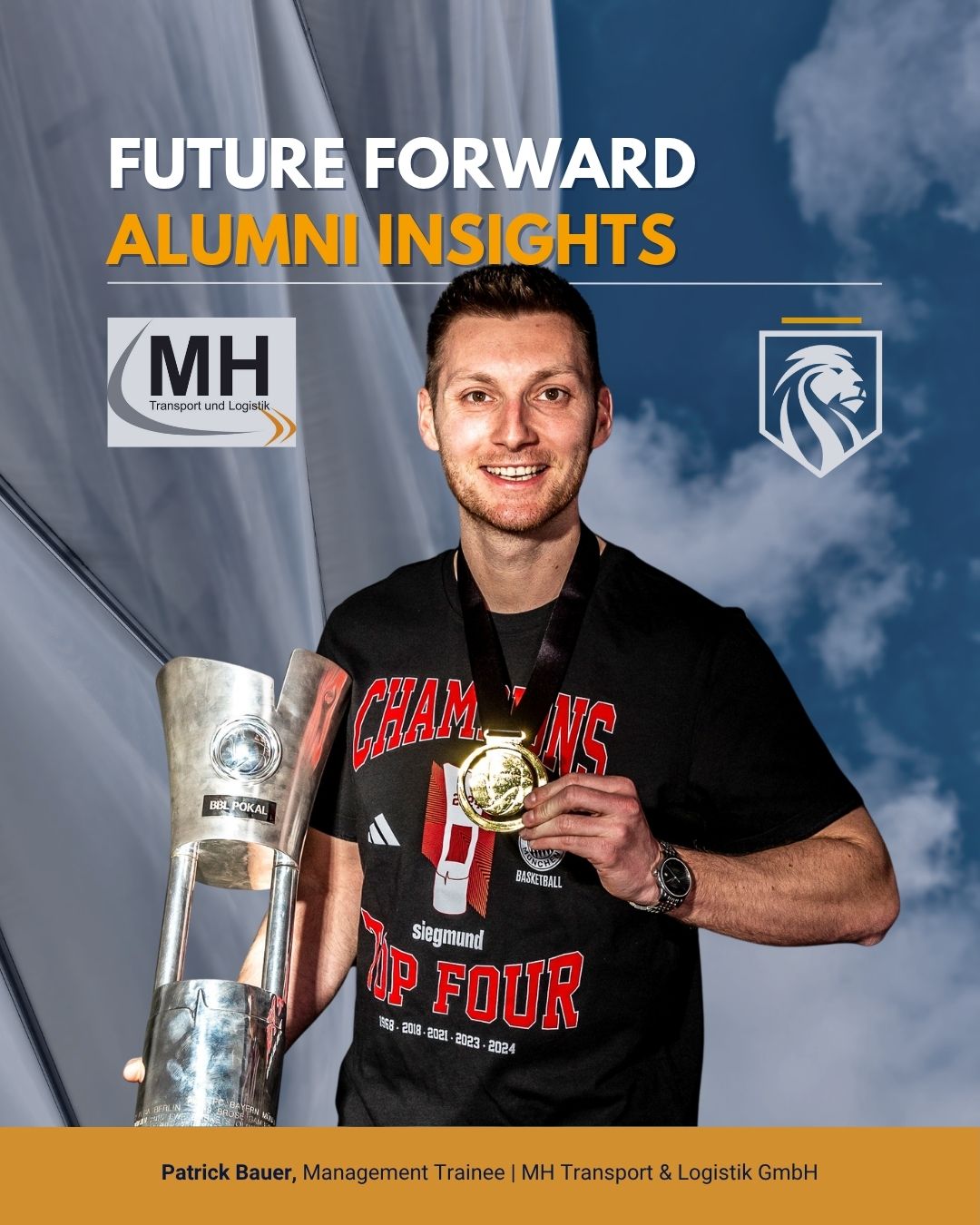
Patrick Bauer, a graduate of the MBS Master’s program in Sports Business and Communication (class of 2018), took a bold step after more than six years with FC Bayern Basketball: he made the switch from the sports business to the logistics industry and joined his father-in-law’s family business. In our new Future Forward Alumni Insights profile, he speaks candidly about culture shocks, personal challenges, leadership lessons from professional sports, and the question of how to successfully blend tradition and innovation in a medium-sized company.
Name: Patrick Bauer
Degree program at MBS: Master’s in Sports Business and Communication, graduated in 2018
Current position in the family business: Trainee Leadership – Getting to know the industry and learning the basics of freight forwarding; handling all day-to-day operations, including driving trucks independently (I obtained my driver’s license and completed my training as a professional truck driver during my first year); driving digitalization forward; refining the company’s image and brand identity; and managing HR matters and employer branding.
You initially worked in the sports industry, including at FC Bayern Basketball. How did you end up on that career path back then?
I’ve always wanted a career in sponsorship. That’s why I pursued the sports-specific master’s program at MBS. Right from the start, I realized that not only the course content but also the network within the sports industry would be valuable to me.
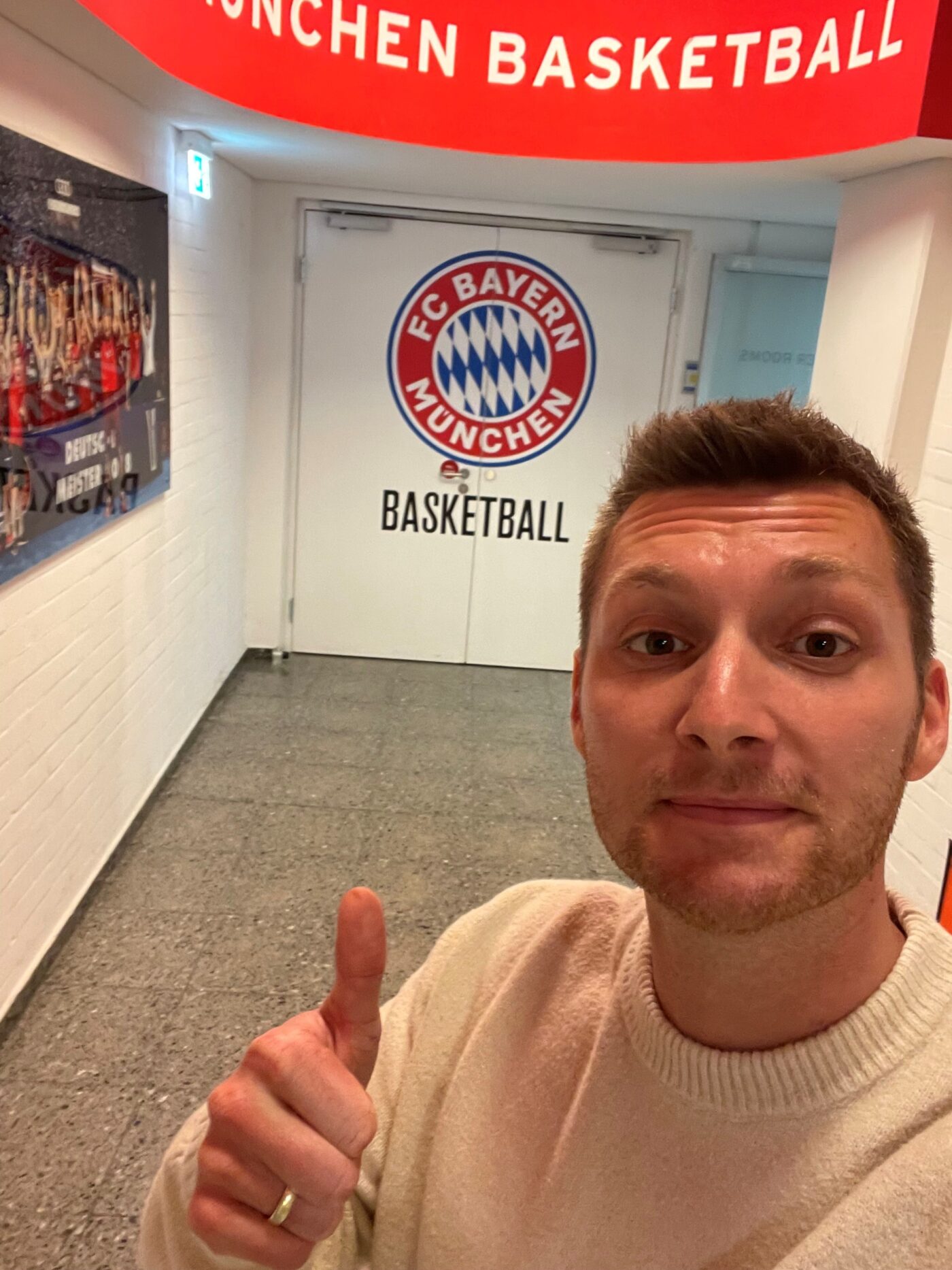
The position at FCBB was actually posted directly on the MBS bulletin board, and I applied for it—as Partnership Relations Manager at FCBB. So I was responsible for managing sponsors and activating contractual sponsorship rights. For me, it was a dream job to kick off my career in the sports business. Even though I’m actually a BVB fan—but basketball is a different story. I had my job interview back then with Hanna Boll and Adrian Sarmiento (also MBS alumni, as far as I know). Hanna was in charge of the sponsorship department back then, and Adrian was the CBO. He’s now the managing director of FCBB. To me, the FCBB project sounded exciting right from the start. When I started in 2018, there was still a real startup mentality there. We were maybe 20 employees. We were at every home game and, of course, out and about at many events in the sports business beyond that. We were also very closely linked to the FCB soccer department.
The early days at FCBB were especially awesome: a young and motivated team, winning the championship right away in 2018 with a championship celebration, partying with the team at P1, meeting Sido at Music Meets Basketball 2018, and so on. As a young guy, those were some wild experiences, but looking back, they also seem kind of surreal. At FCBB, I was part of the entire evolution over the last few years; after starting with traditional partner management, I took on more and more strategic responsibilities and eventually focused mainly on sponsorship sales and marketing FCBB—initially working with agencies and later increasingly through self-marketing. I left the organization the same year the SAP Garden opened. In hindsight, it was actually a good time to leave, because I’d truly experienced and absorbed everything during my 6.5 years at FCBB.
What excited you most about working in the sports industry?
As someone who loves sports, this is truly something special. Being behind the scenes and then cheering for your team at sold-out home games. It brings a team together in a whole new way, because you’re not just working together—you’re also sharing victories and defeats with one another. So you automatically develop a very emotional bond with your employer.
Of course, I was also thrilled by the work in sponsorship. Knowing the amounts that are sometimes paid for marketing services at the arena, or even being there live during contract negotiations when Marko Pesic is sitting at the table—that’s really exciting, and you learn an incredible amount about communication and negotiation. And, of course, there’s the proximity to the sport. At FCBB, the players would often stop by the office and chat with us. Getting to meet Vladimir Lucic, Andi Obst, and Nils Giffey in a casual setting was pretty cool.
In the end, though, it was also the people in general that you regularly run into at conferences like SPOBIS. The sports business is actually quite small, and over time, everyone kind of knows everyone else. It always felt very like a family.
Were there any skills or experiences from that time that help you in the family business today?
The camaraderie and team spirit within the group were truly unique. I’d like to incorporate the culture I experienced in the sports business into my day-to-day work at our family business. It’s especially difficult to foster this sense of togetherness among our truck drivers because they’re on the road all week and rarely come into the office. But I’ve definitely learned that success depends largely on team dynamics and corporate culture. It’s a bit of a culture shock at first when you suddenly start working at a trucking company.
I’ve also learned just how powerful brands can be. At FCBB, the brand’s impact was enormous. When marketing the basketball division, the Bayern logo really always helped us, and many companies wanted to be associated with that brand. That’s why I also want to focus on branding—especially employer branding—here at our company. This could truly become a unique selling point in our industry if we increase our visibility in our region and project a positive image.
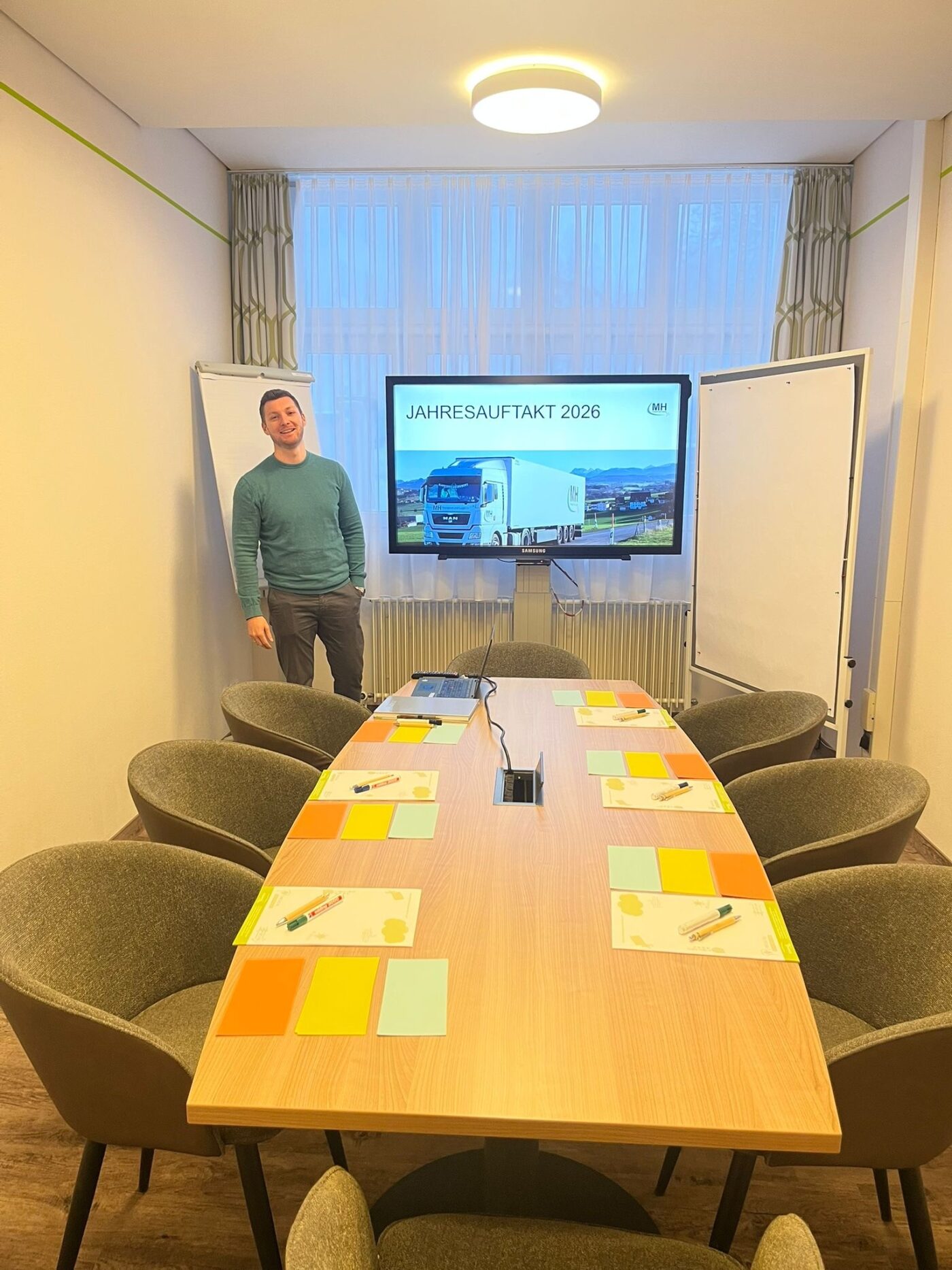
When did you first start thinking about joining the family business?
I’ve been asking myself this question a lot lately, too, and I’m having a hard time giving a clear answer. Probably around the time it became clear that I would be moving to the Allgäu with my wife to start a new chapter in my life there. I had also set myself an ultimatum at FCBB; after more than six years, I wanted to see something different and continue to grow professionally.
Since Kempten was going to be our new home and commuting wasn’t really an option for me, my next career move in this region would have been perfect. However, there aren’t exactly many jobs in the sports industry here. I noticed that my father-in-law had been thinking about what to do with his company. There were really only two options: sell it or find a successor. And from that point on, I started looking into it without really knowing what I was getting myself into. So I made the decision pretty quickly because this presented a once-in-a-lifetime opportunity for me and my family. Maybe a bit naive. But somehow, fate had this path in store for me, and it was the right time to take this step and venture into a family business from a different field.
How did the transition from the sports business to the logistics industry go—and how significant was that change for you personally and professionally?
At first, I experienced total culture shock and felt overwhelmed by the whole situation. Probably because the change was so drastic—not just professionally, but personally as well. It wasn’t just the transition from FCBB to a family-run freight forwarding company, but also the move from Munich to Kempten. So, from one day to the next, I not only had to settle into the company but also find my way in a new city and a new apartment. It was all a bit too much for me, and the early days were very difficult at times.
What made you interested in taking on long-term responsibility in the family business?
What appealed to me most was the personal challenge. I can see how much this challenge is changing me as a person, and I want to help shape and develop the company over the long term. I want to leave my own mark and shed a more positive light on an industry that might seem a bit complex and boring to outsiders.
You’re currently working as a trainee in executive management. What does this role actually entail?
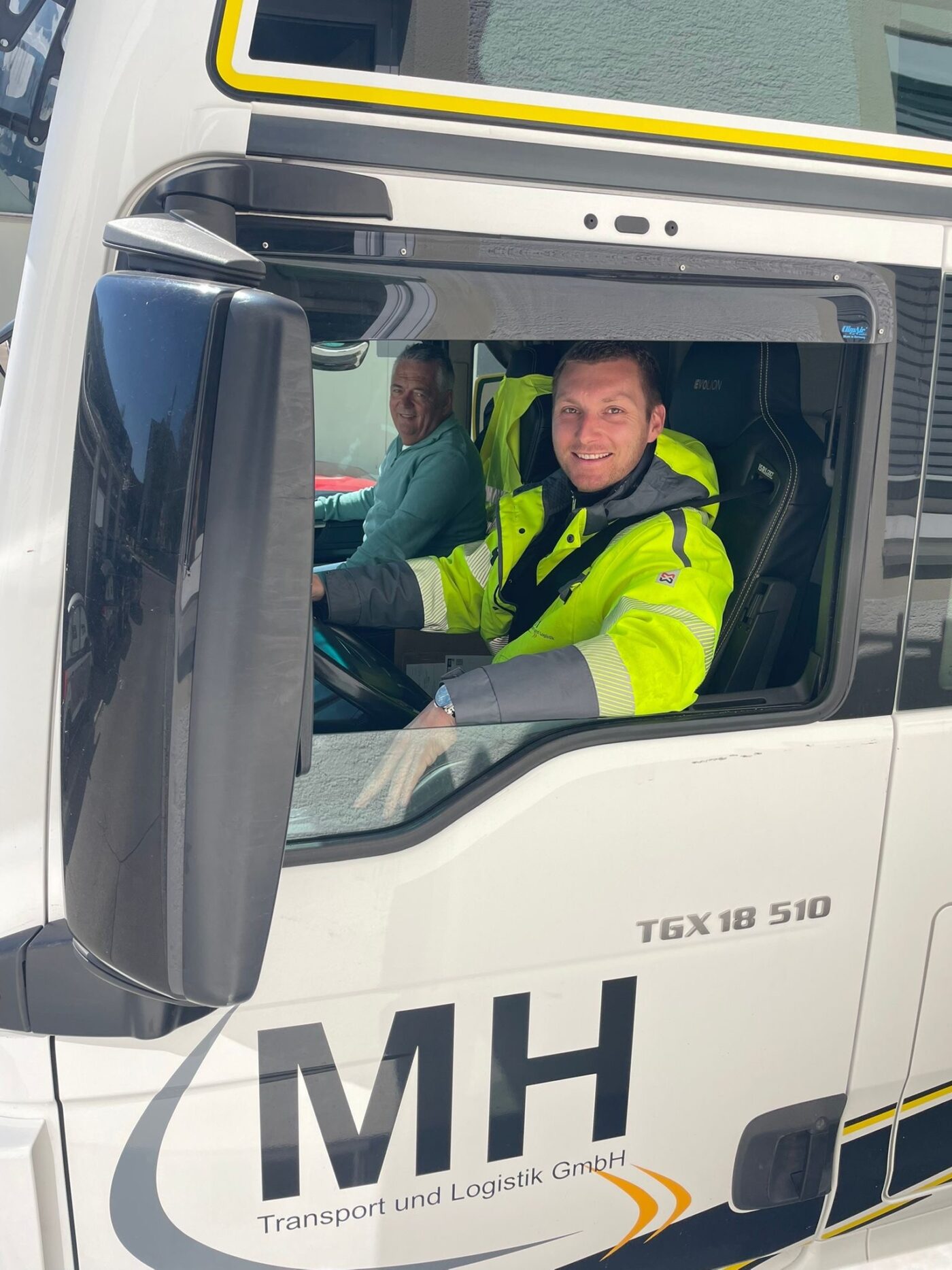
Actually, my job right now is to learn and get to know all areas of the business. Of course, I also have specific areas of responsibility, such as human resources or digitalization. But somehow, you end up doing everything. I sometimes unload trucks with the forklift and even drive a truck myself from time to time. So, a major part of my job right now is figuring out my future role in the company and working together to prepare for the transition. This naturally includes many one-on-one conversations with my father-in-law outside of day-to-day business.
What has been the biggest challenge so far in joining the family business?
My biggest challenge wasn’t the work itself, but my own ego. I had to fight against that regularly at the beginning. You have to accept that you’re becoming a student again and starting from scratch with some topics. In your previous job, you were somebody. Now you have to work your way back up from the bottom. At first, that really eats away at your self-confidence. So at first, you have to take a back seat, even though you actually want to make a difference and help shape things. That requires a great deal of patience.
But what was also really challenging was getting my commercial driver’s license—or rather, training to become a professional truck driver. These days, a regular commercial driver’s license isn’t enough to transport goods commercially. You need this training, and I had totally underestimated that. I’d never had anything to do with automotive technology or mechanics before and had to learn it all from scratch. Sometimes I felt pretty dumb and clumsy, and I often asked myself what I was even doing there.
And what might have pleasantly surprised you?
I quickly felt that the team—and the drivers, too—accepted me. I was particularly surprised by the drivers’ reaction, because they’re naturally aware of my background. It may have been an advantage that I got my commercial driver’s license right away. The drivers really appreciated that, and it helped them connect with me on a personal level right away.
How would you describe your leadership style or corporate culture?
The hierarchy is very flat, and everyone has a say. There are currently six of us in the office, and management isn’t separated from the rest of us—they’re right in the thick of things. That way, you’re always in the loop about what’s going on. The atmosphere is, of course, very friendly, and that’s exactly what sets the entire team and staff apart.
How important is the issue of succession to you right now?
I try to put this topic off for a little while and focus on my daily work and day-to-day business. As I said, my studies are my top priority right now. Still, the topic is very much on my mind because I believe it requires a lot of communication, and everyone has different ideas and needs. By that, I don’t just mean my father-in-law and me, but also my wife (who, by the way, isn’t employed by the company), my mother-in-law, and, of course, the entire team.
I think it’s important to address these issues early on and discuss them regularly with everyone involved. However, this often gets neglected in the day-to-day business. That’s why we have to consciously set aside time for it again and again and block off meetings.
Are there any values or principles from the family business that you particularly appreciate and would like to carry forward in the future?
Our personal relationships with customers and service providers, as well as the high quality and reliability we ensure every day. As a medium-sized business, you have to be better and more reliable than the big players. Otherwise, you won’t survive.
At the same time: Are there areas where you’d like to bring new ideas to the table or make changes?
There’s a lot to be done when it comes to digitalization. AI also offers great potential for the industry and small and medium-sized businesses. In addition, image and brand building are issues very close to my heart. I’d like to increase brand awareness and further refine and expand our brand image—especially since this is often not a priority for freight forwarders.
What motivates you the most personally about the path you’re on right now?
The opportunity to help shape a company’s future. Working independently and driving the transformation toward digitalization. Reimagining freight forwarding and logistics by drawing on my background in the sports industry.
For some time now, you’ve also been sharing your transition from the sports industry to the family business very openly and thoughtfully on LinkedIn. What motivated you to take this path and share your thoughts?
I’d been thinking about sharing this transition and my story on LinkedIn for quite some time. At first, I thought it was still too early and that I should wait until I’d truly settled in and the transition was complete. But then I decided to share these topics right in the middle of the process—while they’re still fresh and my feelings and thoughts authentically align with the content. In hindsight, it might have been difficult to recount everything in such detail. There’s also a long-term vision behind this: to position myself as an entrepreneur and link the company brand with my personal brand. Ultimately, of course, I also want to increase awareness of our company and build an authentic brand.
In addition, I’d like to talk even more in the future about everyday life in the trucking and logistics industry and portray the sector as cool and attractive. I think that could be an exciting and varied alternative on LinkedIn. So really, showing the freight forwarding business behind the scenes: What challenges do we face? What do our drivers accomplish every day? I think the profession of truck driver is often viewed too negatively in Germany. But when you see what these people accomplish every day, they deserve much more recognition and appreciation. I’d like to address that openly as well and use my reach to support that cause.
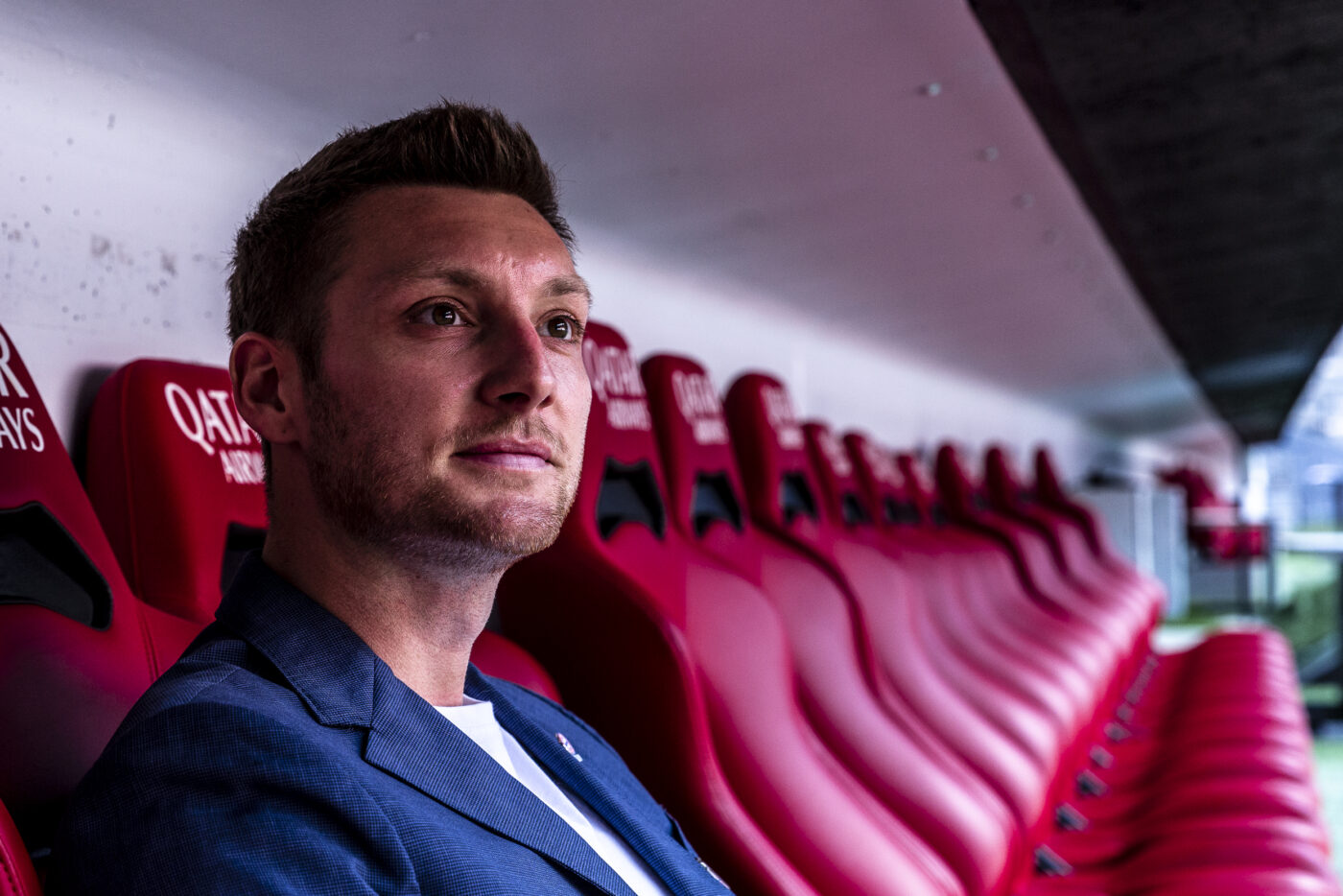
Sports, Business & Leadership – Lessons from Two Worlds
What differences do you see between the world of professional sports and the logistics industry?
Looking back, the world of professional sports sometimes seems like a rose-colored bubble to me. Of course, there’s a lot of money at stake, especially in sponsorship, and that means you end up dealing with trivialities every now and then. The logistics industry, on the other hand, was a real reality check for me. You’re so close to the business world here, and you realize what problems have to be solved every day to keep supermarket shelves stocked or to ensure that a sporting event can even take place.
Are there parallels between the sports business and family-owned businesses that many people might not even expect?
For me, it’s definitely the family-like atmosphere and the communication on an equal footing.
What have you learned from the sports industry about leadership, teamwork, or performance?
It was at FCBB, in particular, that I learned how important culture is to success. FCBB has created a genuine basketball culture in Munich, and that has been instrumental in its rapid and successful growth. You need people who identify with your brand or your club. FCBB has understood this very well and has been able to compete successfully in Europe in recent years, even though its budget is nowhere near as large as that of other European clubs.
The FCBB has relied on players and staff who believe in the vision and who value professional structures. Ultimately, you need people who are happy to be part of this story and this family and who are 100 percent committed. That’s the only way to achieve long-term success.
How does this background influence you today in your work and in your collaboration with others?
I think it’s similar in our day-to-day work and in business in general: People should always come first. I want to create a corporate culture where everyone feels comfortable and knows their value. It’s only with this sense of togetherness that we can set ourselves apart from others. You don’t just feel this internally—customers and service providers notice it, too.
In my opinion, personal relationships will become even more important. At the same time, regular communication is essential for a functioning corporate culture. Only when there’s clear communication about what our shared path should look like can everyone pull together. That’s why I’m also a big fan of an overarching vision and clear values that every employee can use as a guide.