

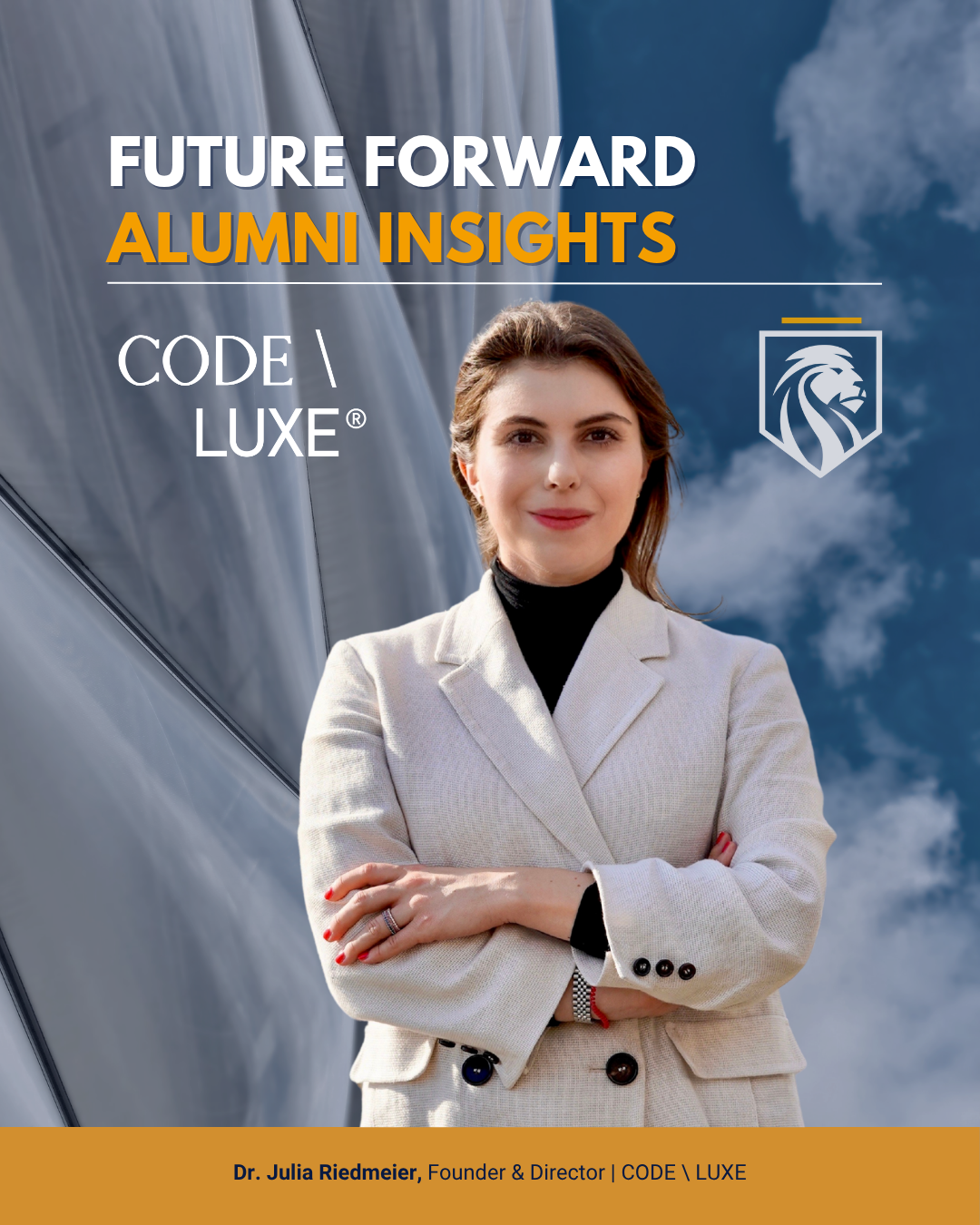
Dr. Julia Riedmeier is an alumna of the International Business master’s program (2015), founder and director of Code \ Luxe, and an expert in luxury strategy. Through her strategy studio, she combines her passion for luxury with international practical and research experience. In this interview, she discusses the origins of Code \ Luxe, the unique challenges of the luxury industry, the connection between entrepreneurship and teaching, and why a clear vision, curiosity, and a willingness to continually adopt new perspectives are crucial to her journey.
Name: Dr. Julia Riedmeier
Degree from MBS: Master of International Business, graduated in 2015
Current position in the family business: Founder & Director of Code \ Luxe and expert in luxury strategy
How did the idea for your strategy studio come about—and how has your passion for the luxury sector been reflected in it?
During the master’s course “Success Factor Happiness” with Professor Schmidkonz, we worked with the MPS model (Meaning, Pleasure, Strength). This model helped me define my direction and my personal goals. Since then, it has served as my compass.
Founding Code \ Luxe in January 2021 was therefore a logical and natural progression. I knew not only what brings me joy, but also how I can use my strengths to support others and guide them in their endeavors.
What motivated you to apply your expertise in the luxury sector to entrepreneurship and start your own business?
Luxury brands fascinated me from an early age. I wanted to understand the mechanisms behind the brands and their codes. And above all, what exactly triggers that fascination in clients.
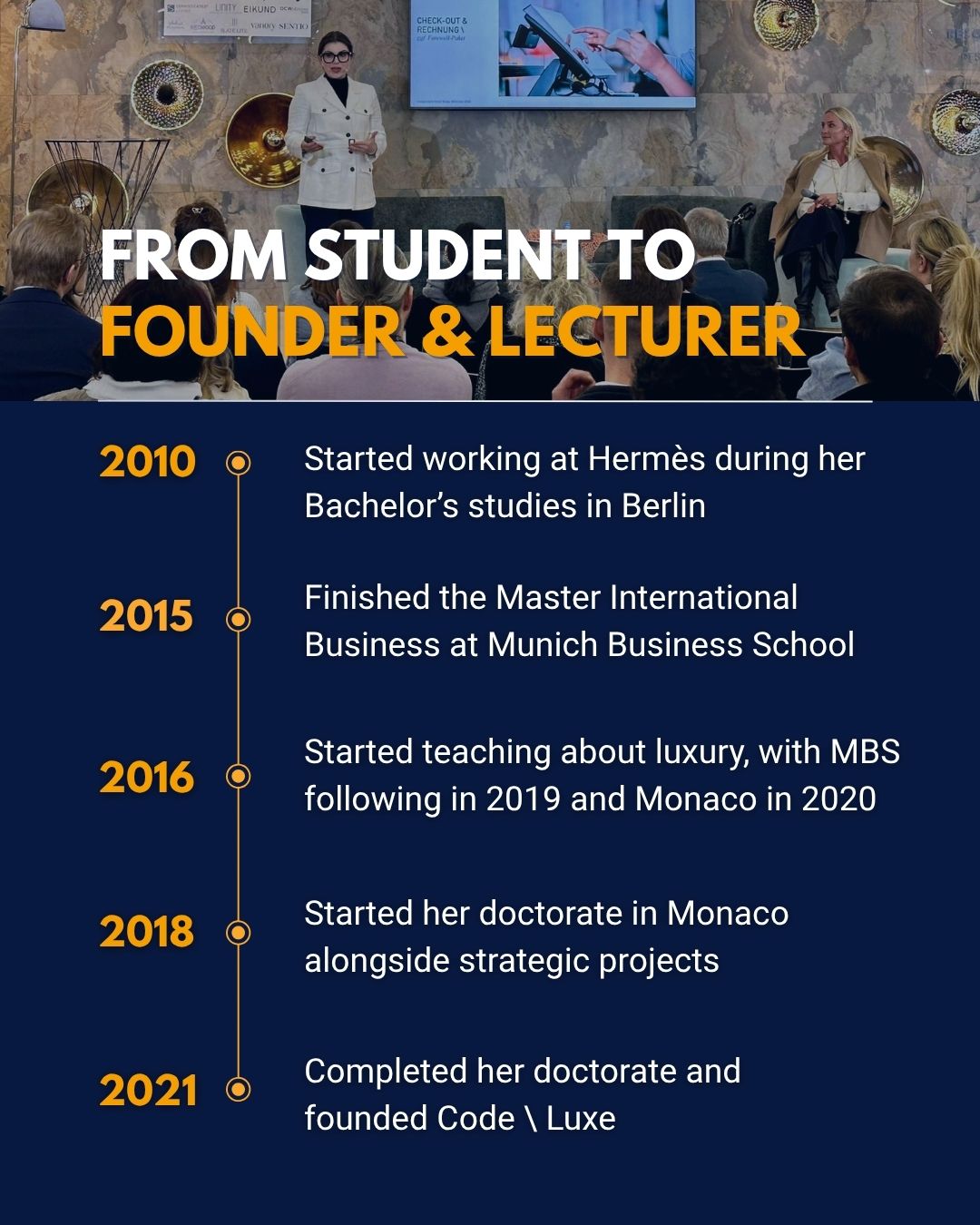
During my bachelor’s degree in Berlin, I worked at Hermès. I then took on my first independent project for the company in 2013, which was a great honor. All the subsequent projects and people I encountered also shaped my path and showed me that I wanted to combine my expertise and passion for luxury in an entrepreneurial way.
What kind of luxury companies do you advise today?
I work with international DAX-listed companies as well as with passionate founders. It’s precisely this diversity that I find exciting, because it constantly gives rise to different perspectives and questions.
In which specific areas do you support your clients?
The topics are as diverse as luxury itself. That’s why no two projects are alike. Each one is, in a sense, like a tailor-made suit.
The spectrum ranges from trend research and professional development programs to holistic brand or client strategies. The key is always to understand the unique identity of each company and the mindset of its clients.
What sets Code \ Luxe apart from other consulting firms in the luxury sector?
Code \ Luxe was originally founded as a strategic consulting boutique and has since evolved into a strategy studio with its own academy, magazine, and products. It is a unique ecosystem that is constantly evolving.
This requires international practical and academic expertise, an entrepreneurial spirit, and, above all, passion to pursue such a labor of love over the long term.
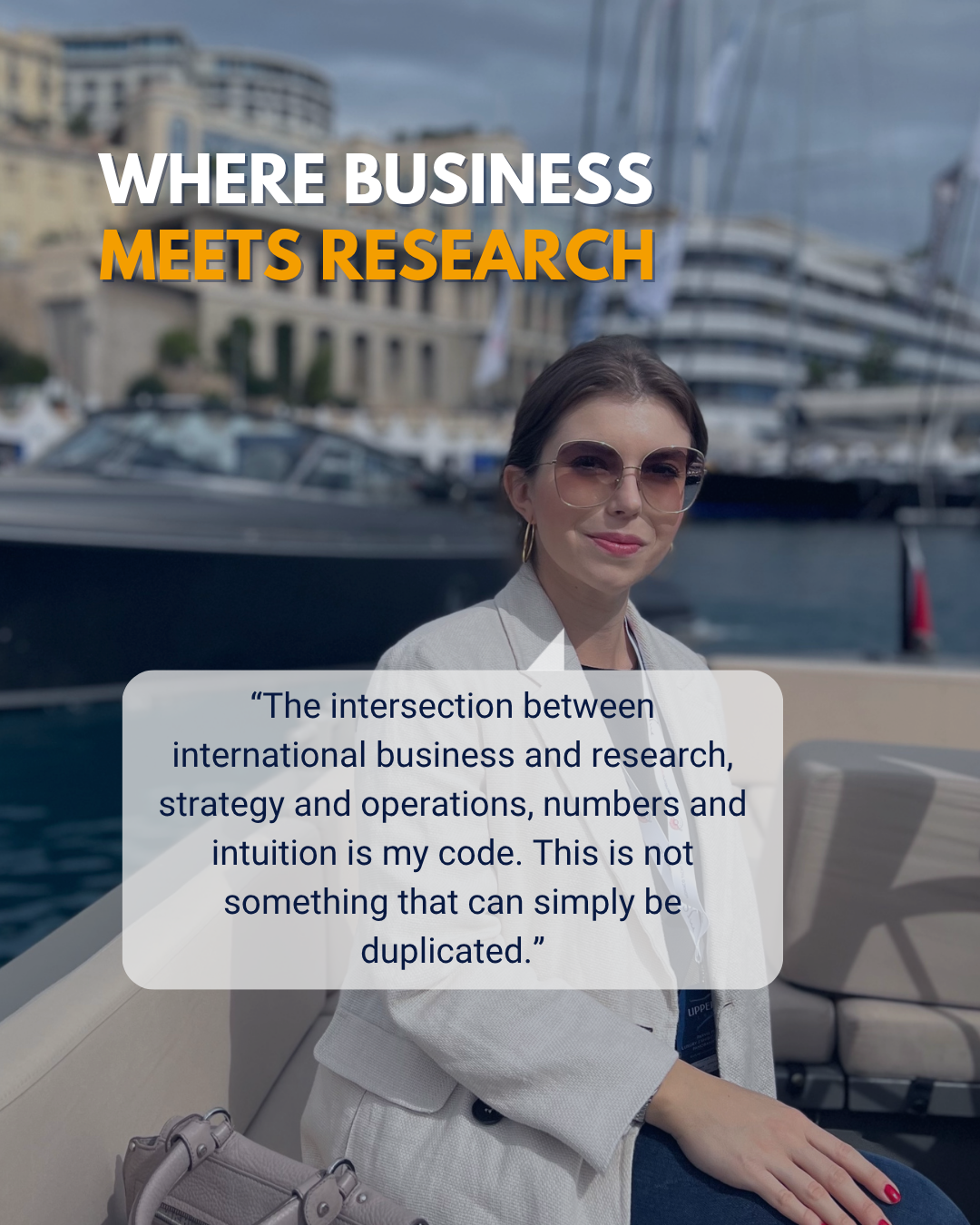
The intersection of business and research, strategy and operations, and data and intuition is my code. And that’s not something that can be easily copied. “Beyond the usual luxury” and “Strategy and education through reflection” are my guiding principles.
What specific challenges does founding and leading a consulting firm in the luxury sector entail?
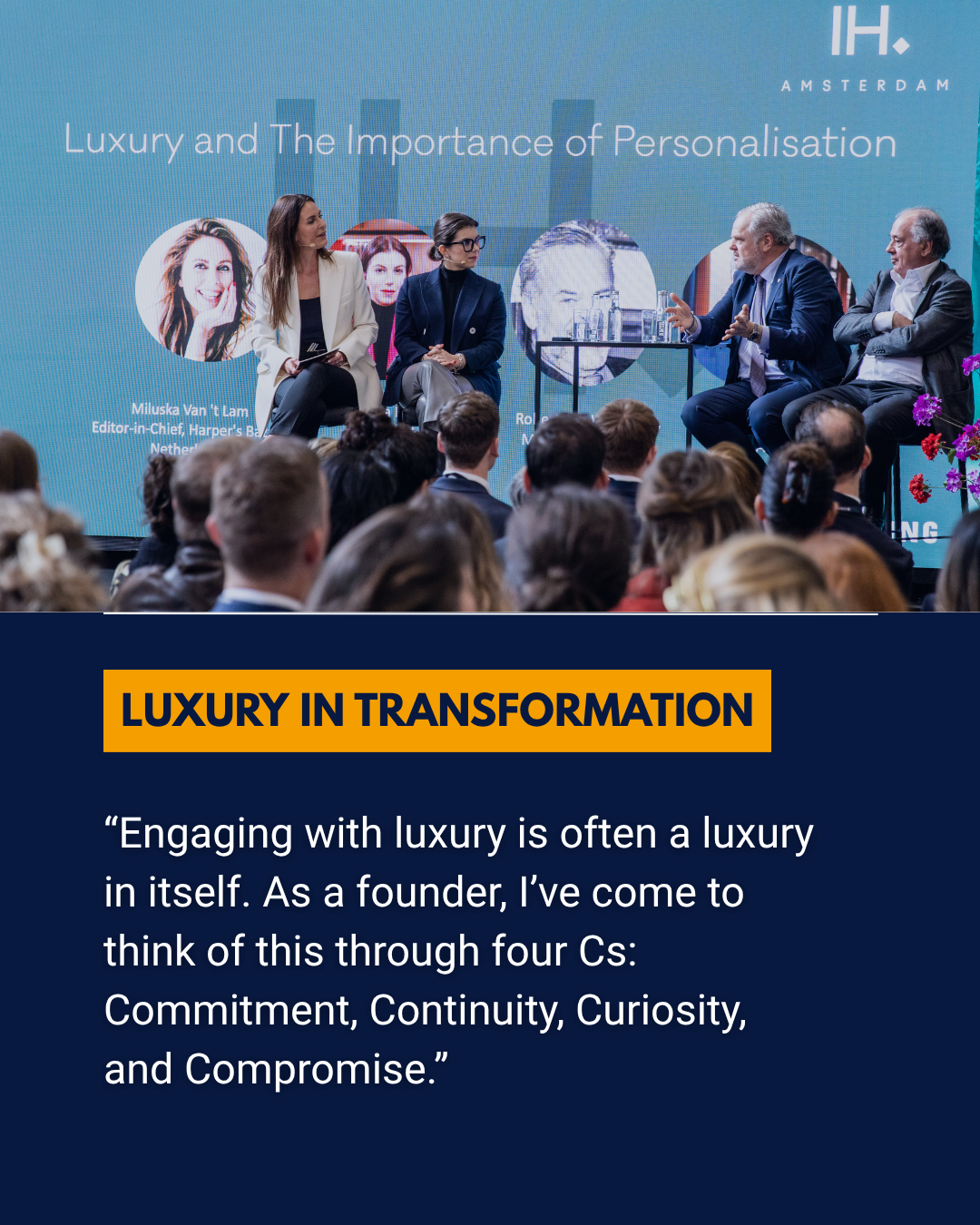
Luxury is undergoing a transformation and, at the same time, is heavily experience-based. This requires innovation and investment. Engaging with luxury is therefore often a luxury in itself—one that you have to be fully committed to.
That’s why I often talk about the 4 Cs: Commitment, Continuity, Curiosity, and Compromise. These four aspects guide me both in my work and in the ongoing development of Code \ Luxe.
Was there a moment or a project that was particularly formative for the development of your studio?
On the one hand, I’m deeply honored when leading global luxury brands want to collaborate with me and value my work. On the other hand, it’s a special recognition when international media outlets reach out to me for expert commentary. Both show me that the combination of practical experience, academic expertise, and my own perspective on the market is perceived as meaningful.
How do you deal with uncertainties, high expectations, and the demand for quality in the luxury sector?
For me, this is less a single strategy and more of an attitude and a constant. A commitment to excellence is simply part and parcel of the luxury sector.
Where do you currently see the greatest opportunities and risks for luxury companies—especially from a consulting perspective?
Luxury is changing, and so are clients. As a brand, failing to question yourself just because things are going well right now is an attitude you simply can’t afford in today’s world. At the same time, inspiration and external input should never become a luxury. On the contrary: they’re essential for staying relevant.
What advice do you give to MBS students who are considering starting their own consulting firm or going into business for themselves in the luxury sector?
A question I’m often asked is whether people in the luxury industry earn “luxurious” salaries. The luxury industry is like any other industry, but it thrives especially on the passion and the people behind it. And self-employment isn’t right for everyone, either.
My recommendation, therefore, is to gain as much experience as possible in a variety of fields, always go the extra mile, and offer real added value through meaningful, innovative solutions.
A solid understanding of entrepreneurship and luxury is essential here.
Teaching & Entrepreneurship—Two Worlds, One Profile
How did you come to teach alongside running your own business?
I’ve been teaching since 2016, and for me, it’s always been a natural (project) part of my self-employment and a seamless progression.
At first, I taught the “Distribution and Communication of Luxury” module once a year near Frankfurt. In 2019, I also took on the role of module director for the luxury specialization in the master’s program at MBS. Then, in 2020, I began teaching in Monaco, where I was still pursuing my DBA at the time.
To what extent do your students benefit from your practical experience as a founder?
I continuously adapt each lecture based on new market developments, observations, publications, as well as my business trips, conference attendance, and my own research.
As a result, in addition to academic and fundamental knowledge, students also gain practical and up-to-date insights into industry developments.
Conversely, are there any insights from teaching that also help you grow as an entrepreneur?
The exchange with international and younger students is particularly valuable. Discussing current developments from different cultural perspectives consistently opens up new ways of thinking.
How do you manage the balancing act between entrepreneurship and teaching in your day-to-day life?
For me, it’s not really a balancing act. The two flow seamlessly into one another and are intertwined. To do justice to both my students and my clients, I set aside specific blocks of time. That way, every “project” gets my full attention, and at the same time, it’s clearly defined when I’m focusing on which topic. Organization is everything.
Are you still in touch with other alumni?
Yes. On the one hand, I’m still good friends with some wonderful people from my master’s class. On the other hand, I’m in occasional contact with former students who have gone on to work in the luxury industry.
And, of course, you also stay connected with many people through LinkedIn.
What tips do you have for successful networking during and after college?
Networking is essential. That’s what I tell my students, too.
My advice, therefore, is to take advantage of the many opportunities that arise during your studies and to develop your skills and etiquette naturally over time. Networks aren’t built solely through individual contacts, but through long-term relationships and authentic interactions with one another.
What advice would you give your former student self?
The master’s program, in particular, goes by incredibly fast and offers many great opportunities that can shape your future and have a lasting impact on you personally.
In my case, I’d do it all over again exactly the same way. It’s best to have a clear vision for yourself and to think about how your decisions will impact your future.
And perhaps that is the most important lesson I’ve learned from my own journey: A clear vision provides direction, but it’s the curiosity, the experiences, and the people along the way that allow you to create something truly your own. In that regard, a big thank you to everyone who has walked this path with me!
The interview was conducted by Dr. Lea Krähahn, Head of Alumni Relations at Munich Business School.
Find Dr. Julia Riedmeiers website here.