The economic cycle can be represented in different models that emphasize different aspects of economic interactions. The simplest models include only the basic actors, while more complex models integrate additional elements such as the state and foreign countries. These models help to understand the basic mechanisms of the economy and to analyze the impact of changes in one part of the cycle on the whole system.
Dual-circuit model (households and companies)
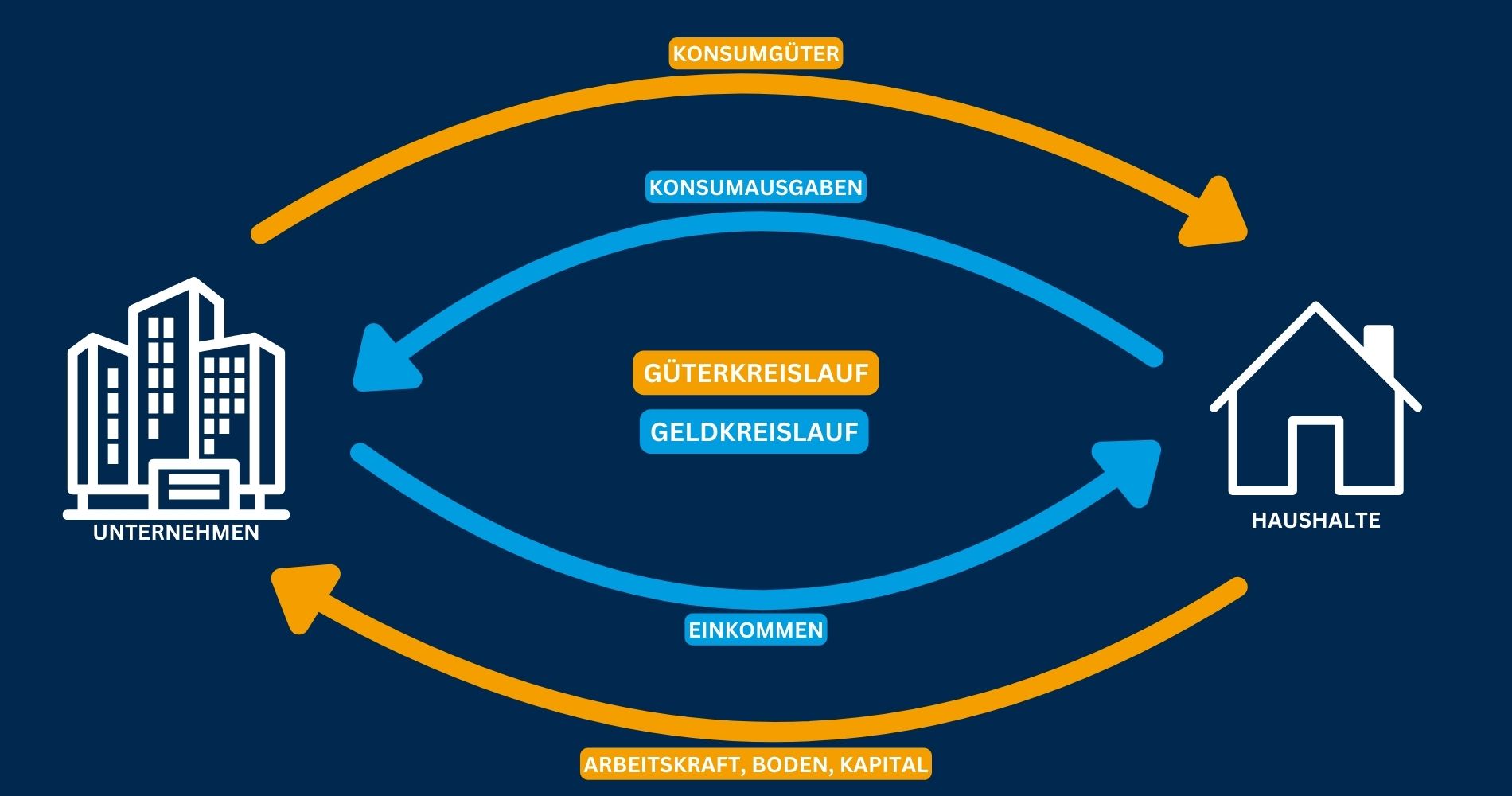
The two-circuit model is the simplest form of the economic cycle and focuses on the interactions between households and companies. In this model, there are two main flows: the flow of money and the flow of goods.
- Money flow: Households receive income in the form of wages, salaries and other returns that they receive from businesses for their labor and capital. They use this income to buy consumer goods and services produced by companies.
- Flow of goods: Companies produce goods and services that they sell to households. They use the income from these sales to pay for factors of production such as labor and raw materials.
This model shows how the demand of households for goods and services drives the production of companies and how the production of companies in turn creates income for households.
Expansion by the state
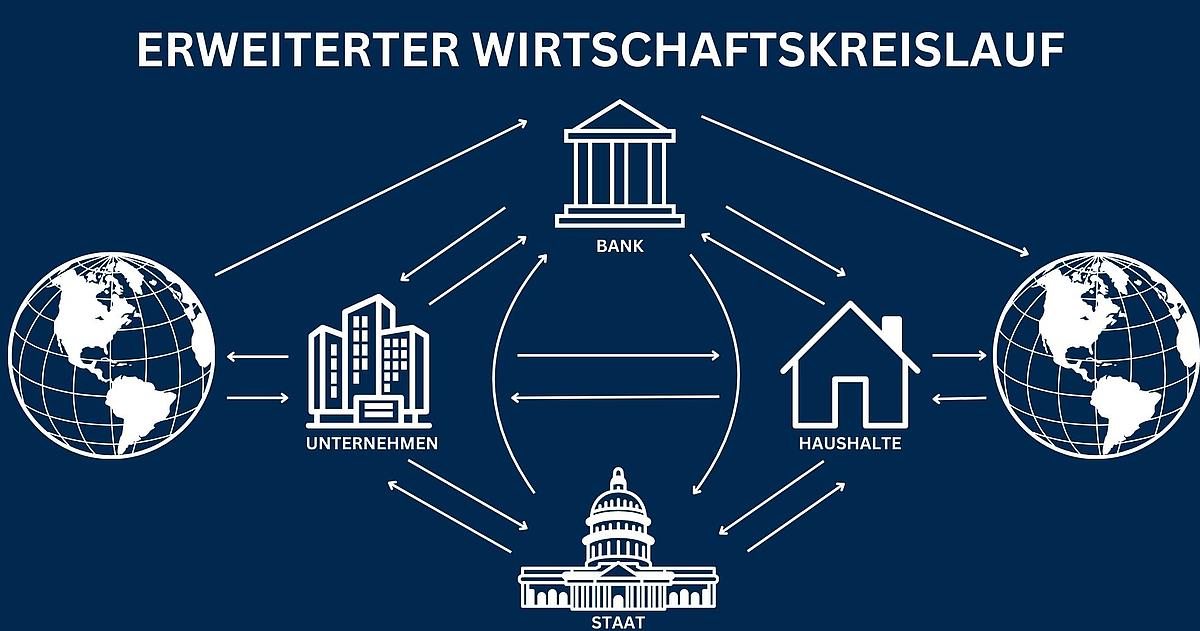
The extended model integrates the state as an additional player in the economic cycle. The state plays an important role in regulating and stabilizing the economy through taxes and public spending.
- Taxes: The state levies taxes on households and companies. These taxes reduce the disposable income of households and the profits of companies, but are used by the state for public spending.
- Public spending: The state uses tax revenues to provide public goods and services such as education, healthcare, infrastructure and social security. This expenditure flows back into the economic cycle and stimulates economic activity.
By integrating the state, it becomes clear how fiscal policy measures such as taxes and public spending influence economic stability and growth.
Integration of foreign countries
In an open economy, foreign countries play an important role in the economic cycle. International trade and capital flows influence national income and economic dynamics.
- Exports: The sale of goods and services to foreign markets brings income into the economy and strengthens the production capacities of companies.
- Imports: The purchase of goods and services from abroad enables access to products that are not available domestically and contributes to the diversity of the consumer supply. Capital flows: International investment and financial transactions influence the availability of capital and investment opportunities within the economy.
The integration of foreign countries shows how global economic linkages influence the national economy and how changes in the international economy can have a direct impact on the national economic cycle.
These models of the business cycle provide a basis for understanding complex economic interactions and help to analyze the impact of economic policies and global events on the national economy.