OsloMet's greatest motivation is to contribute to solving social challenges and problems through its teaching and research – both in Norway and worldwide. To achieve this, the university is breaking new ground and constantly challenging itself.


Norway's education system is renowned far beyond its borders. At Oslo Metropolitan University, you can expect a forward-looking degree program at the interface between theory and practice. This is where you can research the social challenges of tomorrow and make a valuable contribution. On our website, you will find all the important information about the university, the city, and more – and learn how your dream of studying abroad at OsloMet can become a reality. Who knows—maybe you will soon be strolling through Oslo's hip old town, swimming in crystal-clear fjords, and watching the fascinating northern lights?
Oslo Metropolitan University can best be described as a new university with a long history. A modern look and officially founded in 2018 on paper, yet with decades of experience in innovative knowledge and expertise development. The university's midwifery program was established as early as 1818, and many other programs are the oldest of their kind in Norway. What began as an independent college merged with other educational institutions in the region in the 1990s and 2000s to form two large university colleges, which merged again in 2011 to become the Oslo and Akershus University College of Applied Sciences. In 2018, the Oslo and Akershus University College of Applied Sciences finally received university status. A new identity with a new name was born: OsloMet.
OsloMet's degree programs cover a wide range of academic fields, from quantum physics and economics to journalism, teacher training, and cancer nursing. There is a particular focus on health and social services, technology, and sustainability, which has grown historically. As an “urban university with a social mission”, OsloMet aims to contribute to the further development of society – both locally and globally – through its teaching and research. To achieve this, all degree programs are highly practice-oriented and closely linked to the local economy and community. Theory and practice complement each other in a meaningful way, for example through internships or practical semesters.
At the same time, Oslo Metropolitan University has an international focus. Norway's third-largest university conducts much of its research in cooperation with universities around the world. This attitude is also reflected in the student body: many students are first-generation Norwegians or have parents who immigrated to Norway. In terms of ethnic and linguistic background, OsloMet's student body is one of the most diverse in Norway. Everyone is welcome here!
Oslo Metropolitan University has two campuses.
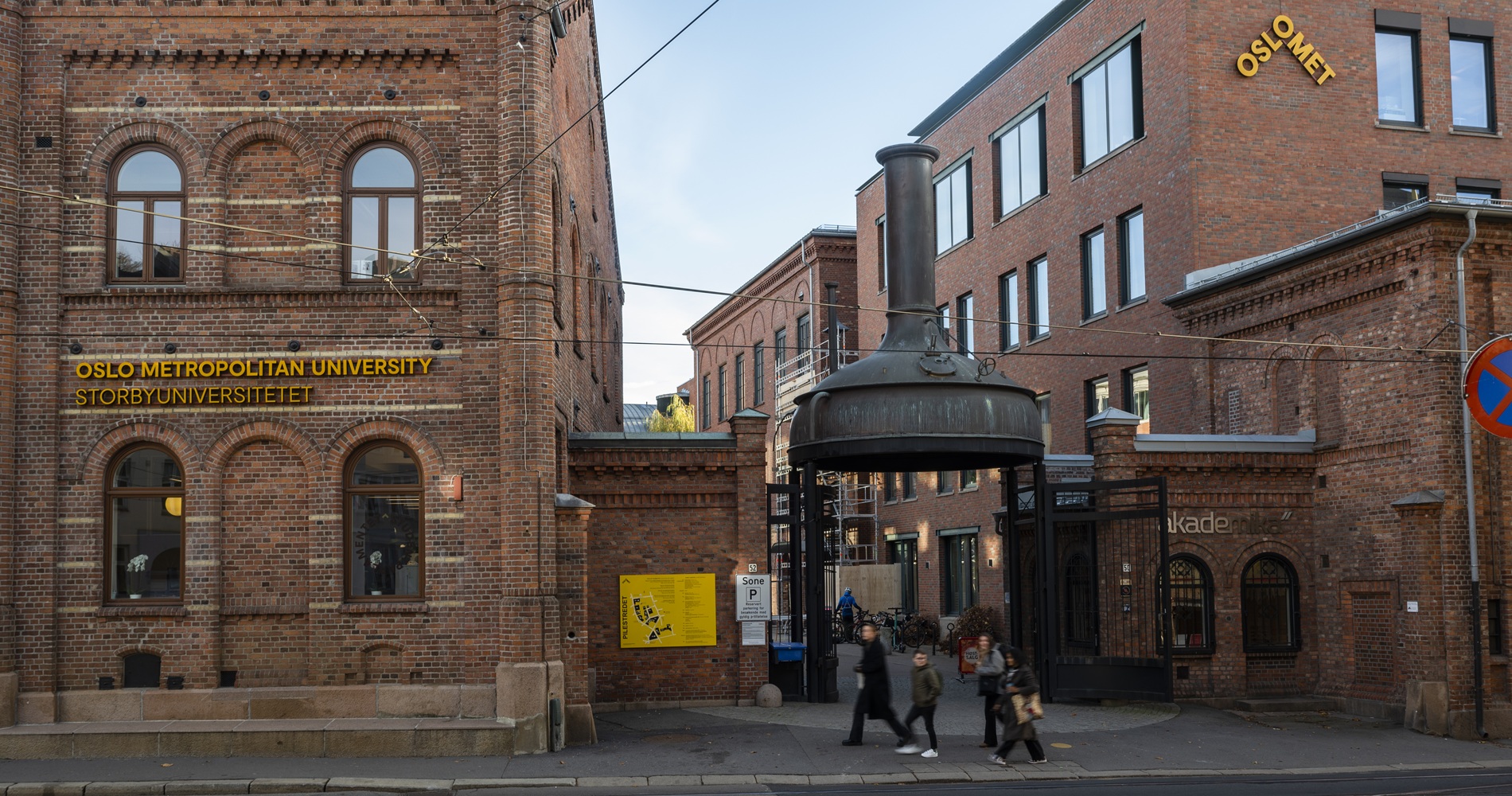
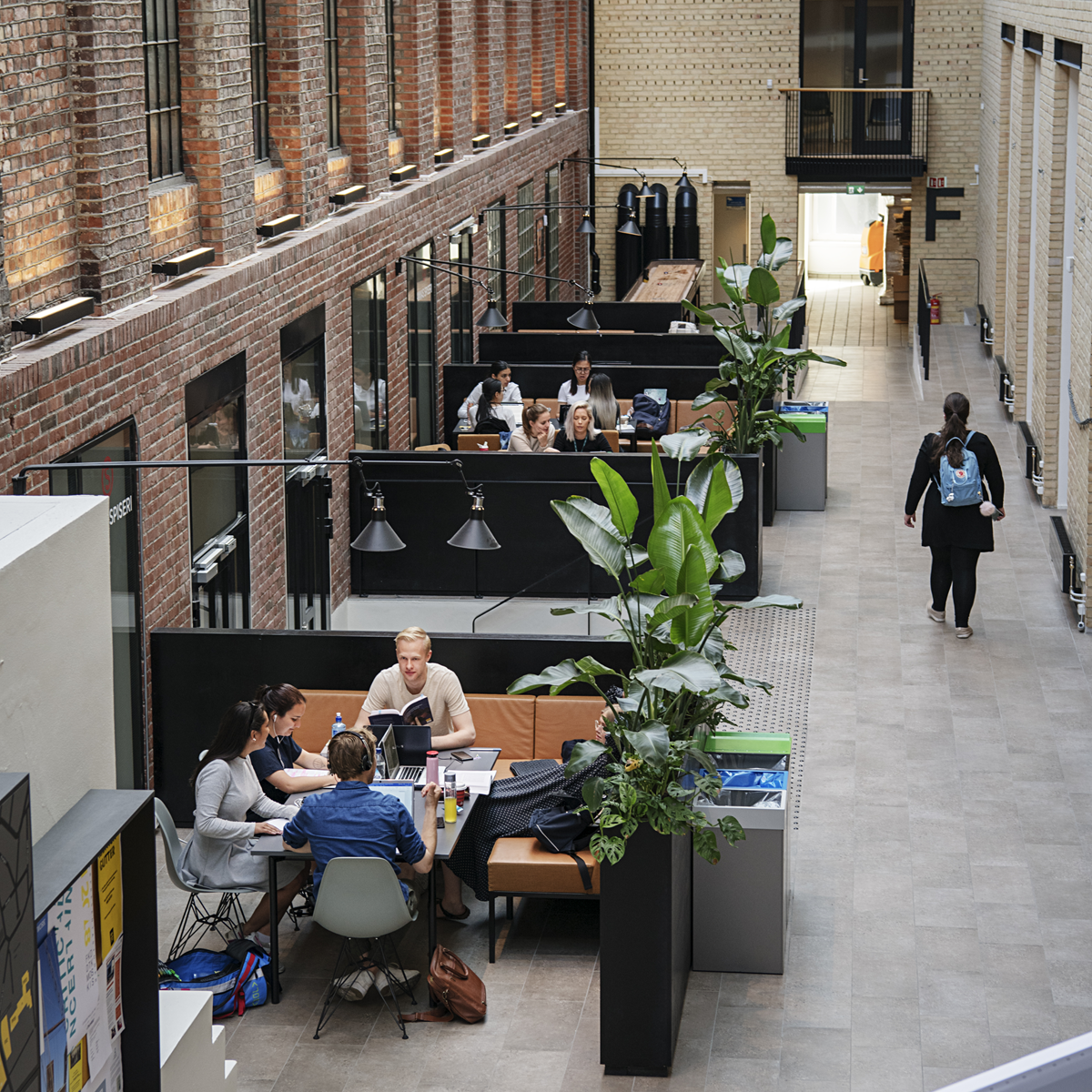
The larger of the two, Pilestredet Campus, is located in Oslo city center. Norway's most urban university campus is compact. It takes just ten minutes to walk from one end of the campus to the other. And yet it has everything a student could need: modern learning spaces, cafeterias, libraries, pubs, the student and service center, gyms, and even a climbing wall. Architecture lovers will also get their money's worth: the northern part of the Pilestredet Campus is located on the site of a 19th-century brewery. Historic brick buildings stand alongside modern glass architecture – a fascinating interplay of tradition and innovation.
There are more cafés and restaurants in the immediate vicinity where you can read, meet fellow students, and enjoy lunch at student-friendly prices. Another advantage of an inner-city campus is obvious: all the important sights of downtown Oslo and even the Oslo Fjord are just a short walk or tram ride away – perfect for clearing your head between intensive study and learning phases.
OsloMet's second campus, the Kjeller Campus, is located 20 km outside Oslo. It mainly offers degree programs and courses in the fields of design, art, and technology. A modern glass complex houses classrooms, laboratories, workshops, a cafeteria, a free gym, and a library with a wonderful view of the surrounding fields, making it a great place to study. Although the Kjeller Campus may be located away from the hustle and bustle of Oslo, it is easily accessible by public transport. The up-and-coming town of Lillestrøm is also just a five-minute bus ride from the campus. For students who do not want to commute from the city to the Kjeller Campus every day, there are also student residences within walking distance of the campus.

As by far the largest city in the country, Oslo is the undisputed center of political, economic, and cultural life in Norway. Despite its population of just under 700,000, Oslo feels manageable and more like a large, cosmopolitan community than an anonymous capital city. The atmosphere is safe, tolerant, and relaxed. Many Norwegians speak fluent English, which makes it easier for you to settle in as an international student in Oslo. Without question, life in Oslo is expensive, but you will quickly realize that you get your money's worth here. Hardly any other city in the world is as livable as Oslo. Norway's capital combines the urban life of a modern metropolis with the tranquility and nature of Scandinavia in a fascinating way. Lectures in the morning, swimming in the Oslo Fjord or a walk in the snow in the afternoon, depending on the season, and an evening on the roof terrace of the opera house followed by a concert – all of this is no problem in Oslo, also thanks to the well-developed public transport system.
Oslo offers students a wide range of accommodation options, but demand is high. As is often the case with inner-city universities, OsloMet does not have its own dormitories directly on campus. Instead, students can contact the Student Welfare Association (SiO), which operates more than 8,000 student apartments in Oslo and the surrounding area. Popular residential complexes include Kringsjå Student Village, Sogn Student Village, and Lillestrøm Studentby for students at the Kjeller Campus. Depending on the location and amenities, rents range from NOK 4,500 to NOK 7,000 per month (around €390–610), including electricity, heating, and internet. Those who prefer private accommodation can find small studios or shared apartments starting at around NOK 7,500 (€650). A popular option right in the city center, just a few minutes' walk from OsloMet, is Campus Living MetStudios in Bislett, with rents starting at around €1,000 per month.
However you want to live, starting your search early gives you a clear advantage and allows you to look forward to an unforgettable study experience in Norway!
Munich Business School (MBS) offers you the opportunity to combine studying in Munich with a stay at Oslo Metropolitan University – all within one program! You can complete your semester abroad at OsloMet as part of a bachelor's degree in International Business or a master's degree in International Business or Finance at MBS. Find out more about our study programs now!
Note: Despite careful maintenance of our content, individual details regarding the semester abroad may occasionally change. For binding and up-to-date information, we recommend checking our partner university database.
Have you found a study program that interests you? Then you can easily apply via the MBS application portal. If you meet the necessary academic and language requirements, you will be invited to an interview. It is best to apply early to secure the best chances of studying at both Munich Business School and OsloMet!
Once your application to Munich Business School has been accepted and you have successfully enrolled in a bachelor's or master's program, your studies in Munich will begin. During your first semesters at Munich Business School, you will acquire important business fundamentals, choose your majors and electives based on your degree program and interests, and work on exciting projects together with your fellow students.
The first semesters at Munich Business School are also the ideal time to plan your semester abroad at Oslo Metropolitan University. When you will study abroad at OsloMet depends on your degree program and when you started your studies. If you are studying for a bachelor's degree at Munich Business School and started your studies in the fall, your semester abroad will take place in the fourth semester. However, if you started your bachelor's degree in February, you will not go abroad until the sixth semester. For master's students, the semester abroad is scheduled for the third semester.
The MBS International Center is available to assist you in planning your semester abroad at OsloMet and will answer all your questions about course selection, housing, and student life.
Once you have successfully completed your first semesters at Munich Business School and finalized your plans for your semester abroad at Oslo Metropolitan University, you are finally ready to go. Yay, your semester abroad in Oslo is about to begin! Immerse yourself in the new (university) culture, make new friends, soak up everything around you, try new things, and create memories that will last a lifetime! One thing is certain: the experience of studying abroad in Oslo will stay with you forever and you will return a changed person.
After your semester abroad, you will either return to Munich Business School for one to three more semesters (bachelor's program) or complete your studies with your thesis (master's program).
To qualify for a business degree at Munich Business School and thus also at Oslo Metropolitan University, you must meet certain academic and language requirements. MBS offers several application rounds. It is advisable to apply early, as the number of places is limited.
Studying at Oslo Metropolitan University is a dream for many young adults – and with good reason! At the same time, studying abroad in Norway is a big step that needs to be well planned and financed. To help you with the organization, this FAQ provides answers to frequently asked questions about studying at OsloMet.
No, OsloMet is a public university and is largely funded by the Norwegian government. This means that most students do not pay tuition fees, but only a small administrative fee.
As is the case throughout Norway, exchange students and students from the EU, EEA, or Switzerland do not have to pay tuition fees at Oslo Metropolitan University. Each semester, a small amount between €45 and €60 must be paid to the student services organization, which is used, for example, to finance student housing or organize cultural events. Starting in the 2023/2024 academic year, tuition-free education will no longer apply to all students worldwide. Students who are not from the EU, EEA, or Switzerland and wish to complete a full degree program at Oslo Metropolitan University must pay between NOK 207,000 and NOK 418,000 (approx. €18,000–€36,000) in tuition fees per year, depending on the program.
This means: if you combine your studies at OsloMet with a degree at Munich Business School, there are no additional fees for your semester abroad as an exchange student in Oslo!
Oslo Metropolitan University is not an exclusively English-speaking university. However, at the master's level, there is a selection of study programs that are taught entirely in English, particularly in the Faculty of Technology, Art, and Design. Bachelor's programs are usually taught in Norwegian or in a mix of languages, with individual courses in English. However, the specialist literature used in teaching is predominantly in English in most degree programs. OsloMet offers numerous courses in English for exchange students, so it is not necessary to learn Norwegian in order to study at OsloMet.

Elsenheimerstraße 61
80687 München Germany