For more information on this topic, please visit our dedicated page.


Are you looking for an MBA program and need an overview of your options? Then you've come to the right place! An MBA program is a valuable investment in your future, but choosing the right program can be challenging. In Germany, many universities offer attractive MBA programs, including Munich Business School, Macromedia University of Applied Sciences, and Fresenius University of Applied Sciences. But which program best suits your career goals?

Before we compare the programs in detail, let's take a quick look at the individual programs. Each of the three universities – Munich Business School, HS Fresenius and Macromedia – offers MBA programs with specific focuses and orientations.
The MBA at MBS not only teaches you how to respond to the ever-changing challenges of the business world, but you also develop the ability to meet them with innovation and flexibility. The practice-oriented curriculum provides a sound understanding of key business concepts and current economic challenges, and offers numerous opportunities for practical application. The program is complemented by CV checks, individual career coaching, interview training and networking events.
This MBA is aimed at professionals and career changers who want to develop their management and leadership skills intensively within a year. In addition to business know-how, the program focuses on digitization and innovation.
This MBA program prepares you for challenging leadership roles in senior management. Through the program, you will gain the specialized knowledge and leadership skills you need to navigate the business world effectively and achieve your career goals.
The following specializations play a role in one or more of the MBA programs at Munich Business School, Fresenius University of Applied Sciences and Macromedia University of Applied Sciences. They provide insights into the content, structure and special features of the programs, enable an MBA comparison in Germany and illustrate how these programs promote practical learning, individual design options and international experiences.
Below, we briefly explain what the concepts and terms mentioned in the comparison actually mean.
These are core subjects within an MBA program that teach essential management and business skills, often with a particular practical or industry focus.
Elective courses give you the opportunity to choose the modules that match your interests and career goals, and to customize your studies. In many programs, you can choose more than one elective course.
Concentrations are advanced topics that you can choose within your program of study to specialize in specific areas such as marketing, finance, or entrepreneurship. In some programs, you can even choose more than one concentration.
This is an additional offer to help MBA students learn or improve their language skills (especially in German) in order to prepare for an international or possible German career.
This is a career development program within the MBA that uses coaching, workshops and networking to prepare students for the next step in their careers.
A business project is a real-world project in which you work in teams to analyze real business problems and develop innovative solutions, often in collaboration with a partner company.
Leadership Week is an intensive week in the MBA program during which leadership skills are developed through seminars, practical projects and coaching.
A week in which students test business strategies and practice entrepreneurial decision-making through realistic simulations.
A specialized MBA module that fosters the development of business ideas, entrepreneurship and innovation management.
Events where students can make contacts with companies, alumni and experts to improve their career opportunities.
This includes individual counseling and training to prepare MBA students for application processes, career planning, and leadership skills.
These are ideal opportunities to get to know companies directly, gain insights into industries and make contacts with potential employers.
This is an international study module in which students spend a week at a partner university or in a company abroad.
This is an accelerated MBA variant that can be completed in a shorter time, often due to a higher course density or crediting of previous work.
A university's accreditations are an important indicator of the quality and recognition of its study programs. Institutions such as the Ministry of Education, FIBAA, the German Council of Science and Humanities, and renowned international accreditation organizations such as AMBA, AACSB, and EQUIS assess the academic excellence, practical orientation, and international standards of universities. Below, we take a look at the most important accreditations of the three programs.
| MBS | HS Fresenius | Macromedia | |
| German Ministry of Education | ✔️ | ✔️ | ✔️ |
| FIBAA | ✔️ | ❌ | ❌ |
| German Council of Science and Humanities | ✔️ | ✔️ | ✔️ |
| AMBA | ❌ | ❌ | ❌ |
| AACSB | ✔️ | ❌ | ❌ |
| EQUIS | ❌ | ❌ | ❌ |
An international outlook plays an important role in all three universities and their MBA programs, although they each have different focuses:
The following table summarizes the key facts about the three different MBA programs.
| Munich Business School | HS Fresenius | Macromedia | |
| Degree program | Master of Business Administration (MBA) | Master of Business Administration (MBA) | Master of Business Administration (MBA) |
| Duration | 2 semesters | 2–3 semesters | 3–4 semesters |
| Study language | English | English | English |
| Start of studies | winter & summer semester | winter & summer semester | winter & summer semester |
| Location | Munich | Munich, Cologne, Hamburg, Berlin | Berlin, Munich |
| Format | Full-time studies | Full-time studies | Full-time studies |
| NC | No numerus clausus | No numerus clausus | No numerus clausus |
| Recognition | State-recognized and accredited | State-recognized and accredited | State-recognized and accredited |
| Study requirements | Degree in any subject, at least two years of relevant work experience (under certain conditions, less is also possible), proof of English language skills through a test or an earlier degree in English | Bachelor's degree, at least one year of relevant work experience, proof of English language skills at level B2 | Bachelor's degree, at least two years of qualified work experience, proof of language skills |
| Scholarship opportunities? | Yes, up to EUR 4,000 in funding | No | No |
| Final thesis | Master's thesis | Master's thesis | Master's thesis |
| Special features | Flagship Courses, 2 electives, expert business knowledge courses, optional German courses, MBA Career Accelerator Program, Leadership Week, Start-up Week, Business Simulation Week, business projects, networking opportunities, career coaching and workshops, company visits and company presentations | Option to specialize, fast-track MBA possible, electives such as language courses and networking events, event and training offers | Research-oriented project, practical-based project, own project, electives, optional study week abroad |
All three MBA programs qualify graduates for management and leadership positions, with the individual specializations of the programs favoring different industries and career paths.
Alumni benefit from a strong corporate network and an internationally recognized degree, which opens up career opportunities in management, consulting and strategy positions. International companies and corporations looking for globally minded leaders are particularly attractive.
With a focus on digitization, innovation and sustainability, alumni are ideal for future-oriented industries. They often find positions in medium-sized companies, start-ups or large corporations.
With an innovation-driven approach, the program prepares alumni for management positions in digital industries. There are particularly good opportunities for advancement in companies with a focus on innovation, or as a management consultant.
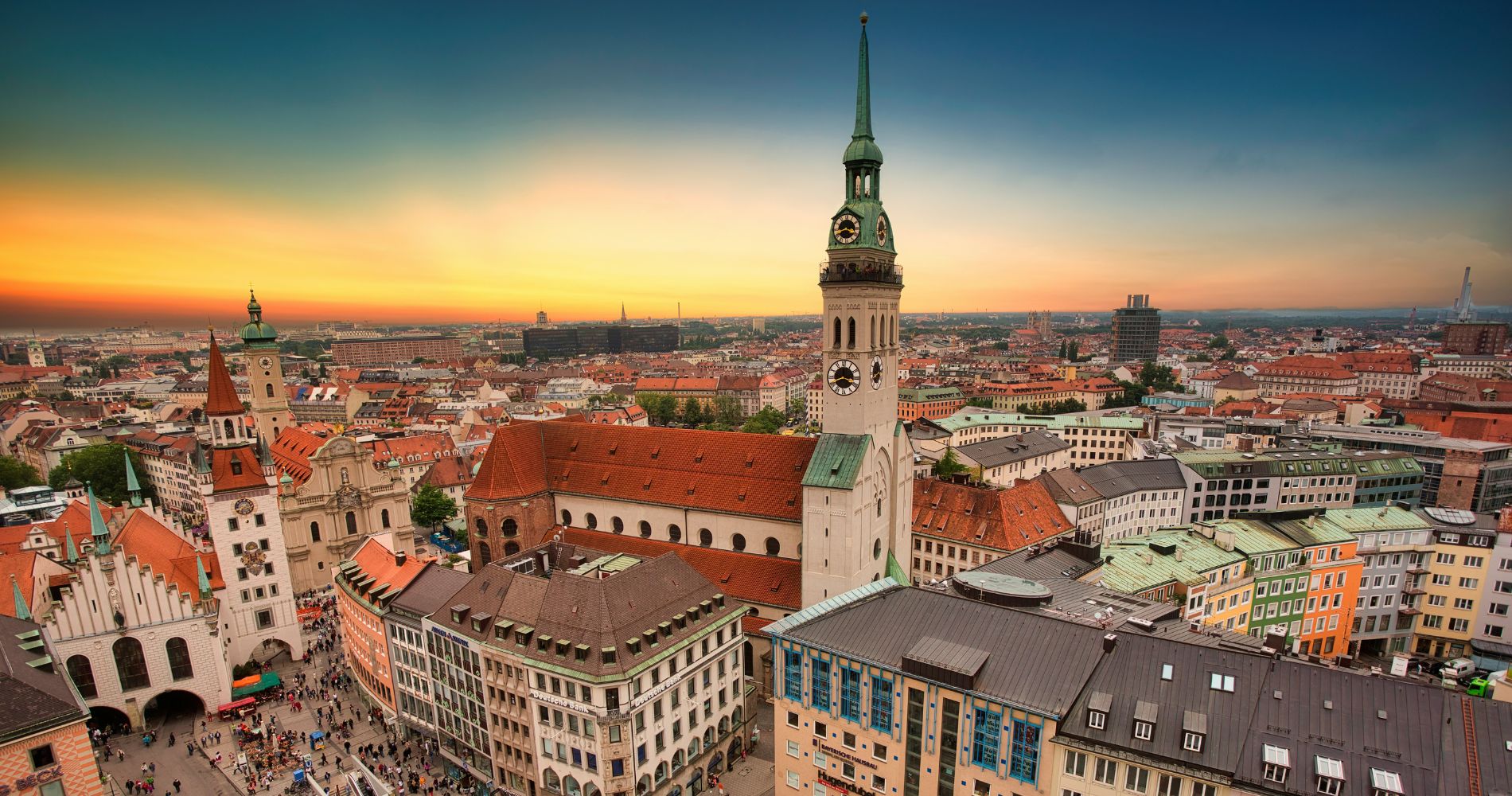
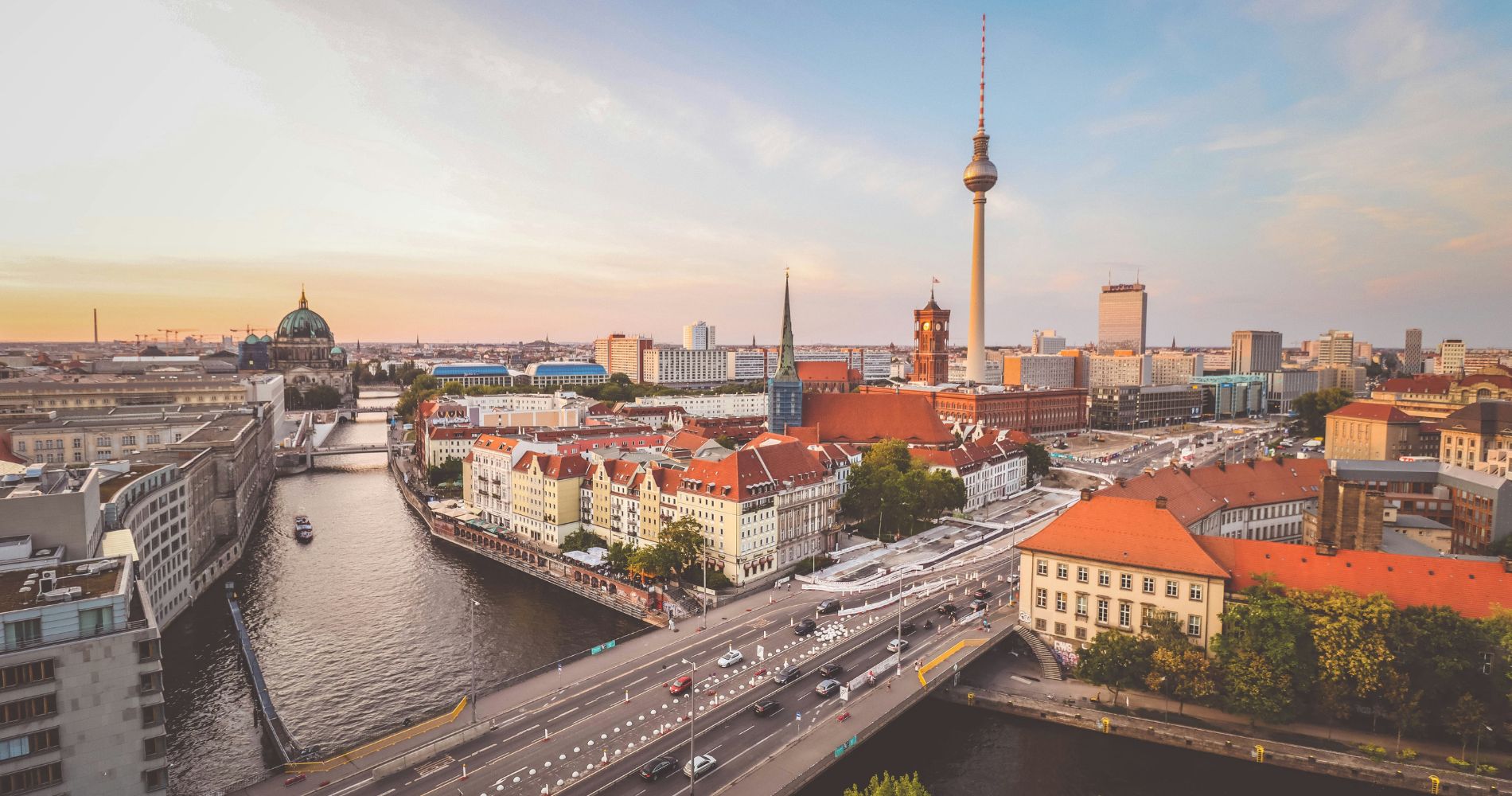
The best location for your MBA depends on your personal preferences and goals. Here is a rough comparison of the locations Munich, Cologne, Hamburg and Berlin for an MBA in Germany:
| Munich | Cologne | Berlin | |
| Economy | 10/10 | 7/10 | 8/10 |
| Internationality | 9/10 | 8/10 | 10/10 |
| Networking Opportunities | 8/10 | 6/10 | 8/10 |
| Infrastructure | 9/10 | 9/10 | 9/10 |
| Quality of Life | 10/10 | 7/10 | 5/10 |
| Cost of Living | 2/10 | 5/10 | 2/10 |
| Student Life | 8/10 | 8/10 | 8/10 |
| Nature | 10/10 | 5/10 | 3/10 |
| Recreational Possibilities | 10/10 | 8/10 | 9/10 |
| Culture | 9/10 | 8/10 | 9/10 |
| 85/100 | 71/100 | 71/100 |
The experiences of alumni and current students are a crucial factor when it comes to choosing the right MBA program. Reviews on platforms such as StudyCheck provide authentic insights into the quality of teaching, support, and career opportunities from the perspective of former and current students. This is followed by an MBA comparison of Munich Business School, HS Fresenius, and Macromedia to provide you with a sound basis for your decision.
These ratings come from the German rating portal StudyCHECK.de. The ratings are current as of January 30, 2025.
A Comparison of Munich, Cologne, and Berlin in Terms of MBA Programs:
The cost of an MBA program varies greatly depending on the country, university and program. At renowned business schools such as Harvard or INSEAD, they often range from €60,000 to €150,000, while cheaper or online programs are available starting at €10,000. In addition, there are living expenses, travel costs and possible loss of income due to reduced working hours.
In Germany, an MBA program costs between €10,000 and €50,000, depending on the university and program.
There are some MBA programs that are part-time. They are offered on a part-time basis and offer flexible models such as weekend or online courses so that you can study alongside your job.
However, there are also full-time MBA programs that are not always compatible with a job, but which allow you to complete your studies much more quickly.
Yes, definitely! An MBA can take your career to the next level, open new doors and provide you with valuable skills and a strong network – an investment that can really pay off!
No specific undergraduate degree is required for an MBA program, but a completed bachelor's degree in any subject and professional experience are usually required. A bachelor's degree in business or a similar field is particularly helpful.
The best MBA programs worldwide are offered by institutions such as Harvard, Stanford, INSEAD and the London Business School, while in Germany the Munich Business School stands out.


Elsenheimerstraße 61
80687 München Germany