EU Applications Open Until August 15  Don't miss your last chance – apply online now!
MBS Logo

Universidad de Murcia

Are you looking to spend your semester abroad not in a student bubble, but right in the heart of authentic Spanish daily life—with centuries-old alleyways, over 300 days of sunshine a year, and a university that was already educating students when most European countries didn’t even exist in their current form? Then the Universidad de Murcia (UMU) in southeastern Spain is exactly the right place for you. As one of Spain’s oldest and largest universities, UMU combines academic tradition with a vibrant, international student body and the laid-back lifestyle of the Costa Cálida. On our website, you’ll find all the important information about the university, the city, and more, and learn how your dream of studying abroad at the Universidad de Murcia can become a reality. Who knows—maybe you’ll soon be working on your next presentation surrounded by palm trees and orange groves, making your Erasmus semester in one of Europe’s sunniest regions a reality!

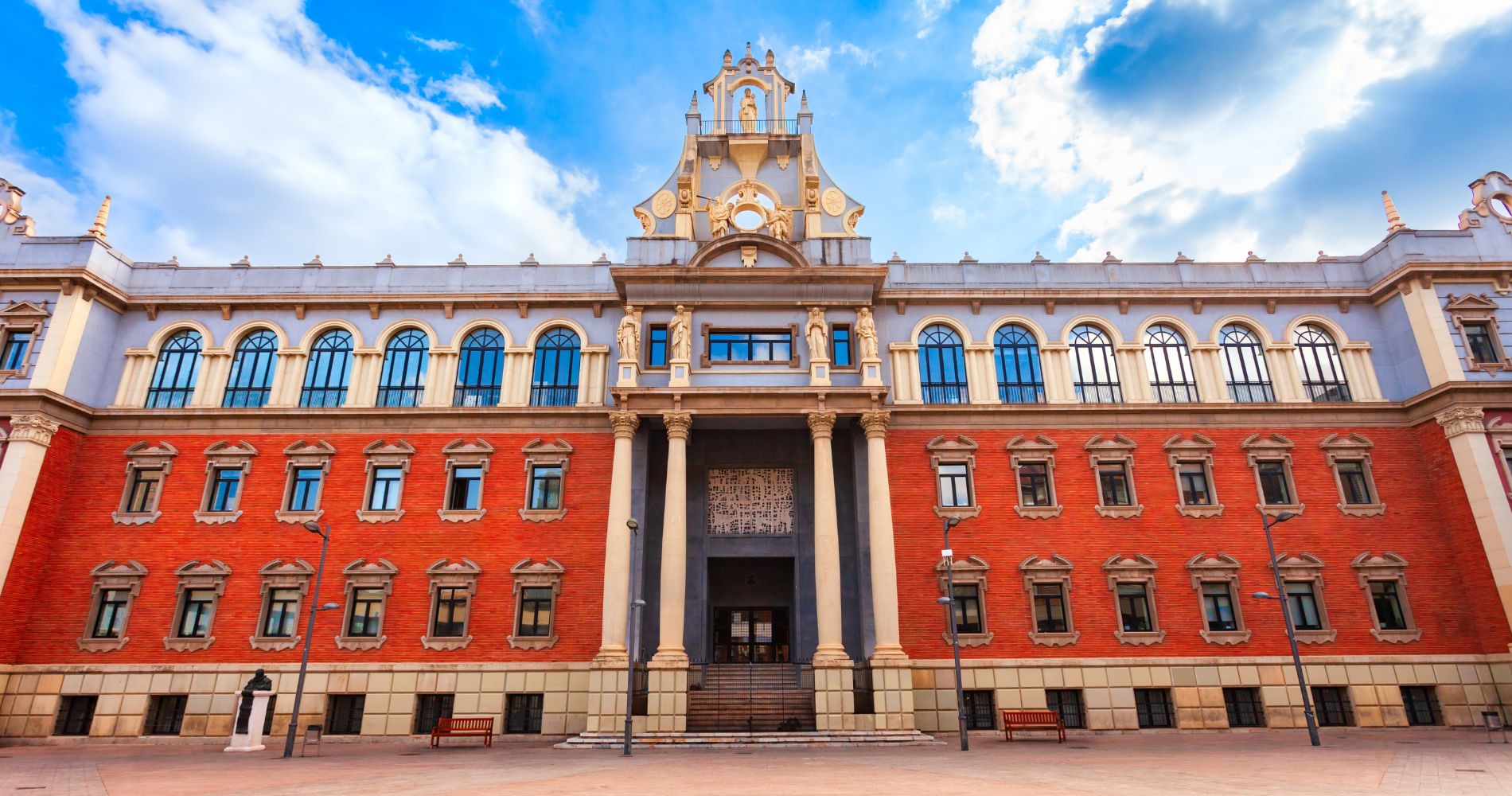
Historisches Hauptgebäude der Universidad de Murcia mit roter Backsteinfassade.
rich in tradition
mediterranean
open-minded
Logo der Universidad de Murcia in Rot und Blau auf weißem Hintergrund.

About the University

The roots of the University of Murcia date back to the year 1272, when King Alfonso X of Castile granted the Dominicans permission to establish the first center of learning in Murcia. After several attempts in the 19th century, the university was finally founded in its current form in 1915. This makes the UMU one of the oldest universities in Spain, while at the same time boasting a very modern present: With approximately 38,000 students, it is now the largest university in the Region of Murcia and one of the largest public universities in Spain overall. As a public university, UMU offers a broad range of disciplines, spanning business, law, and social sciences, as well as the humanities and natural sciences, all the way to medicine, sports science, and engineering. For students at Munich Business School, the Facultad de Economía y Empresa is of particular relevance, as it offers business programs at an internationally recognized level and maintains close ties with companies and institutions in the region. Instruction is based on the European Bologna System, ensuring that courses, ECTS credits, and exam formats are fully compatible with studies at MBS.

Internationally, UMU is exceptionally well-positioned: As part of the “Campus Mare Nostrum” network of excellence, which it shares with the Universidad Politécnica de Cartagena, it is one of the few Spanish universities to have been awarded the designation “Campus of International Excellence”. Through numerous Erasmus and exchange agreements, the university brings thousands of international students to Murcia every year while simultaneously sending its own students all over the world. Students at UMU therefore experience a vibrant mix of local and international peers and a campus life that is noticeably open to Europe and beyond.

Despite its size, UMU remains close to its students: Numerous student organizations, sports programs, language courses, and its own University Information Service (Servicio de Información Universitario) support exchange students from the moment they arrive until the end of the semester. Anyone looking for a change of perspective, wanting to combine practical business knowledge with the Spanish way of life, and wishing to benefit from one of Spain’s most traditional universities will find at the University of Murcia an environment that naturally combines academic excellence with a Mediterranean lifestyle.

Facts & Figures

One of Spain's oldest Universities

With roots dating back to 1272 and its official founding in 1915, the University of Murcia is one of Spain’s most historic universities; it is the third-oldest university in the country, after Salamanca and Valladolid. This long history is still reflected today in historic buildings such as the former La Merced monastery, yet at the same time, the UMU has evolved into one of Spain’s most modern and largest universities.

38,000 Students

As the largest university in the Region of Murcia, UMU boasts a vibrant, diverse student body. Numerous Erasmus and exchange agreements with partner universities throughout Europe and beyond ensure that international students are an integral part of daily campus life at UMU and quickly find their place.

Five Campuses in the Region

UMU is spread across several locations in and around Murcia, ranging from the historic La Merced campus in the city center to the large Espinardo campus and specialized facilities for health and sports sciences. This structure allows for short distances within each academic department and provides a learning environment equipped with state-of-the-art facilities.

Campus Mare Nostrum

Together with the Universidad Politécnica de Cartagena, UMU forms the “Campus Mare Nostrum” network of excellence, which has been designated a “Campus of International Excellence” by the Spanish Ministry of Education. As a result, research and teaching benefit from additional international collaborations, for example in the fields of business, marine sciences, and sustainability.

The University of Murcia Campus

Students at the Universidad de Murcia don’t experience a single, self-contained campus, but rather a network of several locations, each with its own unique character. The historic original campus, La Merced, is located right in the heart of Murcia, in a former 18th-century monastery, and is home to, among other things, the law school and the historic Antonio de Nebrija Library. Walking through the hallways here, you’re literally studying between historic monastery walls and the vibrant city life.

For students of economics—and thus also for MBS exchange students—the Espinardo Campus, located about six kilometers north of downtown, is particularly relevant. It is the largest and most modern campus at UMU: Sixteen faculties, including the Facultad de Economía y Empresa, are located here, complemented by lecture hall buildings, sports facilities, a swimming pool, a central library, and numerous cafés and green spaces. The campus is well connected to downtown by bus and tram, and its spacious, green grounds offer a pleasant contrast to the narrow streets of the old town.

The Espinardo Campus is the academic heart of UMU and, with its modern teaching buildings, laboratories, and research facilities, serves as the central hub for business students. In addition to the courses offered by the Facultad de Economía y Empresa, you’ll benefit here from spacious study areas, well-equipped computer labs, and an active student life featuring sports activities, dining halls, and student initiatives.

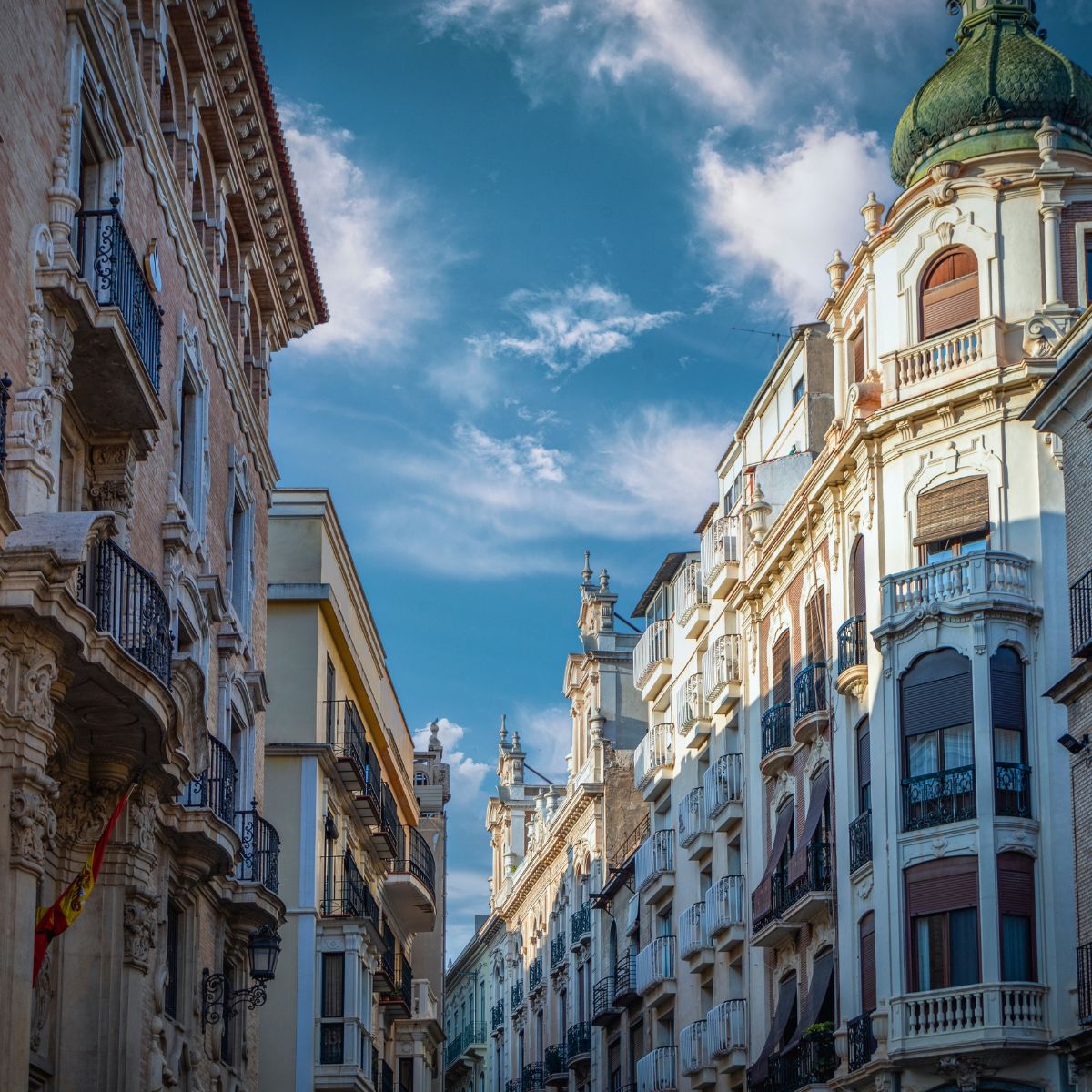
Historische Fassaden mit grüner Kuppel in einer Gasse von Murcia.
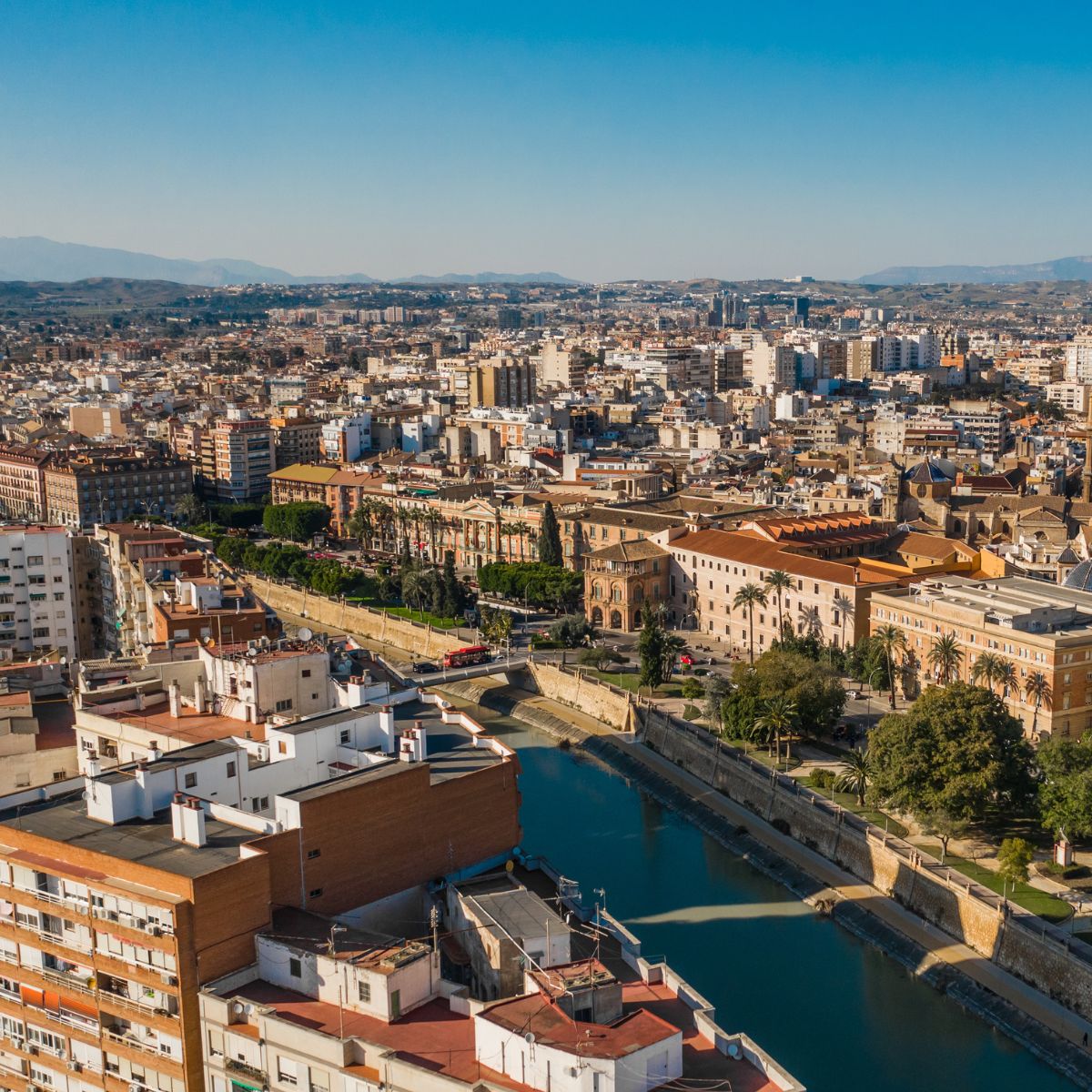
Luftaufnahme von Murcia mit Fluss Segura und Altstadt bei klarem Himmel.

Life and Living in Murcia

Murcia is located in southeastern Spain, just about 45 minutes from the beaches of the Costa Cálida and the Mar Menor, Europe’s largest saltwater lagoon. With a population of about 460,000, Murcia is Spain’s seventh-largest city. This makes it large enough to offer a vibrant student life, yet small enough to find your way around quickly. The historic old town, centered around the imposing cathedral, the Real Casino de Murcia, and the Segura River, invites you to stroll among tapas bars, squares, and small boutiques, while in the evening, the student nightlife is concentrated in neighborhoods like La Fama and San Antón. In terms of climate, Murcia is one of the sunniest regions in Europe: With more than 3,000 hours of sunshine per year and mild winters, you can live, study, and play sports outdoors almost year-round. If you want to head to the beach between classes, you can reach the Mediterranean in less than an hour.

Murcia also scores high financially: Compared to Barcelona, Madrid, or even Valencia, the city is one of the more affordable places to study in Spain. A room in a shared apartment costs between 230 and 380 euros per month, depending on the location and amenities—often slightly more when utilities are included. Those who prefer a room in a student dorm should expect to pay around 380 euros per month. Overall, students in Murcia can often get by comfortably on around 700 to 900 euros per month, including rent, food, and leisure activities—which is significantly less than in Spain’s major cities. The best way to find housing is to start looking well in advance: especially at the start of the semester in September, affordable shared rooms and dorm spots are snapped up quickly, so it’s worth starting your search early through relevant portals or student networks.

Thanks to a large international community, numerous Erasmus events, and the open, warm nature of the people of Murcia, it’s easy to settle into student life in Spain. And for those who want to explore the region further, transportation options are plentiful: Valencia, Alicante, and Cartagena are all within easy reach, and the Región de Murcia Airport also provides convenient connections to other European cities for spontaneous weekend trips.
Your Path to the University of Murcia

1. Request information about studying at Munich Business School

+

2. Apply to Munich Business School

+

3. Spend your first semesters at Munich Business School

+

4. Plan Your Semester Abroad

+

5. Semester 4 or 6: Your semester abroad at the University of Murcia

+

Application

To qualify for a business degree program at Munich Business School—and thus also for an Erasmus semester abroad at the Universidad de Murcia—you must meet certain academic and language requirements. MBS offers several application rounds. We recommend applying early, as the number of exchange spots is limited.

Frequently Asked Questions (FAQ) About Studying at the University of Murcia

A semester abroad at the Universidad de Murcia is a dream for many young adults—and for good reason! At the same time, studying abroad in Spain is a big step that requires careful planning and financing. To help you organize your experience as best as possible, this FAQ provides answers to common questions about studying at the Universidad de Murcia.

Is the University of Murcia a good university?

+

How much does a semester abroad in Murcia cost?

+

Are classes taught in English at the University of Murcia?

+

Did you find this article helpful? Do you have any suggestions or questions about this article? Have you noticed something or is there a topic you would like to know more about? Your feedback is important to us! It enables us to constantly improve our offer and provide you with exactly the content you are interested in.
Contact editorial office

Note on readability and salary information: The salary ranges given refer to Germany.