An international seal of quality awarded to only 6% of business schools worldwide. It attests to high quality and enhances the recognition of the degree abroad.


Looking for an event management course or event management degree that is more than logistics? At Munich Business School you combine business expertise with creativity: you learn to think through concerts, conferences, trade fairs and brand events commercially and bring them to life. If you are searching for event management studies in Munich, you will find international degree programs here with an event focus, real practical experience, and a network into the Munich business scene.

One thing upfront: MBS does not offer a standalone degree called "Event Management". Instead, you study International Business and shape your event focus deliberately — through an elective and a marketing/sales specialization in the Bachelor, or through brand leadership and communication in the Master. That is an advantage: you are not locked into the events industry, but can work at agencies, corporations, trade fair organizers, or in-house brand teams.
The Bachelor’s program in International Business with the elective in Event Management is for you if, after graduating from high school, completing vocational training, or attending school abroad, you want to lay the foundation for your career and gain hands-on experience in event management early on. You’ll start with business administration, accounting, marketing, and languages; gain your first event experience through internships; study abroad; and choose your specializations in semesters 5 and 6, including Sports and Event Management as an elective and CRM (Marketing and Sales).
The Master’s program in International Marketing and Brand Management is for you if you already have a bachelor’s degree and view experiences as a form of brand presentation. That is, events as part of a well-thought-out brand strategy. The program combines marketing, consumer insights, and brand communication with an international focus (e.g., business in Germany, Latin America, China, the U.S./Canada, and Europe). Guest lecturers from agencies and consulting firms share the latest industry insights.
The course content at a glance: lesson by lesson, module by module, semester by semester.
6 Semesters + Thesis · 210 ECTS · B.A. · German & English · Start: February & September
3 Semesters (Single Degree) · 4 Semesters (Dual Degree) · 90ECTS · M.A. · English · Start: September
One of Germany's most international and economically vibrant locations as a place to study.
As an AACSB-accredited institution, MBS is among the less than 6% of business schools worldwide that hold this seal of quality.
Because MBS is a private college with small class sizes, you'll receive personalized support instead of attending large lectures.
In the Bachelor you complete at least 30 weeks of internships; in the Master you work on Business Projects for real companies. Your portfolio grows before you even apply.
Students describe how strongly real-world experience shapes the classroom. In the Master, guest lecturers come from companies like BBDO, McKinsey, or Service Plan.
70+ partner universities, a semester abroad with an internship in semester 4, and 47% international Bachelor students turn campus life into cross-cultural teamwork, exactly what international events demand.
Event management is considered a versatile but also highly competitive field. Large corporations and international brands tend to pay more than small agencies. The following figures are approximate guidelines for Germany.
| Career stage | Benchmark for Germany (Gross per Year) |
| Entry level (junior/assistant, 0–2 years) | approx. €30,000–€45,000 |
| With experience (project lead/senior, 3–7 years) | approx. €45,000–€60,000 |
| Leadership (Head of Events/Event Director, 8+ years) | from approx. €70,000–€75,000 |
An event focus in your studies opens doors at agencies, corporations, hotels, festivals, and trade fair organizers. These six roles are especially close to the program:
Studying event management in Munich means studying where large-scale events are part of everyday life. Messe München's economic impact reaches far beyond its exhibition halls: a Prognos study found €4.45 billion in nationwide economic impact and 34,400 jobs secured, of which 17,600 are in Munich itself. In 2025 alone it hosted 34,600 exhibitors and more than 2.5 million visitors. Around 1.7 million of Munich's 19.7 million hotel overnight stays are linked to trade-fair guests. Then there is the world's largest folk festival: Oktoberfest 2025 drew 6.5 million guests over 16 days, roughly 21 percent of them from abroad. Anyone who can manage numbers like that logistically, financially, and communicatively is working at the very core of what you train for in this program: planning capacity, understanding audiences, and keeping safety and budget in view. For students, that means internships at agencies, hotels, trade-fair organizers, and corporations are right on your doorstep. And because Munich is also home to many international companies, MBS's international focus lines up well with the demands of corporate events, congresses, and product launches.
Sources: Messe München / Prognos AG (press release "Messe München generates economic impact of EUR 4.45 billion and supports 34,400 jobs"), muenchen.de Oktoberfest 2025 summary.
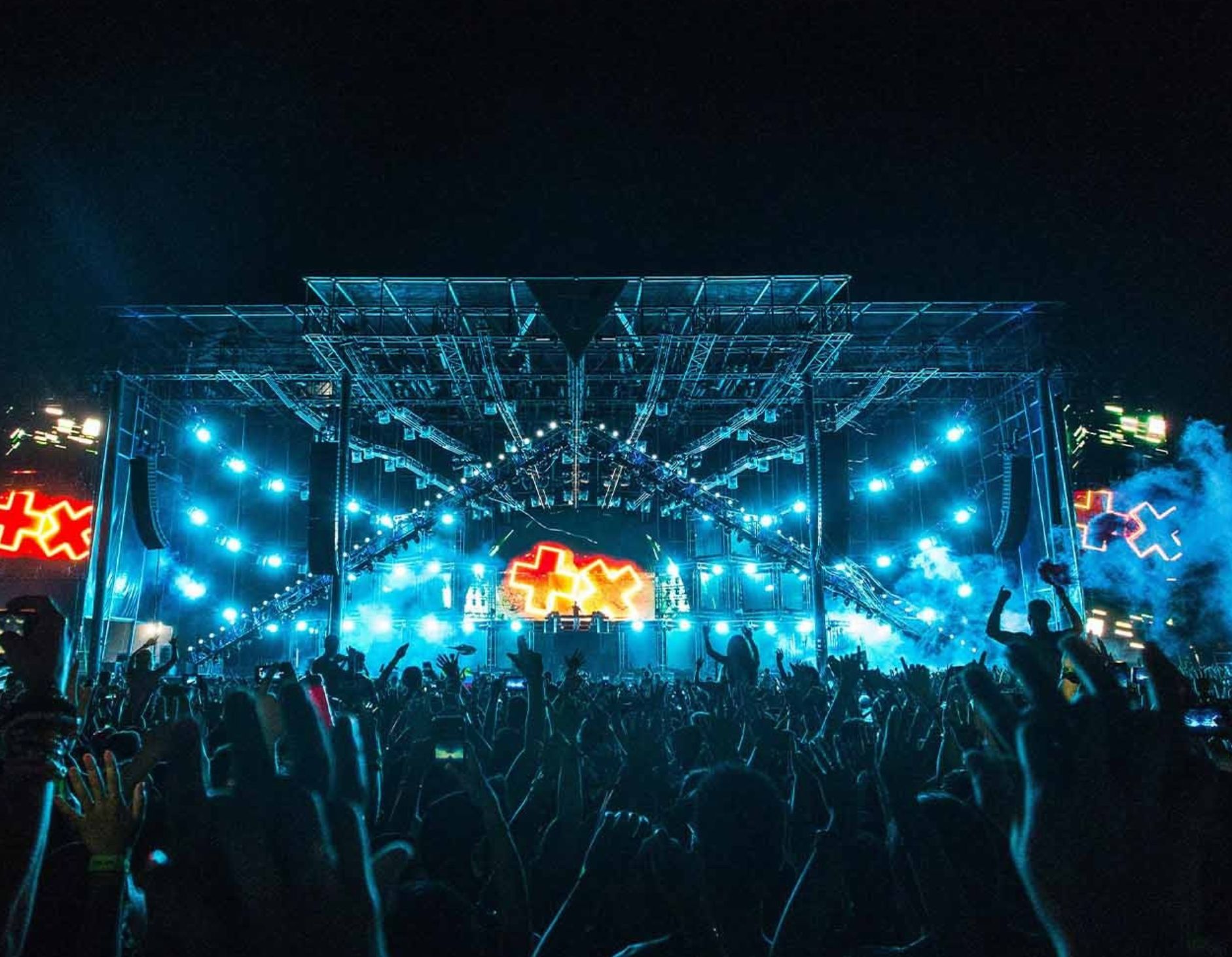

AI is changing the nature of event management tasks. Industry observers point to several developments for 2026: AI as a background tool for scheduling, content, chatbots, and reporting; data as a compass before, during, and after events; "phygital" experiences that blend in-person presence with digital layers; sustainability as a lived standard rather than an aspiration; accessibility (think: the European Accessibility Act); and smaller, more personal event formats. What AI is good at is recurring tasks. What stays human are the decisions: which idea fits the brand? How does the budget work out? What do you do when something breaks two hours before doors open? That is exactly where a program combining business, marketing, communication, and practice comes in. In the MBS Bachelor and Master, you learn to read data, justify concepts, and lead people, which turns AI into your tool rather than your competition.
AI takes over routine tasks, while concept development, budget decisions, stakeholder management, and crisis calls remain distinctly human work. A solid grounding in business and marketing, plus international, hands-on experience, strengthens your long-term prospects.
Source: eventmanager.de, "Die Zukunft von Veranstaltungen" ("The Future of Events", February 18, 2026, contributed by aanmelder.nl) — an industry blog from a vendor, so read as a perspective rather than a market study.
Find out which of our two event management studies best suits your goals, interests, and learning style. The self-assessment will give you an initial idea.
✓ Introduction to Business Administration with a Concentration in Event Management
✓ 6 Concentrations: e.g. Customer Relationship Management
✓ German- and English-language modules
✓ 3 years of full-time study in Munich
✓ Specialized Knowledge & Practical Skills
✓ Business Projects and an International Focus
✓ Abroad or Internship
✓ Entirely in English
A university’s accreditations are one of the most important indicators of the quality and recognition of its degree programs. Government agencies and renowned international accrediting organizations evaluate the academic excellence, practical focus, and adherence to international standards of universities. This ensures that your degree is highly regarded and opens many doors for you.
A wide variety of approaches and perspectives on the degree programs at Munich Business School.


Why do people buy what they buy? Why do we make the decisions we make? Prof. Dr. Sophie Hieke asks exactly these questions – and she loves exploring them together with her students. As Academic Director of the Master's program in International Marketing and Brand Management, she brings together psychology, neuroscience and behavioral economics. What she expects from you and what she promises in return – she shares that in the video.

Event management covers the concept, planning, organization, delivery, and follow-up of events, concerts, conferences, trade fairs, corporate parties, or brand events. In everyday use, "event management course", "event management degree", and "event management studies" are largely interchangeable ways of describing the same field. What matters is less the exact phrase and more the content: business administration, marketing, project management, and practical experience.
Typical building blocks include business fundamentals (finance, budgeting, accounting), marketing and communication, project management, international business, and soft skills like presenting and leading teams. In the Munich Business School Bachelor, you cover this in semesters 1 to 3, then choose two specializations later (e.g. Marketing & Sales) and can take the Sport and Event Management elective. Hands-on event topics like event technology or event law come through internships and projects. In the Master, brand and communication strategy take center stage.
The Munich Business School does not offer a Bachelor or Master with that exact title. You study the Bachelor International Business and build your event focus through an elective, the Marketing & Sales (CRM) specialization, internships, and projects. If you already hold a Bachelor's degree, the Master International Marketing and Brand Management lets you go deeper into brand experiences and communication. The advantage: your degree is broadly recognized and not tied to a single industry.
You need a school-leaving qualification that allows university-level study (Abitur, Fachhochschulreife, Matura, or IB Diploma). Alternatively, completed vocational training with a mastership exam or technical college course, or two years of vocational training plus three years of relevant work experience, can qualify you. You also need proof of English proficiency (e.g. TOEFL iBT 85, IELTS Academic 6.5, Duolingo 115, or Cambridge B2 First, no older than two years). Admission runs through an application and interview, not a fixed cut-off GPA. For more information, visit the program page.
Yes, in specific cases: with vocational training plus a mastership exam or technical college qualification, or with two years of vocational training plus three years of relevant work experience. If you already have some university credit, you may be able to enter directly into semester 2 or 3 (up to 60 ECTS transferable, subject to a paid pre-check). For more information, visit the program page.
As a private university, Munich Business School charges tuition fees. Merit-based and need-based scholarships are available, including scholarships of up to €4,000. In addition, there are discounts if you take advantage of the early bird promotion and apply early. Current prices can be found on the respective program pages for the Bachelor’s or Master’s programs at Munich Business School.
Munich Business School offers scholarships that, according to its current website, cover 10 to 50 percent of the tuition for the first and second semesters of the bachelor’s program and up to €4,000 for the master’s program. A one-page personal statement is required for the application. For more information, visit the program pages.
Munich Business School is state-recognized and accredited by the German Science Council. In addition, its programs hold international accreditations such as AACSB and FIBAA. The degrees awarded by Munich Business School are full-fledged, state-recognized university degrees.
The degree programs at Munich Business School are full-time programs on campus in Munich, featuring mandatory internships in Germany and abroad (totaling at least 30 weeks for the bachelor’s degree) and a semester abroad. They are therefore neither a traditional dual degree program with a fixed industry partner nor a distance learning program. Students who wish to combine practical experience with their studies will find ample opportunity to do so through the internships.
A classic apprenticeship, such as the German "Veranstaltungskaufmann/-frau" (events clerk), takes three years, usually requires at least a secondary-school qualification, and is strongly hands-on. A degree adds business knowledge, international experience, and generally better odds at leadership and corporate roles. If you want to earn money early and start out hands-on, the apprenticeship route works well. If you're aiming at strategy, brand, and an international career, a degree serves you better.
Yes. Event manager isn't a formally regulated profession with one required path. Routes in include an apprenticeship (e.g. Veranstaltungskaufmann/-frau in Germany), further training, or a lateral move backed by relevant experience. A degree isn't mandatory, but it can speed up your progression and open doors to other industries.
Yes. A business degree gives you the fundamentals the industry looks for: budgeting, sales, marketing, negotiation. The Munich Business School Bachelor International Business combines that with an event elective, a marketing specialization, and internships. The key is gaining hands-on experience early, at agencies, venues, or event organizers.
In the bachelor’s program, the fourth semester is set aside for study at one of the 70+ partner universities (20 ECTS) plus an internship abroad (10 ECTS). In the master’s program, you can use the third semester for a semester abroad or an internship, and by completing a fourth semester in the dual-degree model, you can earn a second master’s degree from a Munich Business School partner university.
The Master's in International Marketing and Brand Management is ideal for careers in events and branding. Other suitable options include the Master's in International Business (with specializations such as Sustainable Business, Luxury Management, and Corporate Finance) and the Master's in Innovation and Entrepreneurship.
Depending on the source, entry-level salaries run roughly €30,000 to €45,000 gross per year, rising to about €45,000 to €60,000 with experience, and from roughly €70,000 to €75,000 in leadership roles. Full figures and sources are in the salary table above (German-market data). Industry, company size, and level of responsibility are the biggest factors.
Organizational talent, creativity, strong communication, resilience under stress, teamwork, and problem-solving. Add to that solid English skills and comfort with numbers, budget responsibility comes with almost every event role.
Munich brings together trade fairs, congresses, sport, culture, and folk festivals. Messe München alone secures around 17,600 jobs in the city according to the Prognos study, and Oktoberfest draws millions of visitors every year. Students benefit from internship opportunities, guest speakers, and an international environment.
You apply online by submitting your school transcripts, a statement of purpose, a resume, and proof of English proficiency. The application fee is €60. This is followed by an online interview lasting approximately 45 minutes. Application rounds take place monthly (on the 15th of each month), with programs starting in February or September. If you are accepted, you will typically be notified within a week, and your spot will be reserved for three weeks. For more information on the application process, visit the Bachelor’s or Master’s program page.
Typical employers include event agencies, hotels and venues, corporations (for corporate events), festivals, and trade-fair organizers. The job usually involves flexibility, weekend and evening work, travel, and the ability to stay calm under pressure. In exchange, the field offers varied work and a lot of creative latitude.

Elsenheimerstraße 61
80687 München Germany