An international seal of quality awarded to only 6% of business schools worldwide. It attests to high quality and enhances the recognition of the degree abroad.


Whether it's recruiting, employee development, or international leadership: an HR management degree from Munich Business School lays the foundation for a career where people and business success go hand in hand.

At Munich Business School, there isn't just "one human resources management program"; rather, there are two distinctly different programs designed for different starting points and career goals.
The Bachelor International Business is MBS's generalist core program, with the concentration “International Human Resources Management and Leadership”. You can sharpen your profile specifically for recruiting, employee development, and leadership roles in international companies.
The Master International Business builds on your generalist management knowledge with international leadership skills, with the mandatory “Responsible Leadership” module and two freely selectable specializations. It is ideal fit for anyone planning to take on HR responsibility after graduation.
All course content at a glance: lesson by lesson, module by module, semester by semester.
6 Semesters + thesis · 210 ECTS · B.A. · German & English · Start: February & September
3 Semesters (Single Degree) · 4 Semesters (Dual Degree) · M.A. · English · Start: February & September
One of Germany's most international and economically vibrant locations as a place to study.
Munich Business School is one of the few business schools in Germany to hold this internationally recognized seal of quality.
Small study groups with direct access to instructors who have hands-on experience in human resources and leadership.
Direct real-world relevance through corporate partnerships and a student-led entrepreneurship project during the bachelor's program, rather than purely theoretical study.
The Bachelor's and Master's programs in International Business build on each other in terms of content. For anyone who would like to continue their studies immediately after completing their Bachelor's degree without changing their field of study.
Over 70 partner universities worldwide. No back-and-forth over applications. It’s an integral part of both programs.
Human resources management is considered a diverse but also highly competitive field. The following figures are based on current salary data (2026) in Germany.
| Career Stage | Career Stage |
| HR Officer (entry/specialist level) | €47,949–62,767 |
| HR Business Partner (mid-level) | €60,000–80,416 |
| Head of HR (leadership level) | €61,681–81,062 |
Some career opportunities that become available after completing a degree in human resources management.
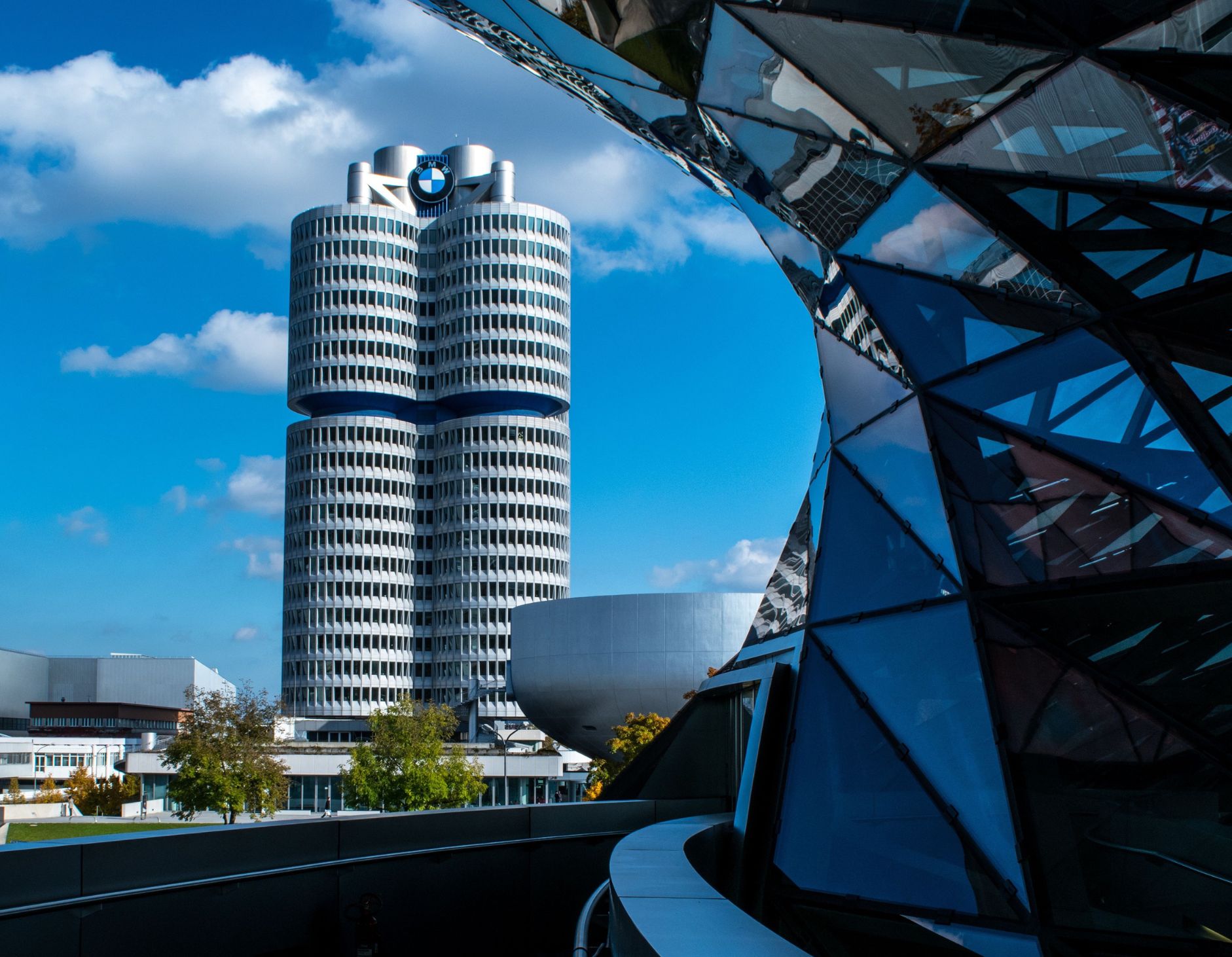
BMW, Siemens, Allianz, and Munich Re are just some of the DAX-listed corporations headquartered in Munich and with them, their central HR functions: from strategic workforce planning to international recruiting and leadership development. Studying HR management in Munich means being closer to the decision-making centers of major HR departments than at almost any other university location in Germany.
The city also hosts the “Munich Personnel Fair powered by Zukunft Personal,” one of the leading HR trade fairs in southern Germany, where companies, HR service providers, and young professionals connect every year. For MBS students, that means short distances to internships, working-student positions, and direct contact with HR decision-makers at international corporations, without having to relocate to start a career. Salaries reflect this too: according to jobvector's 2026 salary analysis, HR Business Partners in Munich earn an average of €62,029 gross per year. A figure that, despite the high cost of living, reflects the sheer number of strategically significant HR roles based in the city.

AI tools already handle routine recruiting tasks: pre-screening applications, matching candidate profiles, and analyzing workforce data in people-analytics dashboards. For aspiring HR professionals, that raises a fair question: will my profession still be needed in a few years?
The short answer: yes, just not in the same form. The more administrative tasks get automated, the more valuable the skills that can't be captured in an algorithm become: leadership under uncertainty, resolving conflict across cultures and generations, and making ethical decisions on sensitive personnel matters. These are exactly the competencies at the center of the “International Human Resources Management and Leadership” concentration in the Bachelor's and the mandatory “Responsible Leadership” module in the Master's at MBS. Studying HR management, then, isn't just about learning to operate HR software – it's about learning to lead people and teams through change, a skill that becomes more valuable, not less, as automation increases.
Find out which of our two human resources management programs best suits your interests, goals, and preferred learning style. The self-assessment will give you an initial idea.
✓ Introduction to Business Administration with a Focus on Human Resource Management
✓ 12 Electives: e.g., Social and Organizational Psychology
✓ German- and English-language modules
✓ 3 years of full-time study in Munich
✓ Business Project and 7 Key Areas
✓ Specialized Knowledge & Practical Skills
✓ Abroad or Internship
✓ Entirely in English
A university’s accreditations are one of the most important indicators of the quality and recognition of its degree programs. Government agencies and renowned international accrediting organizations evaluate the academic excellence, practical focus, and adherence to international standards of universities. This ensures that your degree is highly regarded and opens many doors for you.
A wide variety of paths and perspectives on the Munich Business School's degree programs.



Prof. Dr. Thomas Röhm and Prof. Dr. Christian Schmidkonz believe that learning is about more than acquiring knowledge. In the Master in International Business, it's about taking on responsibility, connecting the dots across disciplines – and working alongside people from all over the world. What that means for your development, they explain in the video.

An HR management degree covers the fundamentals of people management – from recruiting and candidate selection to employee development, compensation systems, labor law, and strategic organizational development. At MBS, HR management isn't a standalone degree but part of the generalist Bachelor International Business program, through the concentration “International Human Resources Management and Leadership”, combined with international management skills, leadership knowledge, and intercultural competence.
Both paths exist, and each has its trade-offs. Some universities offer “HR Management” or “Human Resource Management” as a standalone (often dual or distance-learning) degree; others build HR expertise into a broader business or international management program as a concentration. MBS deliberately takes the latter approach: the “International Human Resources Management and Leadership” concentration within the Bachelor International Business gives you solid HR expertise while the broad business foundation keeps you qualified for other management functions too.
The Bachelor International Business at MBS takes 6 semesters plus a 7th semester for the final internship and Bachelor thesis – roughly 3.5 years, or 210 ECTS. The subsequent Master International Business takes 18 months as a Single Degree, or 24 months as a Dual Degree with a partner university. By comparison, dual or part-time HR management programs at other institutions often take a similar amount of time but combine theory and practice in parallel rather than through a dedicated semester abroad.
For the Bachelor’s in International Business, you need a high school diploma or a qualification recognized as equivalent, as well as sufficient proficiency in German and English (depending on the track you choose). For the Master’s in International Business, MBS generally requires a first university degree in economics or a related field, as well as very good English proficiency. For more information on the requirements, please visit the respective program page for the Bachelor’s or Master’s degree.
It depends on your career goals. Vocational HR training builds on a commercial apprenticeship and is a proven path into operational HR roles. A degree such as the Bachelor International Business with an HR concentration, on the other hand, also opens the door to international corporate structures, strategic HR positions, and (via the Master's) leadership roles with people responsibility, since many companies require a university degree for promotion into HR leadership.
In everyday use, these terms often overlap. “Personnel administration” is the more traditional, administratively focused term; “HR management” emphasizes the strategic, shaping role of people work; and “human resource management (HRM)” is the internationally standard term for the same field – including strategic variants like Strategic HRM (SHRM), which tightly link people strategy to business strategy. At MBS, this international framing shows up in the English-language delivery of many HR-related course content.
HR management deals with the business and organizational processes of people work, recruiting, employee development, compensation, labor law. Business psychology, by contrast, studies human behavior and experience in an economic context, for example through diagnostics, behavioral analysis, or personnel psychology. The two fields overlap significantly and complement each other well: if you want psychological questions front and center, a business psychology degree may be the better fit; if you want to shape people work strategically and internationally, the Bachelor International Business with an HR concentration at MBS is the closer match.
A Master's isn't strictly required, but it significantly improves your chances for leadership roles such as Head of HR or an internationally responsible HR Business Partner position. According to jobvector's 2026 salary analysis, Heads of HR earn an average of around €72,650 gross per year in Germany, considerably more than entry-level HR Officers (avg. €54,625). The Master International Business adds the mandatory “Responsible Leadership” module to your generalist management knowledge, preparing you specifically for leadership responsibility, without an HR-specific Master's concentration, but with a clear leadership focus.
As a private university, Munich Business School charges tuition fees. Merit-based and need-based scholarships are available, including scholarships of up to €4,000. In addition, there are discounts if you take advantage of the early bird promotion and apply early. Current prices can be found on the respective program pages for the Bachelor’s or Master’s programs at Munich Business School.
This specialization track is taken during the specialization phase (semesters 5–6) of the Bachelor’s in International Business and covers key HR topics such as international recruiting, human resource development, leadership in multicultural teams, and the fundamentals of labor law in an international context. It can be combined with a second specialization track from the fields of innovation management, procurement/production/logistics, customer relationship management, finance, or corporate management.
Yes. The Bachelor International Business can be studied either bilingually (German/English) or 100% in English, including a mandatory semester abroad and an international internship in semester 4. The Master International Business is taught entirely in English. Both programs are internationally oriented, around 53% of MBS students come from abroad, which strengthens the intercultural, hands-on relevance for international HR work in particular.
Typical entry-level roles include HR Officer or Junior HR Business Partner. With growing experience, roles such as HR Business Partner, Recruiting Lead, or People Development Manager follow. With leadership experience and/or a Master's degree, positions such as Head of HR become attainable. Related fields such as change management, corporate health management, or people & organization consulting are also open to graduates.
According to jobvector's 2026 salary analysis, entry-level HR Officers earn an average of €51,704 gross per year in Germany, rising to €54,625 with experience. At the mid-level, HR Business Partners average €70,000/year (around €62,029 regionally in Munich), while Heads of HR at the leadership level average €72,650/year. All figures are indicative, nationwide German averages and vary by industry, company size, and region.
Munich is home to several DAX-listed corporations with correspondingly large, strategically important HR departments, including BMW, Siemens, Allianz, and Munich Re. The city also hosts the “Munich Personnel Fair powered by Zukunft Personal,” one of the key HR industry meeting points in southern Germany. For students, that means short distances to internships, working-student roles, and direct contact with companies right where they study.
A first degree in economics alone is not strictly required, but a basic understanding of business administration is helpful. Applicants without a degree in economics must qualify for the program by completing a pre-master’s program, where they will learn the fundamentals of business administration. Applicants with a first degree in a different field (e.g., psychology, engineering) who are interested in international human resources are generally welcome.
Very important, but more as a tool than a replacement. AI-powered systems already handle tasks like pre-screening applications, running people-analytics evaluations, and pre-selecting recruiting candidates. The core skills of HR professionals, leadership, conflict resolution, culture work, and ethical decision-making, are much harder to automate. That's exactly what the “International Human Resources Management and Leadership” concentration in the Bachelor's and the mandatory “Responsible Leadership” module in the Master's are designed to build: the leadership and responsibility side of HR work that stays in demand even as the field becomes more digital.

Elsenheimerstraße 61
80687 München Germany