An international seal of quality awarded to only 6% of business schools worldwide. It attests to high quality and enhances the recognition of the degree abroad.


With the Bachelor International Business and its “International Procurement, Production and Logistics” concentration, or the generalist Master International Business, at Munich Business School you'll learn how global flows of goods are planned, managed and optimized, hands-on, international, and AACSB-accredited.

At Munich Business School, there isn't just "one logistics degree program"; rather, there are two distinctly different programs designed for different starting points and career goals.
The Bachelor International Business first gives you a broad foundation in international business administration, then lets you choose the “International Procurement, Production and Logistics” concentration from semester 5 onward to specialize in global supply chains, procurement strategy and production logistics, including an Industry 4.0 focus. Recommended if you're starting your first degree and want to position yourself toward logistics/supply chain from the outset.
The Master International Business is deliberately generalist: it deepens international management, strategy and leadership skills and lets you choose from seven specializations (including Sustainable Business, International Marketing, Corporate Finance, Innovation and Digital Business). There is no dedicated logistics/supply chain specialization, but the semester-2 elective “Process and Logistics Management” lets you add targeted process and supply-chain know-how. Recommended if you want to prepare for international leadership roles in which supply chain topics are one building block among several.
The course content at a glance: lesson by lesson, module by module, semester by semester.
6 semesters + thesis · 210 ECTS · B.A. · German & English · Start: February & September
3 semesters (Single Degree) · 4 semesters (Dual Degree) · M.A. · English · Start: February & September
One of Germany's most international and economically vibrant locations as a place to study.
As an AACSB-accredited school, MBS belongs to fewer than 6% of business schools worldwide with this seal.
In groups of 20 to 30 students you learn directly from faculty with practical experience in industry and logistics – not in overcrowded lecture halls.
Whether through the Bachelor's own concentration or the Master's targeted “Process and Logistics Management” elective, logistics knowledge is built into the curriculum rather than an afterthought.
In the start-up project, you develop and test your own ideas, for example to optimize processes along the supply chain.
A mandatory semester abroad at one of 70+ partner universities shows you how supply chains work beyond the German market.
Logistics is considered a diverse but also highly competitive field. The following figures are based on current salary data (2026) in Germany.
| Career Stage | Gross Annual Salary (guideline) |
| Entry level (e.g. Junior Logistics/Supply Chain Manager) | approx. €42,500 |
| A few years of experience (Logistics Manager / Supply Chain Manager) | €53,100 – €56,700 (median) |
| Senior / leadership position (e.g. Head of Logistics) | €57,000 – €67,700 |
| Upper leadership (e.g. Director of Logistics, upper range) | up to approx. €94,000 |
Here are some career opportunities you can pursue after completing a degree in logistics.
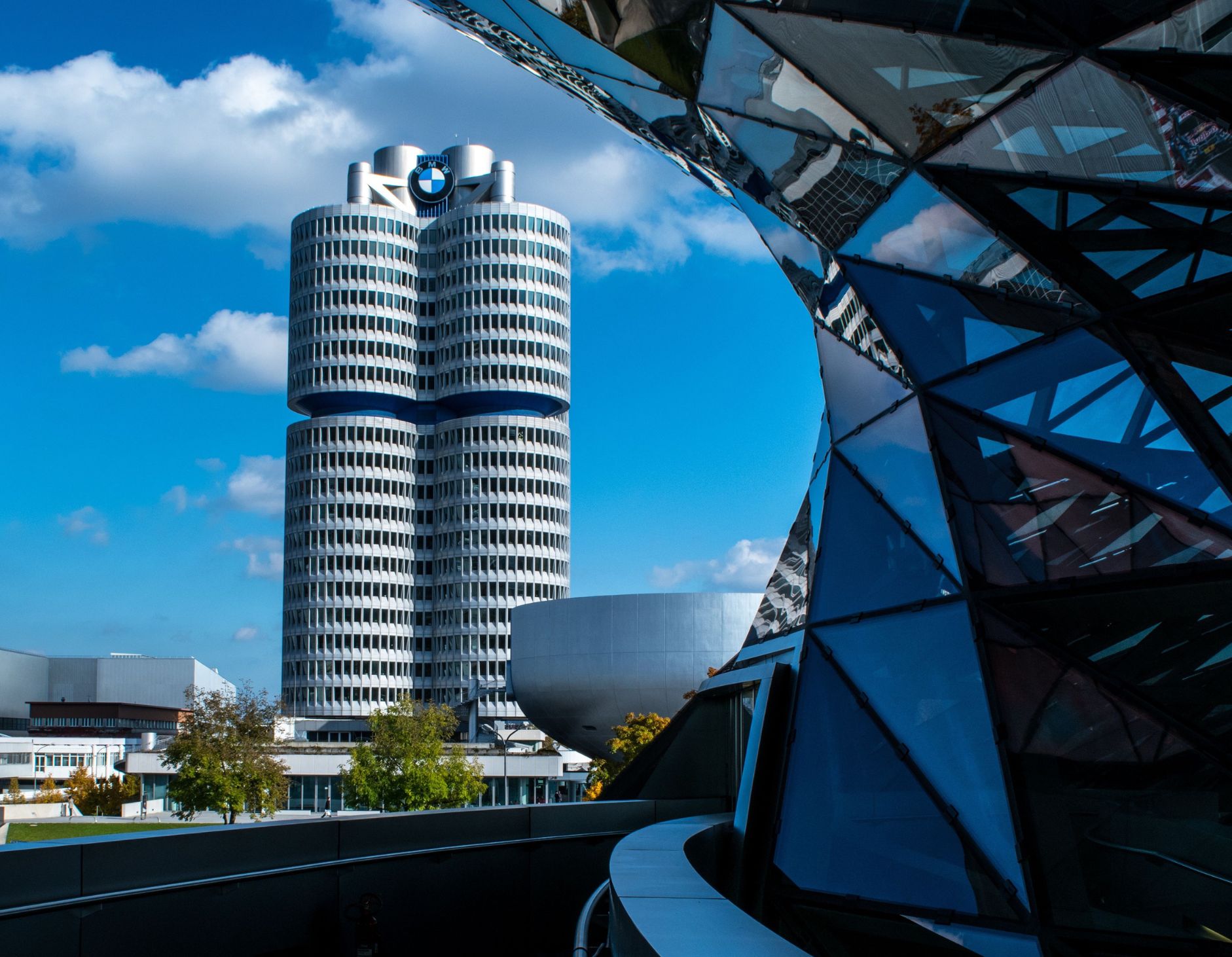
According to commercial real estate analyses (including JLL), Munich is one of Germany's most important logistics regions: the city sits at the crossroads of the A8, A9, A92 and A99 motorways, has an air-freight hub in Munich Airport for international flows of goods, and is home to numerous industrial and technology companies with complex, global supply chains.
A particular differentiator for anyone interested in logistics and supply chain management: every two years, Munich hosts “transport logistic”, the world's leading trade fair for logistics, mobility, IT and supply chain management. Studying at MBS puts the industry quite literally on your doorstep.
For graduates, that means short distances to companies with supply chain and procurement departments, access to one of the densest business regions in southern Germany, and a labor market that has strong demand for internationally minded professionals with logistics know-how.

Few fields are being reshaped as visibly by AI and automation as logistics: predictive-analytics models forecast demand and inventory levels, autonomous systems and robotics automate warehouse processes, and AI-powered tools optimize transport routes and entire supply chains in real time. Industry analyses for 2026 expect this shift toward more automated, “autonomous” supply chains to keep accelerating in the coming years.
For aspiring logistics and supply chain professionals, that means: technical fluency with digital tools (ERP, TMS, WMS systems) and the ability to think about processes strategically, not just operationally, are becoming the key differentiator. That's exactly where the Bachelor and Master International Business at MBS comes in. With dedicated modules on digital skills and Industry 4.0 built into the logistics concentration, we prepare you to use AI and automation as a tool rather than be caught off guard by it.
Find out which of our two logistics programs best suits your interests, goals, and preferred learning style. The self-assessment will give you an initial idea.
✓ Introduction to Business Administration with a Focus on Logistics
✓ 12 Electives: e.g., Globalization and International Trade
✓ German- and English-language modules
✓ 3 years of full-time study in Munich
✓ Specialized Knowledge & Practical Skills
✓ Business Project and 7 Key Areas
✓ Abroad or Internship
✓ Entirely in English
A university’s accreditations are one of the most important indicators of the quality and recognition of its degree programs. Government agencies and renowned international accrediting organizations evaluate the academic excellence, practical focus, and adherence to international standards of universities. This ensures that your degree is highly regarded and opens many doors for you.
A wide variety of approaches and perspectives on the MBS degree programs.



Prof. Dr. Thomas Röhm and Prof. Dr. Christian Schmidkonz believe that learning is about more than acquiring knowledge. In the Master in International Business, it's about taking on responsibility, connecting the dots across disciplines – and working alongside people from all over the world. What that means for your development, they explain in the video.

In a logistics-focused degree, you learn how flows of goods, information and finance are planned, managed and optimized along global supply chains. At Munich Business School, the Bachelor International Business covers this through the “International Procurement, Production and Logistics” concentration, embedded in a broad international business education with a semester abroad and internships.
The terms are often used interchangeably, but they're not identical: logistics classically focuses on transport, warehousing and distribution, while supply chain management also covers procurement, production and the strategic steering of the entire value chain. At Munich Business School, the “International Procurement, Production and Logistics” concentration covers both perspectives.
Munich Business School recommends two programs for this field: the Bachelor International Business (B.A.) with the “International Procurement, Production and Logistics” concentration from semester 5 onward, for anyone starting their first degree, and the generalist Master International Business (M.A.) with the “Process and Logistics Management” elective, for anyone who already holds a first degree and wants to move into international leadership.
It mainly depends on where you're starting from: without a first university degree, the Bachelor International Business with its own “International Procurement, Production and Logistics” concentration is the more direct route into a logistics/supply chain specialization. If you already hold a Bachelor's, the Master International Business offers a generalist international management education that you can sharpen with logistics know-how through the “Process and Logistics Management” elective.
It depends on the program: the Bachelor International Business takes 6 semesters plus one semester for the Bachelor's thesis, 7 semesters in total (210 ECTS), including a semester abroad and two work placements. The Master International Business takes 3 semesters as a Single Degree (90 ECTS) or 4 semesters as a Dual Degree.
Admission to the Bachelor’s program in International Business generally requires a high school diploma or equivalent, as well as sufficient English proficiency. Admission to the Master’s program in International Business requires a first university degree (Bachelor’s or equivalent) as well as sufficient English proficiency. The exact, current admission criteria are linked on the respective program pages.
As a private university, Munich Business School charges tuition fees. Merit-based and need-based scholarships are available, including scholarships of up to €4,000. In addition, there are discounts if you take advantage of the early bird promotion and apply early. Current prices can be found on the respective program pages for the bachelor’s or master’s programs at Munich Business School.
The concentration spans semesters 5 and 6: Part I covers shaping global supply chains and optimizing the flow of goods and services, including digitalization/Industry 4.0; Part II (“Supply Chain Management II”) deepens this further and is complemented by a dedicated seminar on the chosen concentrations.
Yes. The Bachelor International Business can be studied either as a bilingual track (German/English) or 100% in English. The “International Procurement, Production and Logistics” concentration is available on both tracks. The Master International Business is taught entirely in English.
Yes, studying abroad at one of over 70 international partner universities is an integral part of the curriculum in the 4th semester of the bachelor’s program, supplemented by a ten-week internship abroad. In the master’s program, studying abroad is also possible in the third semester or even in the fourth semester for the dual degree program. This allows you to experience global supply chains not only in theory but also from the perspective of a different market.
Typical entry-level roles include Supply Chain Manager, Purchaser, Operations Manager or Dispatcher; with growing experience, roles such as Head of Logistics or Head of Supply Chain become achievable.
According to current StepStone data, entry-level professionals can expect around €42,500 gross per year; with a few years of experience, the median for Logistics/Supply Chain Managers sits between €53,100 and €56,700. Leadership positions can reach €57,000 up to more than €90,000 depending on company and region.
AI is visibly transforming the logistics industry through predictive analytics, automated warehouse processes and real-time supply chain optimization. Graduates who combine digital skills with strategic supply chain knowledge are especially well positioned for this shift, a focus Munich Business School builds into its logistics concentration.
Munich is one of Germany's most important logistics and business hubs, well connected via several motorways and an international airport, and every two years it hosts “transport logistic”, the world's leading trade fair for logistics and supply chain management. That means short distances to companies, networking opportunities and internship options in the industry.
Unlike a dual-study program tied to a single employer, the Bachelor International Business at Munich Business School combines a broad international business foundation with a freely chosen logistics/supply chain concentration, a mandatory semester abroad, and two flexibly chosen work placements, so you're not tied to one company and keep more specialization options open.
Yes. The bachelor’s program includes two required internships: one in Germany (2nd semester) and one abroad (4th semester), which can be completed in procurement, production, or logistics. In addition, the entrepreneurship project offered as part of the program provides students with the opportunity to develop their own ideas for optimizing supply chains. The master’s program also offers a wide range of practical experience through projects and opportunities to study or intern abroad.
You apply for the Bachelor or Master International Business online through the Munich Business School website; after your documents are reviewed, a personal interview typically follows. Use the CTAs on this page to request information, apply directly, or schedule a consultation.

Elsenheimerstraße 61
80687 München Germany